
Dog Potty Training: A Cleaner Home Starts With a Clear Plan
Dog potty training is not about punishment, luck, or waiting for a puppy to “figure it out.” It is a teachable routine built around supervision, timing, access, and rewards. Whether you are raising a young puppy, welcoming an adult rescue, or helping a dog recover from disrupted habits, the most reliable approach is consistent and humane: prevent mistakes, notice the signs, take the dog to an appropriate toilet area, and reward success immediately.
Most dogs can learn household potty rules, but progress is not perfectly linear. Age, health, previous living conditions, fear, weather, schedule changes, and the type of home all affect the process. A realistic plan protects your floors while giving the dog enough opportunities to succeed. It also avoids a common mistake: expecting a dog to understand a rule that has never been taught clearly.
The goal is simple. Your dog should learn where elimination is welcome, how to communicate a need, and what routine makes success easy. You should gain a cleaner home and a calmer relationship.
Prepare Before Training Begins
Choose the Toilet Location
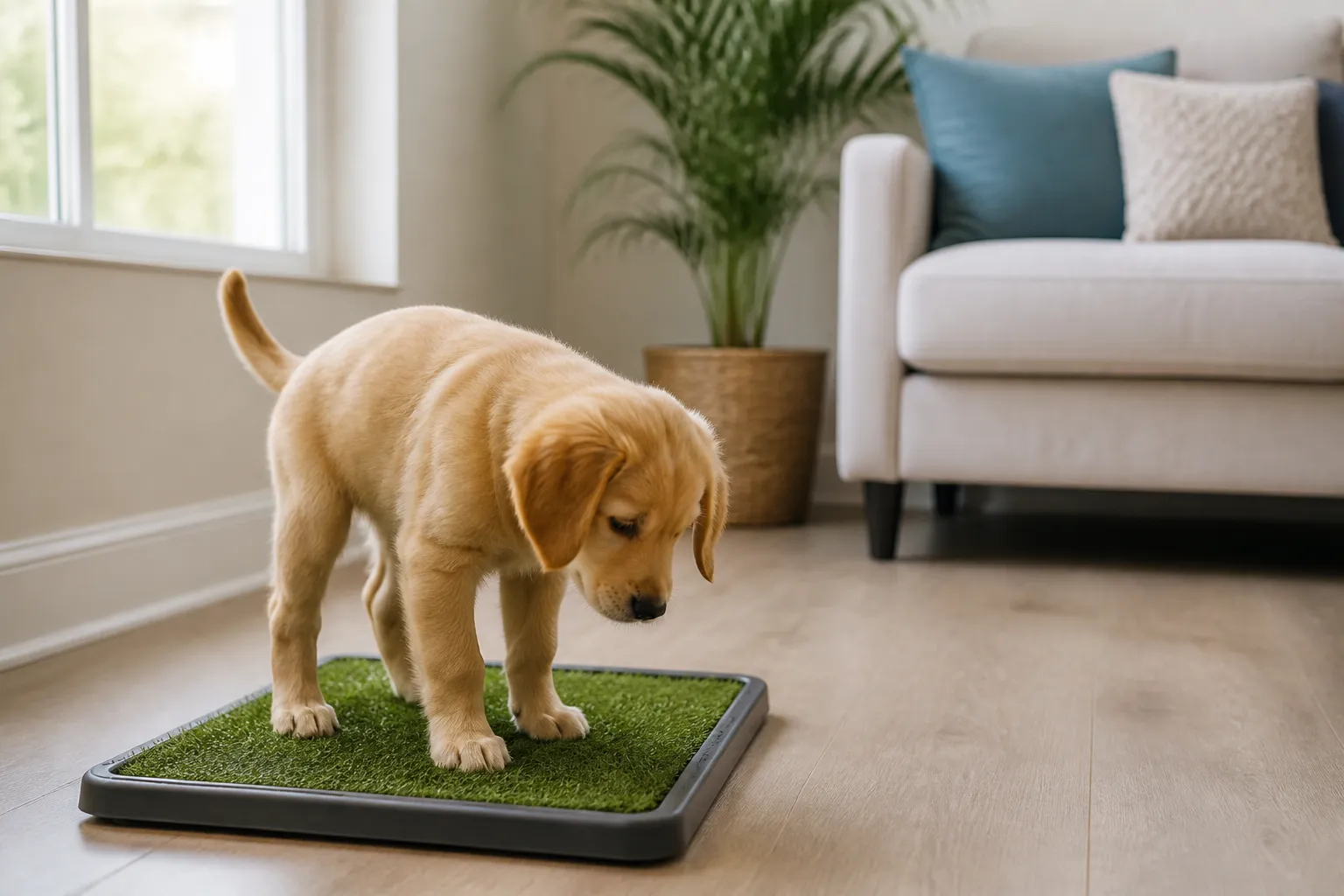
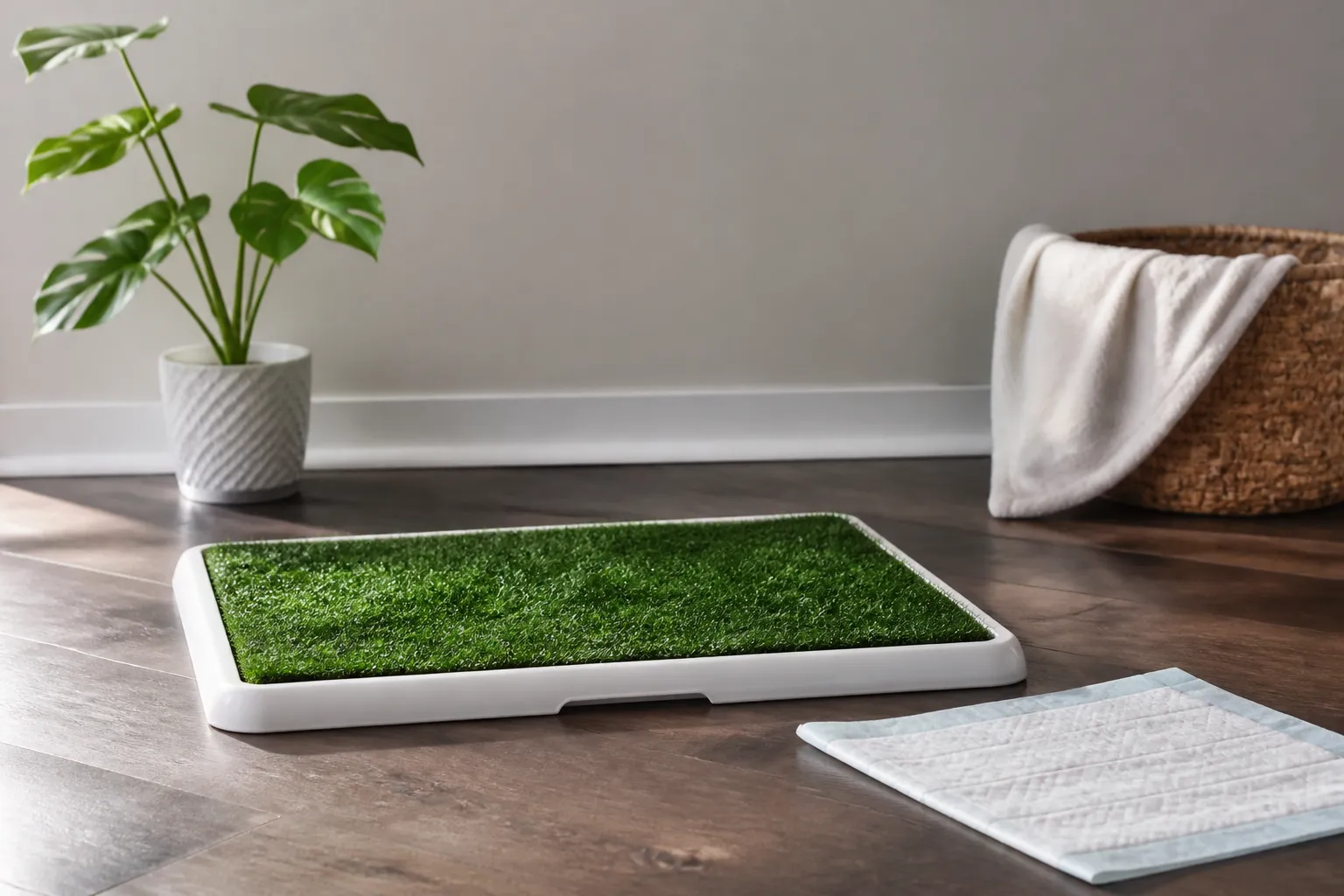
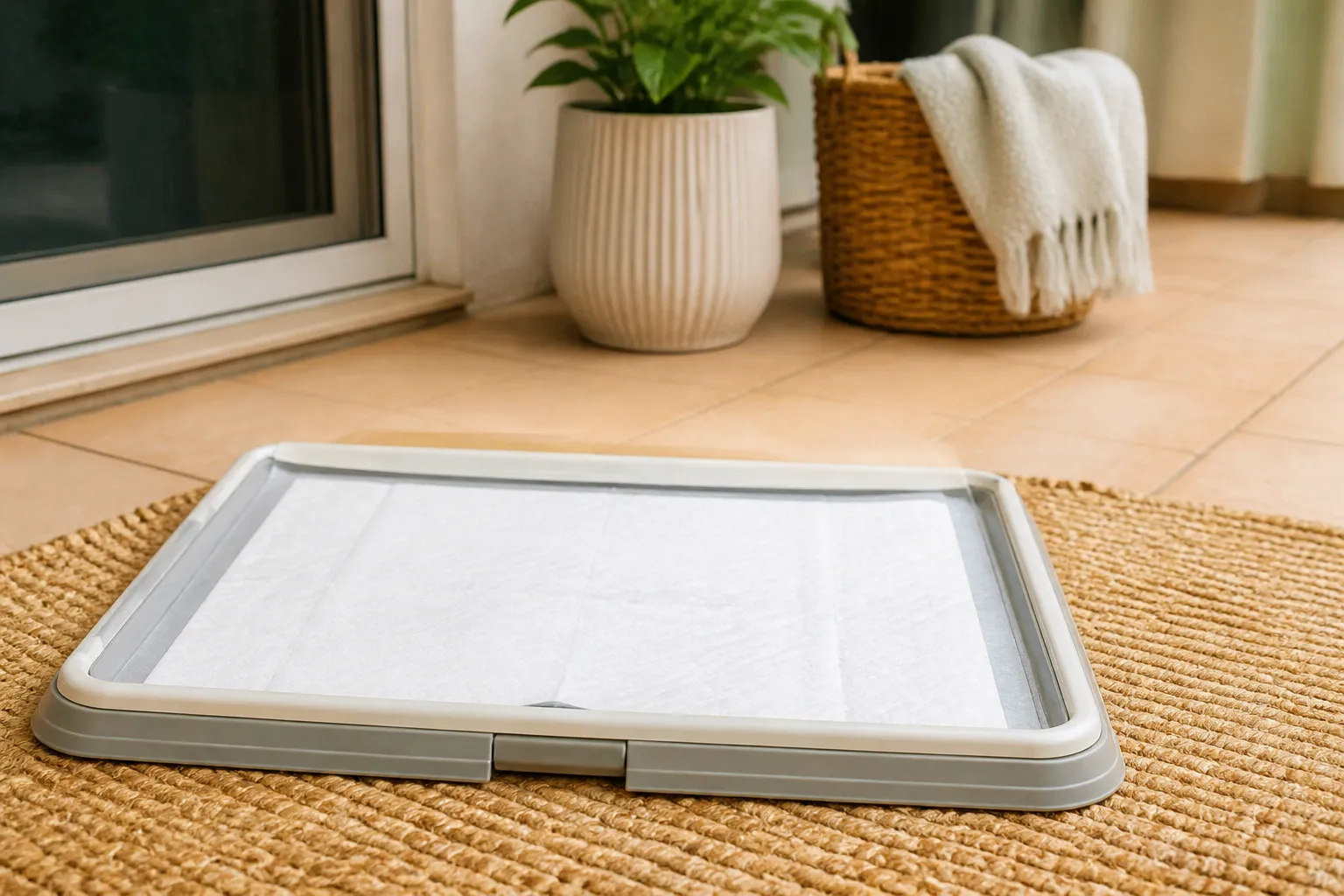
Select one outdoor spot that is safe, accessible, and reasonably quiet. Familiar smells can encourage elimination, so using the same area at first may help. If outdoor access is difficult, establish an indoor toilet station with washable pads, a tray, or artificial turf. Decide whether this is a temporary bridge or a long-term option, because changing the rule later can require additional training.
Keep the route practical. A puppy that must cross several rooms, descend stairs, and wait beside a door may not reach the destination in time. Place a leash, waste bags, shoes, and treats near the exit. Reduce friction for yourself, because successful training depends on many repeated trips.
Gather Useful Supplies
Helpful equipment includes a properly fitted collar or harness, a lightweight leash, small soft treats, an enzymatic cleaner, washable bedding, and a pen or crate if your dog is comfortable using one. A timer can reveal patterns and prevent accidental delays. Baby gates are useful for limiting access to rooms that are difficult to clean.
Do not rely on odor-masking sprays alone. Many ordinary cleaners leave scent compounds that a dog can still detect. An enzymatic product designed for pet urine or feces is generally a better choice. Follow its label directions, allow the area to dry as instructed, and test delicate surfaces first.
Establish a Manageable Schedule
Take the dog out after waking, eating, drinking heavily, playing, training, and waking from a nap. Puppies usually need more frequent opportunities than adult dogs, while an older dog may need a schedule influenced by mobility or medical needs. Begin with a conservative interval rather than testing the dog’s maximum capacity.
Write down meals, trips, successes, and accidents for several days. A simple record can show when the dog commonly needs to go. Then move trips slightly ahead of that pattern. Training becomes easier when you prevent urgency instead of responding after an accident has already begun.
Teach the Routine Step by Step
Start With Calm Supervision
When the dog is loose, keep the animal in the same room, attach a leash if appropriate, or use a small puppy-safe area. Watch for pacing, sniffing, circling, sudden quietness, moving toward a previous accident site, or heading to the door. These behaviors are clues, not guaranteed signals, so combine them with scheduled trips.
If you cannot supervise, use a safe management option such as a pen or crate that allows comfortable movement and rest. The space should never be so large that the dog can sleep in one corner and toilet in another without discomfort. A crate is a management tool, not a substitute for frequent bathroom opportunities, exercise, or companionship.
Use a Predictable Cue
Take the dog directly to the chosen area. Stand quietly and give a brief cue such as “go potty.” Avoid repeating it continuously, because background repetition can make the words meaningless. Give the dog several minutes to investigate. If nothing happens, return indoors under close supervision and try again shortly afterward.
The cue should describe the action, not serve as a scolding phrase. Use the same wording and tone among household members. Later, the cue may help the dog focus before a car ride, bedtime, or another situation where a reliable bathroom opportunity is valuable.
Reward at the Right Moment
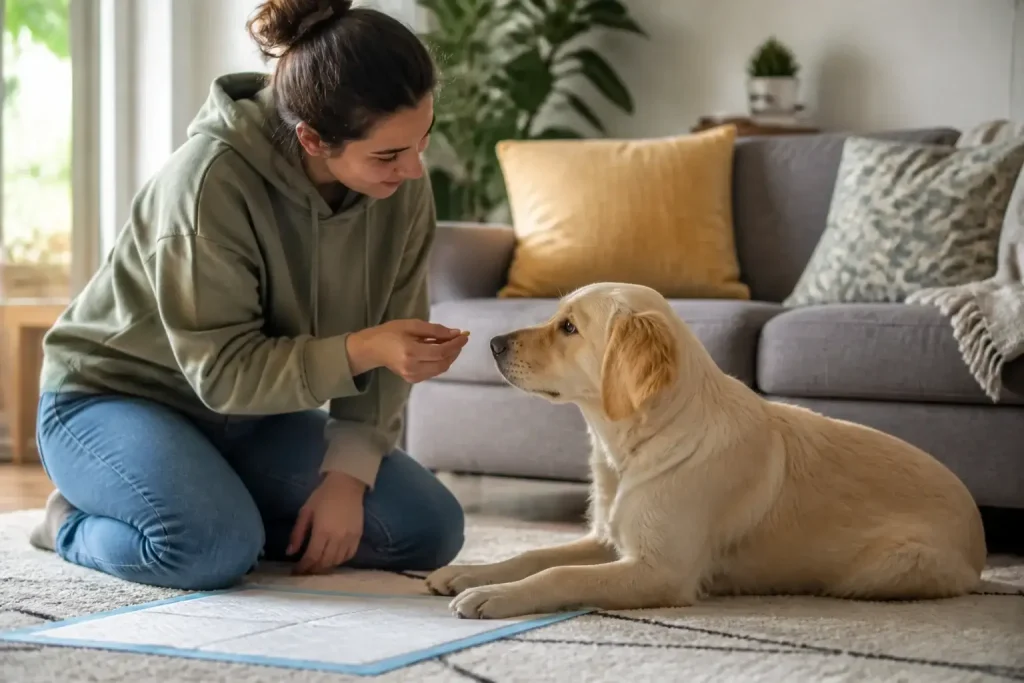
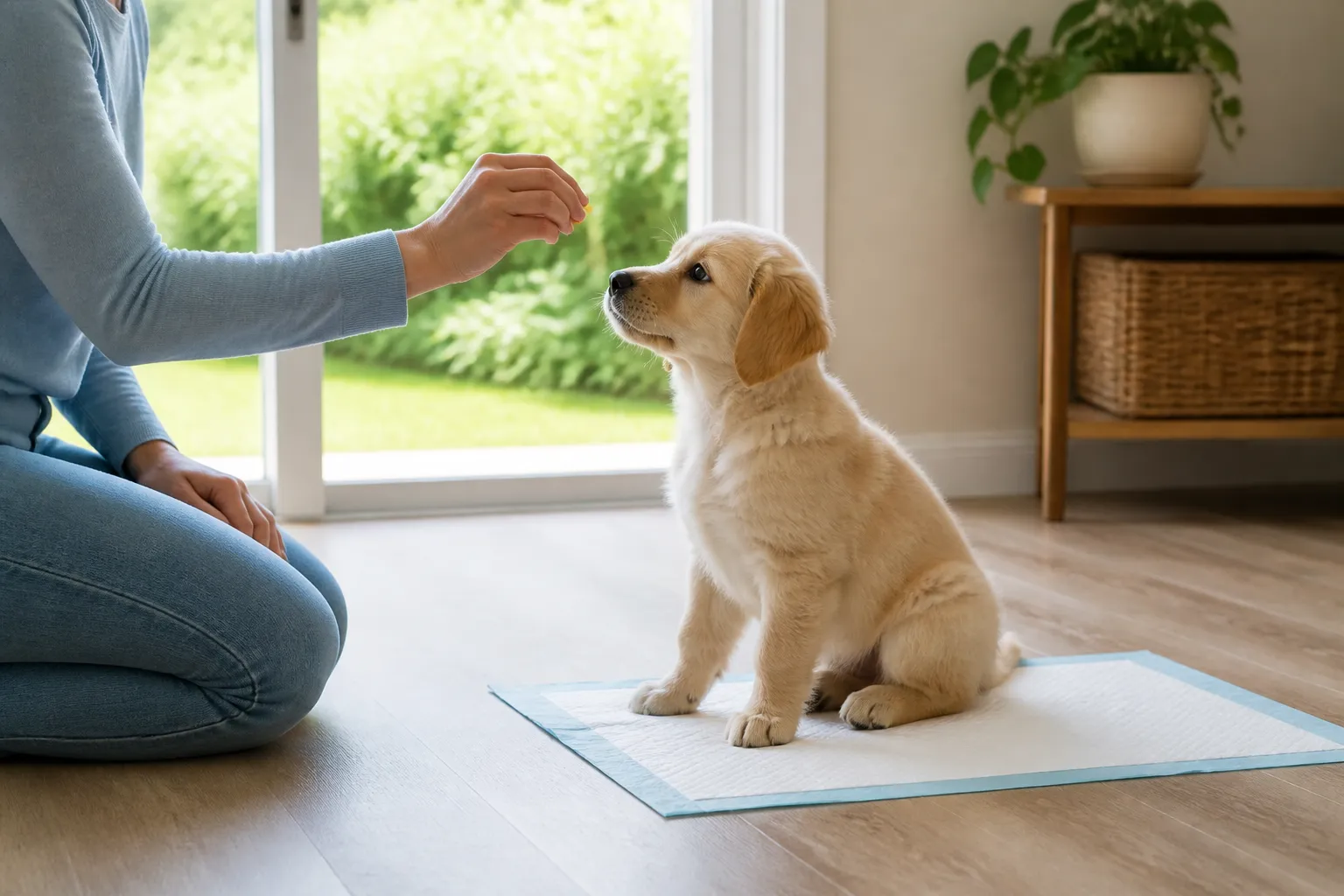
The reward must arrive immediately after the dog finishes, while you are still in the toilet area. Offer enthusiastic but calm praise and a small treat. Timing matters more than treat size: the dog should connect the reward with eliminating in the correct place, not with walking back indoors.
After success, allow a brief sniff or relaxed walk when possible. This prevents the dog from learning that eliminating immediately ends every enjoyable outdoor experience. If every bathroom trip ends abruptly, some dogs may delay elimination to prolong time outside.
Handle Accidents Without Creating Fear
Accidents are information. They may mean the interval was too long, supervision failed, the dog misunderstood the location, or a physical problem is present. Do not rub the dog’s nose in waste, shout, hit, or drag the dog to the mess. Such responses can create fear and may teach the dog to hide elimination rather than use the correct area.
If you catch the dog beginning to eliminate indoors, interrupt gently with a neutral sound, such as “outside,” and move quickly to the toilet location. If the dog finishes there, reward the success. Do not punish an accident discovered later; the dog is unlikely to connect delayed punishment with the earlier behavior.
Clean the entire area thoroughly. Block access until the surface is dry and odor has been removed. Rugs, upholstery, and floor seams may retain scent even when humans cannot detect it. Repeatedly soiled spots can become preferred locations, so cleaning and management should happen together.
Look for patterns rather than isolated failures. A cluster of accidents after a new food, a long nap, a stressful visitor, or a change in work hours provides a useful training clue. Adjust the environment before assuming the dog is stubborn.
Build Communication and Independence
Teach a Door Signal
Some dogs naturally approach the door, vocalize, sit, or touch a person when they need to go. You can shape a clearer signal by pausing at the exit and rewarding a quiet behavior, such as sitting or touching a bell, before opening the door. The signal must remain meaningful. Respond to it promptly when possible, and also continue scheduled trips so the dog does not need to reach an emergency.
Bells and buttons are optional tools, not proof of understanding. A dog may ring a bell for attention or outdoor play. Observe what happens after the signal and guide the dog to the toilet area. Reward elimination, not merely noise at the door.
Increase Freedom Gradually
After a consistent period of success, enlarge the dog’s access one room at a time. Continue supervision during the transition. If accidents return, reduce freedom temporarily and shorten the interval between trips. This is not failure; it is useful feedback that the current level of independence is premature.
Keep bedrooms, laundry rooms, and carpeted spaces restricted until reliability improves. Freedom should be earned through demonstrated habits, not granted because the dog appears calm. A relaxed dog can still have an urgent need.
Generalize the Rule
Dogs do not automatically transfer learning from one place to every place. Practice in different weather, on different surfaces, and at varied but predictable times. When visiting another home, take the dog out immediately and follow the familiar cue. During travel, preserve meal timing and bathroom opportunities as much as practical.
If you use indoor pads, teach a clear boundary. Place the pad away from food and sleeping areas, keep it stable, and reward use immediately. When transitioning outdoors, gradually move the pad closer to the exit, then reduce its size or replace it with outdoor opportunities. Expect temporary confusion and return to more frequent trips during the change.
Adapt the Plan to the Dog
Puppies
Young puppies have limited physical control and are easily distracted. They often need trips after sleep, meals, play, and excitement, with additional opportunities between those events. A puppy may appear successful for several days and then regress during growth, teething, visitors, or schedule disruption.
Keep sessions short and positive. Carrying a small puppy to the toilet area may prevent an accident in a hallway or elevator. If carrying is impossible, move quickly while supervising closely. Avoid assuming that a puppy can wait simply because it managed to do so once.
Adult Dogs
An adult dog may learn quickly, but previous habits can complicate training. A dog formerly kept outdoors may not understand indoor boundaries. A rescue may have learned to eliminate on concrete, bedding, or hidden corners. Identify the preferred surface and location, then gradually transfer the habit to your chosen arrangement.
Adult dogs also benefit from routine rather than unlimited access. They may hold urine longer than puppies, but that does not mean they should be forced to wait unnecessarily. Comfort, hydration, age, and individual health vary.
Senior Dogs and Dogs With Disabilities
Older dogs may need more frequent trips, easier routes, nonslip flooring, ramps, or a nearby indoor option. Vision loss, arthritis, cognitive changes, and hearing loss can make a previously familiar path difficult. Use lighting, consistent furniture placement, and tactile or verbal guidance.
A dog with mobility limitations may need help reaching the door quickly. Consider washable rugs, waterproof bedding protection, and veterinary advice about comfort. Management is not giving up on training; it is adapting expectations to physical ability.
Multiple Dogs
Train each dog with individual attention at first. One dog’s success can distract another, and competition may cause rushing or incomplete elimination. Take dogs separately when necessary, especially if one is anxious or easily stimulated. Maintain separate records if patterns are unclear.
Health, Stress, and Setbacks
Sudden house soiling after reliable training deserves attention. Urinary infection, gastrointestinal illness, increased thirst, pain, hormonal changes, kidney problems, medication effects, and age-related changes can influence elimination. Contact a veterinarian when accidents are abrupt, frequent, painful, bloody, unusually smelly, accompanied by straining, or paired with changes in appetite, energy, thirst, or bowel movements.
A dog that leaks urine while sleeping, repeatedly squats without producing much, or seems distressed may need prompt professional assessment. Do not assume the issue is behavioral. Medical treatment and training often work together, but training cannot correct an untreated condition.
Stress can also alter habits. Moving house, construction noise, guests, new animals, separation, harsh weather, and conflict may cause temporary regression. Provide a predictable routine, a quiet resting place, and extra opportunities. Avoid forcing a frightened dog outside into overwhelming conditions. A covered, secure area, gradual exposure, or professional behavior guidance may help.
If the dog is afraid of rain, darkness, traffic, or a particular surface, make the environment easier. Use a coat or umbrella only if the dog accepts it, choose a sheltered route, and reward calm investigation. Never turn a bathroom trip into a prolonged battle.
Choosing Helpful Products
The best products support supervision and cleanup rather than replace teaching. A well-fitted harness may provide comfortable control, while a standard leash helps guide the dog safely. Retractable leashes can complicate close supervision around doors and are not ideal for every environment. Select equipment based on handling ability, the dog’s size, and local safety conditions.
A crate can support rest and short-term management when introduced positively. It should allow standing, turning, stretching, and comfortable lying down, but not become a place for isolation or punishment. Dogs with separation distress may become more anxious when confined, so consult a qualified professional before using a crate as the main solution.
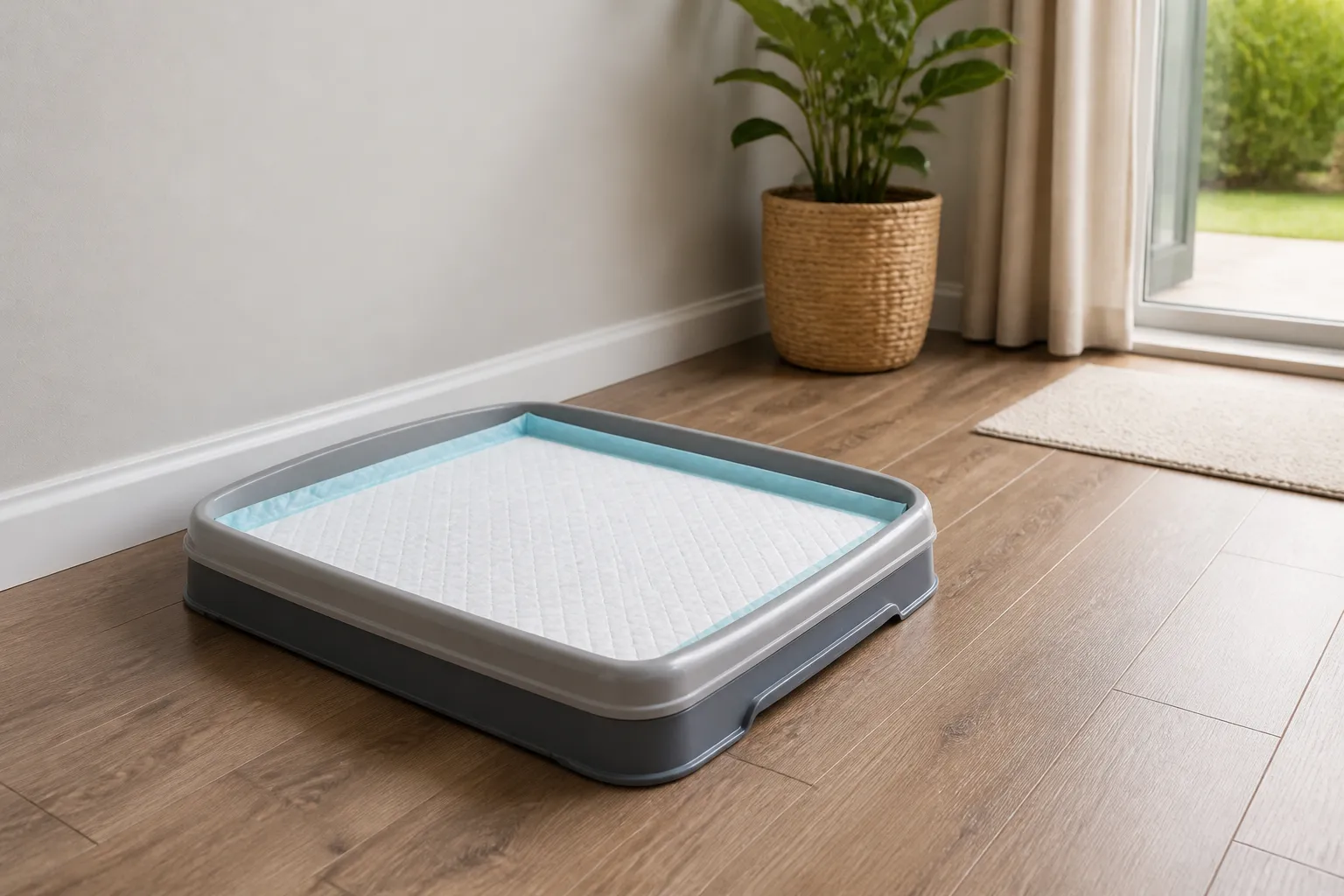
Washable pads protect floors, but they can blur the difference between acceptable and unacceptable indoor surfaces if used inconsistently. If pads are part of your plan, use one defined station and maintain it clean. Disposable pads are convenient; reusable pads may reduce waste and provide a stable surface, but either option requires regular replacement or washing.
Enzymatic cleaner is especially valuable after urine or feces. Paper towels, gloves, a storage container for soiled materials, and waterproof covers can make cleanup faster. Choose products appropriate for your flooring, and never mix cleaning chemicals unless the label explicitly permits it. Good equipment lowers stress, but your timing and consistency teach the behavior.
A Practical Daily Example
A workable day might begin with an immediate trip outside, followed by breakfast and another opportunity afterward. The dog then rests in a supervised area. After waking, play, or training, offer another trip. During the afternoon, repeat the pattern around meals, naps, and activity. Before bedtime, provide a calm final opportunity.
The exact schedule should fit the individual dog. A small puppy may need many more trips than an adult. An adult dog may manage a longer interval, but frequent opportunities remain useful during early learning. On busy days, arrange help from a trusted person, dog walker, or sitter rather than expecting the dog to wait beyond its ability.
Keep each trip purposeful. Go to the designated area, use the cue once, wait quietly, and reward immediately after success. If nothing happens, return indoors with supervision and try again later. Avoid turning every trip into an exciting adventure before elimination, because distractions can delay the behavior you are teaching.
At the end of each day, review what worked. Note the time of accidents, successful trips, food changes, unusual events, and signals. Adjust one variable at a time when possible. Small, evidence-based changes are easier to evaluate than a complete routine overhaul.
Common Mistakes to Avoid
Waiting for the dog to ask every time is unreliable during early training. Many dogs do not yet know how to communicate, and some signals are subtle. Scheduled trips create opportunities before urgency becomes an accident.
Giving too much freedom too soon is another frequent problem. A dog may behave perfectly in the kitchen but fail in a carpeted room that smells different or offers hidden corners. Expand access gradually.
Rewarding late is also confusing. Praise given after walking indoors may reinforce returning inside, sitting, or approaching the treat hand rather than eliminating outdoors. Carry treats to the toilet area and deliver them promptly.
Inconsistent household rules slow progress. If one person allows pads in the laundry room while another insists on outdoor elimination, the dog receives conflicting information. Agree on locations, cues, rewards, supervision, and responses to mistakes.
Finally, do not mistake physical control for understanding. A dog that stays clean in a crate may still need instruction throughout the home. Management prevents practice of unwanted behavior; teaching creates a reliable alternative. Both are necessary.
FAQ
How long does potty training take?
There is no universal timetable. Progress depends on age, health, history, schedule, supervision, and the home environment. Some dogs establish a routine quickly, while others need weeks or longer. Measure improvement by fewer accidents, clearer signals, and longer successful intervals rather than a fixed deadline.
Should I use pee pads?
Pads can be useful for apartments, severe weather, mobility limitations, or periods when immediate outdoor access is impossible. They may also be appropriate as a long-term toilet option. Use one consistent station, reward correct use, and understand that transitioning outdoors later may require a separate training phase.
What if my dog refuses to go outside?
Check for fear, discomfort, weather sensitivity, distracting surroundings, or a route that feels unsafe. Make the area quieter and more predictable, and reward small steps such as approaching the door or standing calmly outside. If refusal is sudden or accompanied by pain, consult a veterinarian.
Is crate training necessary?
No. A crate is optional. Pens, gates, supervised tethering, or a small safe room can provide management. If you use a crate, introduce it gradually and positively. Never use it for punishment, and never leave a dog confined longer than its physical and emotional needs allow.
Why does my dog have accidents only at night?
Possible explanations include a long overnight interval, late drinking, incomplete evening elimination, anxiety, aging, or a medical issue. Add a calm bedtime trip, review evening routines, and temporarily shorten the overnight interval. Persistent or sudden nighttime accidents warrant veterinary advice.
Should I punish marking?
Punishment is unlikely to solve marking and can increase anxiety or secrecy. Clean affected areas thoroughly, supervise access, and identify triggers such as unfamiliar animals, household changes, or conflict. A veterinarian or qualified behavior professional can help distinguish marking from ordinary urination and address underlying causes.
When should I call a professional?
Seek veterinary guidance for sudden changes, pain, straining, blood, excessive thirst, leaking, repeated unsuccessful attempts, or unusual stool changes. For persistent training difficulty without medical signs, a reward-based trainer or veterinary behavior professional can assess the routine and create a customized plan.
Conclusion
Successful dog potty training comes from making the correct choice easy and rewarding, not from making mistakes frightening. Establish a clear toilet location, use frequent opportunities, supervise closely, reward immediately, clean accidents thoroughly, and increase freedom in stages. Adapt the plan for age, health, temperament, weather, and living arrangements.
Expect occasional setbacks, especially after changes in routine. Treat them as information, not defiance. When accidents are sudden, painful, or persistent, involve a veterinarian before assuming a behavior problem. With patience and consistent management, most dogs can learn dependable household habits, and the result is more than a cleaner floor: it is clearer communication, greater independence, and a more trusting relationship between dog and owner.