

Anxiety Relief for Dogs: Calm, Safe, Effective Tips
Anxiety Relief For Dogs: Understanding Anxiety in Dogs
Anxiety is a stress response that can affect a dog’s emotions, behavior, body, and ability to learn. A worried dog may pace, pant, tremble, hide, bark, whine, drool, lick repeatedly, destroy objects, soil indoors, or cling to a trusted person. Some dogs become unusually quiet instead. These signs are meaningful, but they do not identify one cause by themselves. Pain, illness, hearing or vision changes, medication effects, and age related cognitive changes can resemble anxiety, so a new or severe change deserves veterinary attention.
The most effective approach combines safety, routine, gradual behavior training, environmental support, and professional guidance when needed. A single product rarely solves anxiety on its own. Instead, choose tools that reduce triggers while teaching your dog that unsettling situations can end safely. The goal is not to force silence or eliminate every fearful reaction immediately. It is to improve coping, reduce distress, and preserve a trusting relationship.
Anxiety can appear during separation, thunderstorms, fireworks, travel, grooming, veterinary visits, introductions, construction, or unfamiliar social situations. Triggers may be obvious, but sometimes the pattern is subtle. Keep a simple record of what happened before the behavior, how intense it became, how long recovery took, and what helped. This information can reveal predictable patterns and gives your veterinarian or behavior professional useful context.
First Steps That Help Most
Rule Out Medical Problems
Arrange a veterinary examination when anxiety begins suddenly, worsens quickly, occurs in an older dog, or includes aggression, repeated vomiting, collapse, severe panting, pain, self injury, or inability to rest. A veterinarian can assess physical causes and discuss treatment options. Do not give human sedatives, pain medicines, supplements, or leftover prescriptions without professional direction. Dogs process substances differently, and some common household medications are dangerous.
Create a Reliable Safe Space
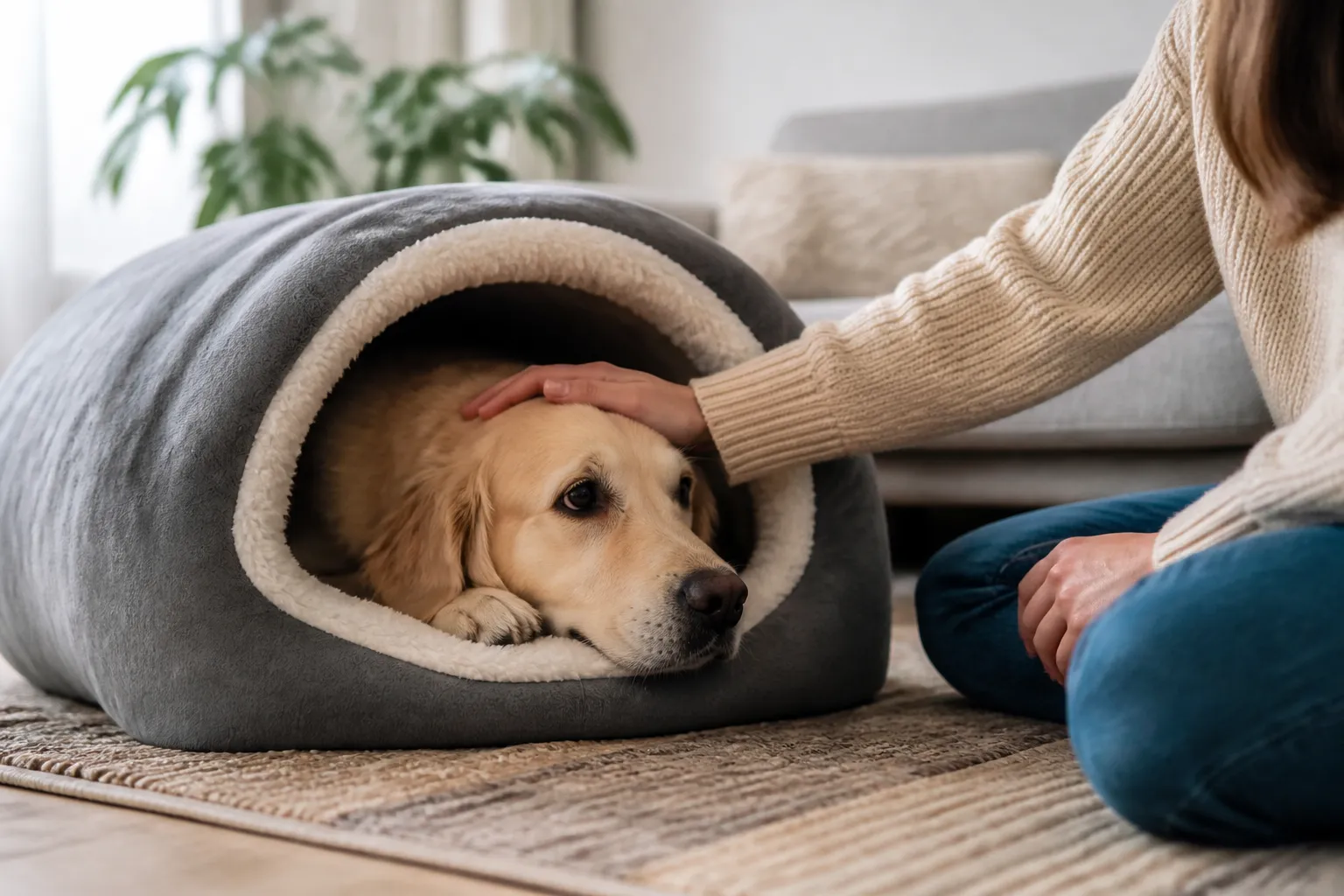
Set up a quiet retreat where your dog can choose to rest. A crate may work for a dog that already views it positively, while another dog may prefer a bed behind furniture or in a low traffic room. Add familiar bedding and a safe chew or food toy. Keep the area accessible, and never use it for punishment. During noise events, close curtains, reduce flashes, and add steady background sound such as a fan or quiet music.
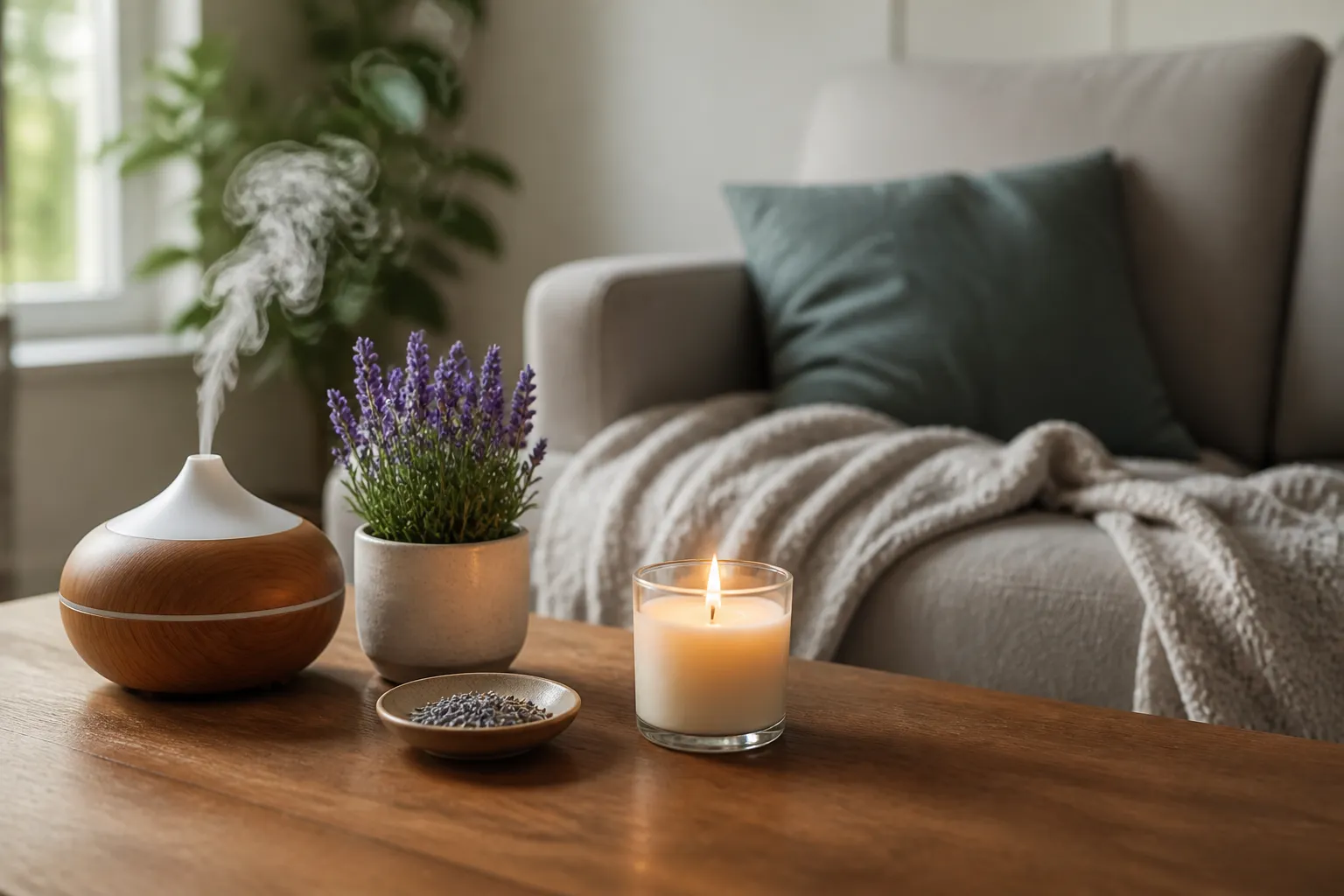
A safe space works best before panic begins. Invite your dog there with treats during calm periods, then allow voluntary departures. If the dog scratches, vocalizes intensely, or attempts escape when confined, do not assume a crate is calming. Use a larger, open retreat and seek guidance if confinement increases distress.
Maintain Predictable Daily Rhythms
Regular mealtimes, walks, rest, play, and training can make the environment easier to predict. Predictability does not mean every day must be identical. It means your dog receives consistent cues and appropriate outlets. Offer exercise suited to age, health, and breed tendencies, but avoid exhausting a distressed dog. Sniffing walks, food puzzles, gentle play, and short training sessions can provide mental activity without creating excessive arousal.
Behavior Techniques With Strong Practical Value
Reward Calm Choices
Notice quiet, relaxed behavior and reward it promptly with food, praise, play, or access to something enjoyable. For example, when your dog lies on a mat while visitors move around, place a treat beside the paws. Keep your voice calm and your movements unhurried. Rewards teach the dog which behaviors are safe and useful. They do not reward a feeling of fear; they reinforce the calm response you want to strengthen.
Begin in easy circumstances. If the dog cannot eat, respond to cues, or recover, the situation is probably too difficult. Increase distance from the trigger, reduce its intensity, or return to an easier exercise. Learning requires the dog to remain below the point where panic overwhelms attention.
Use Desensitization and Counterconditioning
Desensitization means presenting a trigger at a low enough intensity that the dog can remain comfortable. Counterconditioning pairs that trigger with something valuable, commonly small treats. Together, these methods can change the dog’s emotional association over time.
Suppose your dog fears the doorbell. Begin with a very quiet recording played briefly while the dog is relaxed and receives food. Stop before signs of tension appear. Across many sessions, gradually increase volume or duration, but only when the dog remains comfortable. If barking, hiding, freezing, or frantic movement occurs, the progression was too fast. Lower the challenge next time.
Avoid flooding, which means forcing prolonged exposure until the dog stops reacting. A dog that becomes still may be overwhelmed rather than cured. Flooding can intensify fear and damage trust.
Teach a Practical Settle Behavior
Train a mat, bed, or hand target when no trigger is present. Reward looking at the mat, stepping onto it, lying down, and remaining there briefly. Add duration in small increments, then practice in different rooms. Later, use the skill during mild distractions. A settle behavior gives your dog a clear alternative to pacing or jumping, but it should not be demanded during extreme panic when learning capacity is limited.
Choosing Supportive Products
Products can support a broader plan, but evaluate them by safety, fit, evidence, and your dog’s response. A well designed calming product should be comfortable, durable, clearly labeled, and appropriate for the dog’s size and condition. Introduce one new item at a time during a calm period so you can identify benefits or adverse reactions.
Calming Beds and Retreats
A supportive bed with washable fabric can make resting easier, particularly when placed in a quiet location. Raised edges may appeal to dogs that like to lean, while an open design suits dogs that dislike enclosure. The best bed is one your dog voluntarily uses. Do not drag a reluctant dog onto it or block all exits.
Pressure Garments
Some dogs appear more settled in a properly fitted anxiety wrap or vest. Evidence and individual responses vary, so treat it as an optional aid rather than a guaranteed solution. Check breathing, movement, skin, and temperature. Introduce the garment gradually, rewarding short, comfortable wear. Remove it if the dog becomes hotter, more distressed, or restricted.
Food Toys and Chews
Lick mats, stuffed food toys, and appropriate chews can encourage quiet engagement. Use only items your dog can handle safely, supervise new products, and account for calories. A food toy is unsuitable when the dog is too frightened to eat. It should complement, not replace, training and environmental management.

Pheromone and Supplement Products
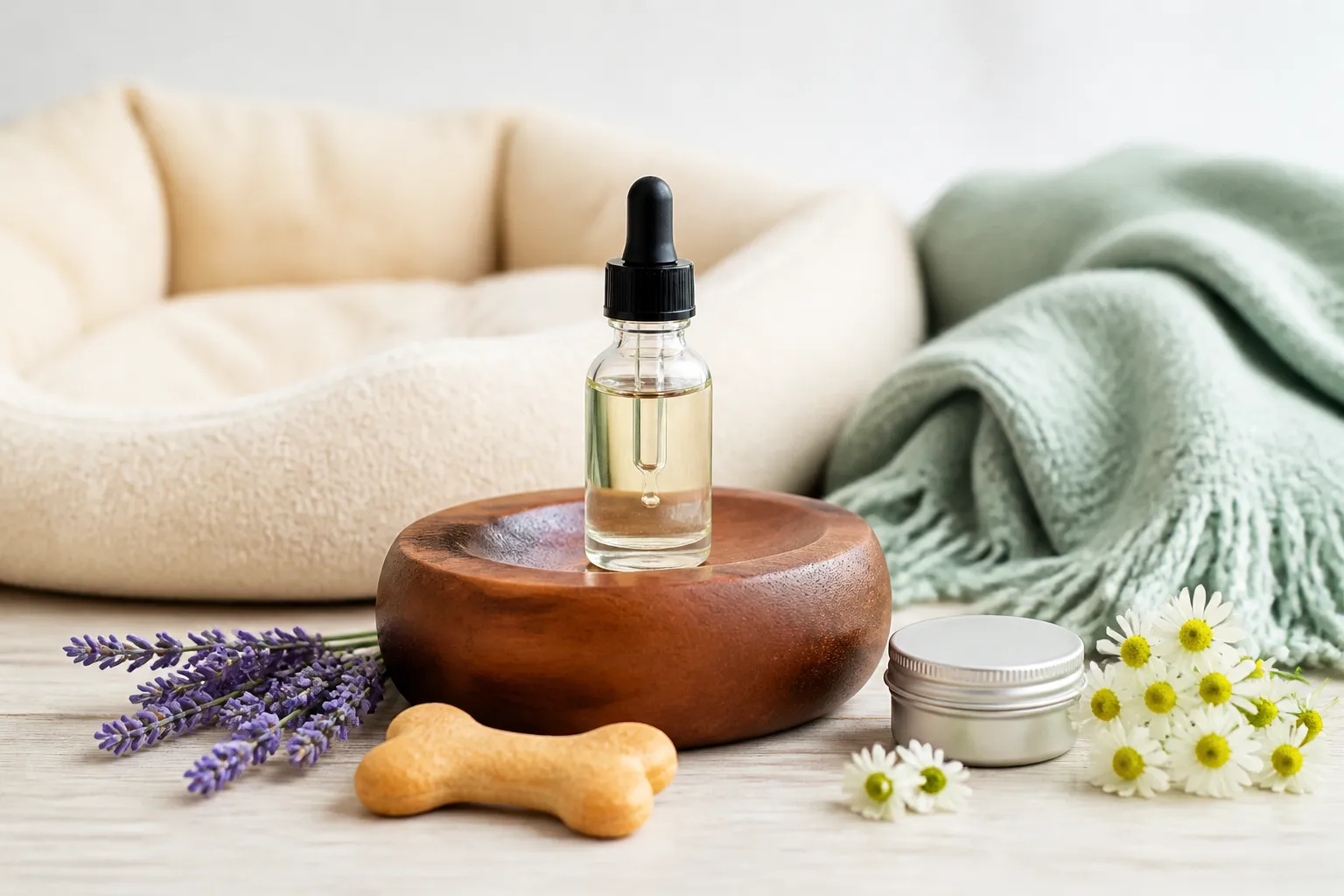
Synthetic pheromone products and calming supplements are marketed for various forms of stress. Some dogs may show improvement, while others show little change. Product quality, ingredients, interactions, and research support differ. Ask a veterinarian before using supplements, especially for puppies, seniors, pregnant or nursing dogs, or dogs taking medication. “Natural” does not automatically mean harmless. Essential oils can irritate or poison dogs, and concentrated products should never be applied casually.
Medication and Professional Treatment
For persistent, severe, or dangerous anxiety, medication may be appropriate under veterinary supervision. Medication can lower distress enough for behavior modification to work; it is not a moral failure or a substitute for training. A veterinarian may recommend short term support for predictable events or a longer plan for ongoing anxiety. Follow instructions precisely, monitor changes, and report side effects. Never alter a dose independently.
A qualified veterinary behaviorist or reward based trainer can identify triggers, design gradual exercises, and help prevent setbacks. Avoid practitioners who rely on intimidation, punishment, shock, or claims that fear is simply disobedience. Behavior treatment should improve safety and communication, not suppress warning signals.
Managing Common Anxiety Situations
Separation Related Distress
Signs may begin when you pick up keys, put on shoes, or leave. Video recording can reveal what happens after departure, provided recording does not increase risk. Begin with absences shorter than the dog’s panic threshold, sometimes only a few seconds, and increase gradually. Keep departures and returns calm. Provide a safe area, exercise beforehand when appropriate, and avoid leaving the dog alone longer than it can currently tolerate. Repeated panic can strengthen the problem, so temporary help from family, a sitter, or daycare may be valuable while training progresses.
Thunderstorms and Fireworks
Prepare before the event. Close windows, secure doors, bring the dog indoors, and check identification details. Offer the retreat and background sound early. Stay nearby if possible, but avoid dramatic reassurance or forced interaction. Calmly provide treats when the dog can eat and let the dog choose contact or distance. For predictable severe reactions, discuss preventive medication with your veterinarian well before the season.
Travel, Grooming, and Veterinary Visits
Use short practice trips, reward relaxed behavior, and gradually increase duration. A secured harness, carrier, or crate protects everyone. For grooming and veterinary handling, ask whether visits can begin with low pressure introductions. Bring familiar rewards and practice gentle touching at home. Do not force greetings or restraint beyond what safety requires; a professional plan may include pre visit medication.
Mistakes That Commonly Slow Progress
Punishing barking, accidents, destruction, or growling can add fear and remove useful warnings. Ignoring severe distress is also not a treatment. A dog cannot reliably “get over it” through repeated panic. Another mistake is changing several products and techniques simultaneously. You may not know what helped, caused discomfort, or made no difference.
Progress is rarely linear. A bad storm, illness, disrupted routine, or frightening incident can cause temporary regression. Return to an easier level, reinforce successful behaviors, and review the plan. Measure improvement by shorter recovery, greater willingness to eat, more voluntary resting, safer behavior, and better ability to function, not only by the total absence of barking.
A Practical Home Plan
Start by identifying the likely trigger and recording observable signs. Next, arrange veterinary advice when the onset, intensity, or medical risk warrants it. Establish a safe retreat, predictable routine, and appropriate enrichment. Teach calm skills away from triggers. Then design exposures that remain mild enough for successful learning. Practice briefly and frequently rather than pushing through one exhausting session.
Keep treats ready in strategic locations, but choose rewards your dog values and can digest. Use clear criteria: reward one calm breath, then several seconds of relaxed posture, then a longer interval. End while the dog is succeeding. Everyone in the household should follow the same rules about doors, greetings, confinement, and rewards. Consistency reduces confusion.
Protect safety during episodes. Secure gates, windows, balconies, and escape routes. Check collars, tags, and microchip information. Separate the dog from children or other pets if fear makes interactions unpredictable. Do not corner, grab, or hug a panicked dog. Give space and call a professional if there is bite risk.
Frequently Asked Questions
Can I comfort my anxious dog?
Yes. Calm companionship does not create anxiety. Sit nearby, speak softly, and offer contact if your dog seeks it. Avoid forcing cuddles, excited reassurance, or repeatedly touching a dog that wants distance. Your behavior should communicate safety without adding stimulation.
Should I ignore anxious behavior?
No. Ignoring a dog in severe distress can leave the underlying problem untreated. Instead, reduce the trigger, provide safety, and reward manageable calm behavior. Some attention seeking behaviors may change with training, but fear signals deserve thoughtful response.
Are calming treats effective?
They may help some dogs, depending on ingredients and the reason for anxiety, but results are variable. Check the label, discuss ingredients with a veterinarian, and avoid relying on treats as the entire plan. Stop and seek advice if unusual sleepiness, stomach upset, agitation, or other changes appear.
Can music or white noise reduce anxiety?
Steady sound may mask unpredictable noises for some dogs, especially when combined with a retreat. Keep volume moderate and observe body language. If the dog becomes more alert, stop using it. Sound is an environmental aid, not a universal cure.
How quickly should improvement happen?
Timing varies with cause, severity, duration, health, and training quality. Some dogs settle with environmental changes, while established fears may require weeks or longer. Set small goals and review progress regularly. If there is no improvement or safety is worsening, consult a veterinarian or qualified behavior professional.
Is a crate always helpful?
No. A crate helps only when the dog associates it with comfort and can remain safe inside. Dogs with confinement anxiety may panic, injure themselves, or intensify vocalization. Choose an open retreat or professional plan when necessary, and never use a crate as punishment.
When is anxiety an emergency?
Seek urgent veterinary help for self injury, collapse, breathing difficulty, suspected poisoning, escape danger, severe aggression, inability to settle, or signs of significant pain. Contact a veterinarian promptly for sudden behavioral change, prolonged refusal of food or water, or repeated gastrointestinal symptoms.
Conclusion
Effective anxiety relief for dogs is a measured process, not a single purchase or quick correction. Start with medical evaluation when appropriate, reduce preventable triggers, create a voluntary safe space, and build calm behavior through rewards and gradual exposure. Select beds, wraps, food toys, pheromones, or supplements only when they fit your dog’s needs and safety profile. For severe cases, veterinary treatment and qualified behavioral support can make learning possible and protect quality of life.
Your dog does not need to face fear alone, and progress does not require perfection. Observe carefully, work below the panic threshold, celebrate small improvements, and adjust the plan when circumstances change. Patient, humane support is persuasive because it addresses both the visible behavior and the emotion underneath it. With consistent management and appropriate guidance, many dogs can become more confident, recover faster, and participate more comfortably in everyday life.