
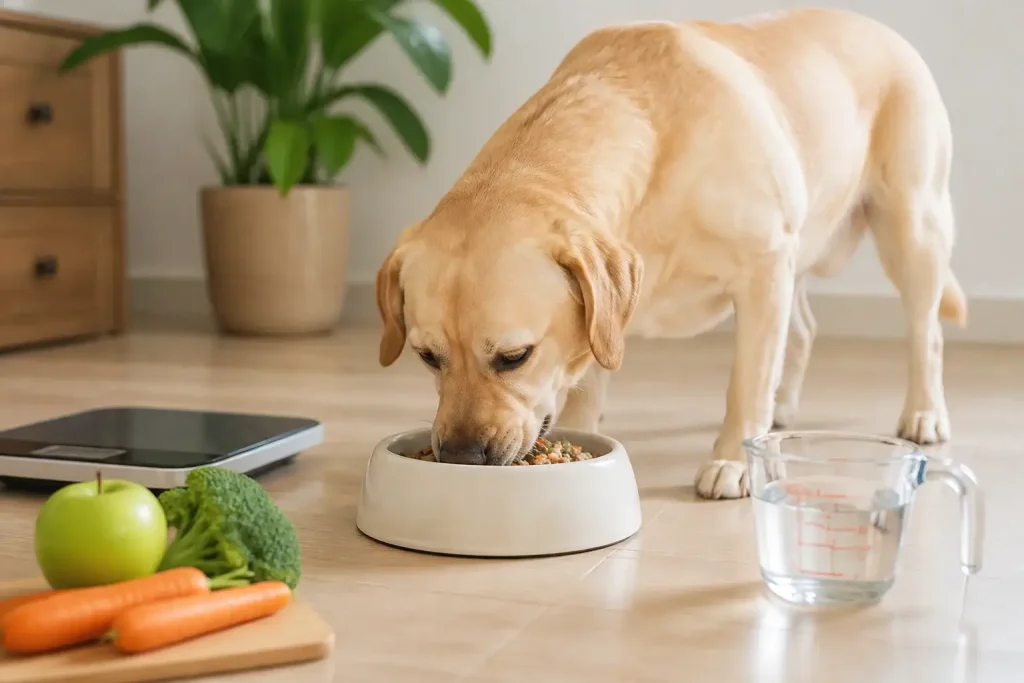
A healthy weight-loss plan for a dog combines measured nutrition, appropriate exercise, veterinary guidance, and regular monitoring. The safest approach is gradual: reduce excess calories without depriving your dog of protein, essential nutrients, hydration, or enjoyment. Because obesity can be linked with arthritis, endocrine disease, pain, medications, or other health concerns, speak with a veterinarian before making major dietary changes, especially if your dog is very overweight, elderly, pregnant, growing, or chronically ill.
A successful plan should fit your dog’s age, breed type, activity level, body condition, medical history, preferences, and household routine. The goal is not simply a lower number on the scale. It is better mobility, easier breathing, improved stamina, healthier joints, and a longer opportunity to enjoy daily life.
Weight Loss Diet For Dogs: Understanding Your Dog’s Healthy Weight
Body weight alone cannot tell you whether a dog is overweight. A muscular dog may weigh more than a breed-average chart suggests, while a small-framed dog may appear normal on paper but carry excessive fat. Veterinarians commonly assess body condition by looking at the ribs, waist, abdominal tuck, spine, and hips.
At an ideal condition, you should be able to feel the ribs with light pressure, although they should not be sharply visible in most dogs. Viewed from above, the dog should have a discernible waist behind the rib cage. Viewed from the side, the abdomen should rise toward the hind legs rather than hanging level with the chest. A thick fat covering, absent waist, or rounded abdomen can indicate excess body fat.
Ask your veterinarian to assign a body-condition score and establish a realistic target weight. This professional assessment is more useful than choosing a target based on a food label or an internet calculator. It also creates a baseline for measuring progress.
Choosing an Effective Diet
Weight-management food
A veterinary weight-management diet is often the most practical choice for a dog that needs meaningful calorie restriction. These formulas are designed to provide fewer calories per serving while supplying adequate protein, vitamins, and minerals. Many include increased fiber, which may help a dog feel fuller, and controlled fat levels, which reduce calorie density.
Not every “light,” “healthy,” or “senior” food is a true weight-loss diet. Some products are intended only to maintain weight or support general wellness. Compare calorie information, not just package claims. The label may list calories per cup, can, pouch, gram, or kilogram. Those units are not interchangeable, so calculate portions using the same measurement consistently.
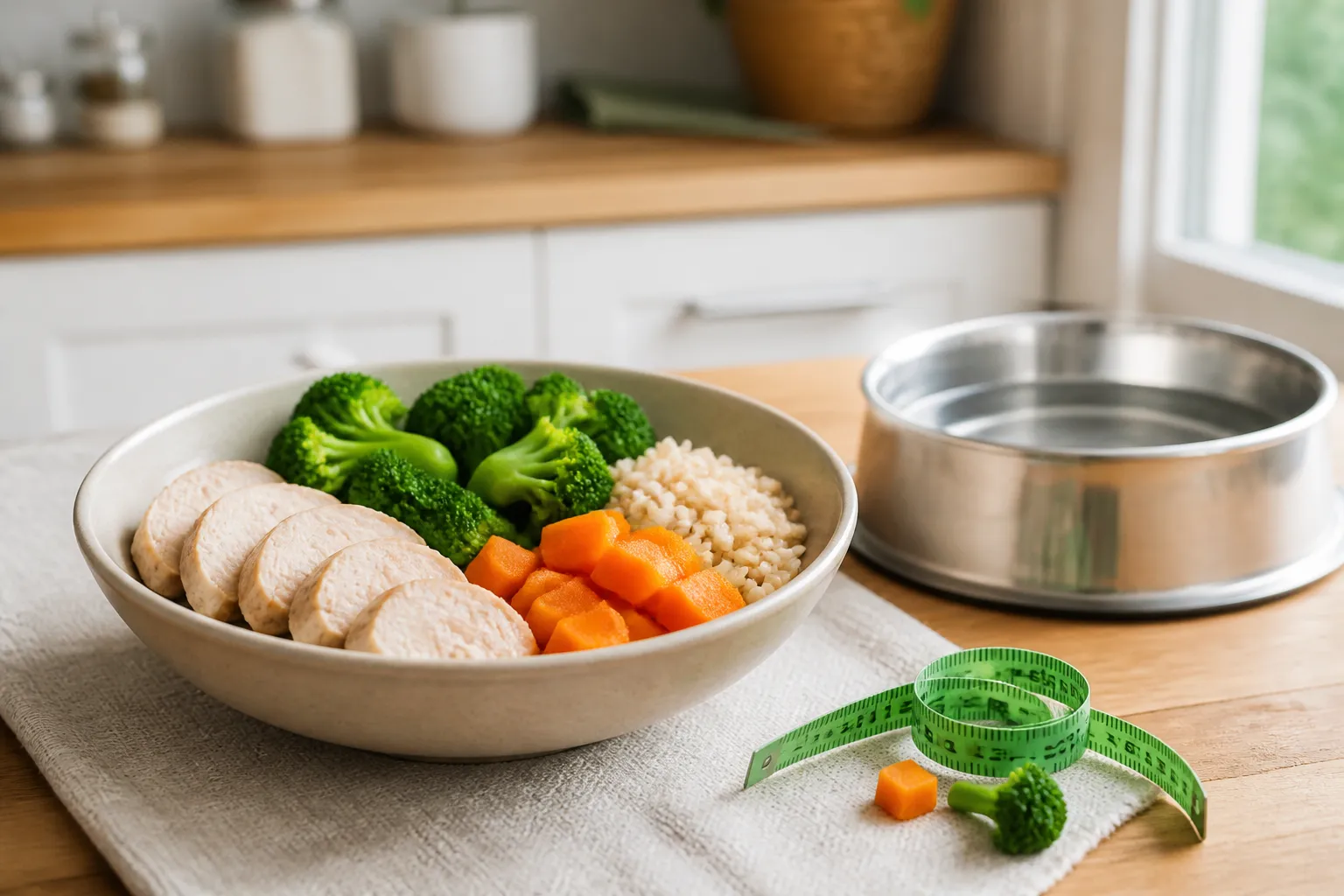
A therapeutic formula may be especially helpful when a dog is constantly hungry, has lost muscle, or needs dietary support for another condition. Your veterinarian can recommend a product that accommodates allergies, digestive sensitivity, kidney disease, diabetes, or joint problems when relevant.
Regular complete food
Some dogs can lose weight while eating their current complete and balanced food, provided portions are carefully reduced and the dog remains nutritionally satisfied. This option may work when the required calorie reduction is modest and the existing food is suitable for the dog’s life stage.
However, simply cutting the portion dramatically can create problems. A dog may receive too little protein or essential micronutrients, become intensely hungry, or lose lean muscle along with fat. If reducing the regular food would make the serving unusually small, ask your veterinarian about switching to a calorie-controlled formula instead.
Wet, dry, or mixed feeding
Dry food is convenient to store and measure, while wet food often contains more water and may provide greater volume for the same calorie intake. Mixing formats can give variety, but calories from both must be counted. Never assume that replacing a portion of dry food with an equal volume of canned food produces an equal calorie reduction.
A kitchen scale can improve accuracy because cups vary with kibble size, shape, and packing. Weighing food in grams also makes adjustments easier when the veterinarian recommends a small change.
Building the Daily Feeding Plan
Begin with the veterinarian’s recommended daily calorie amount or portion. Divide the allowance into two or more meals rather than leaving food available all day. Scheduled feeding makes intake easier to observe and can reduce accidental overfeeding.
Measure every meal before placing the bowl down. If several people feed the dog, store the day’s allowance in one container. Each person can offer food from that container, preventing multiple family members from believing the dog has not yet eaten.
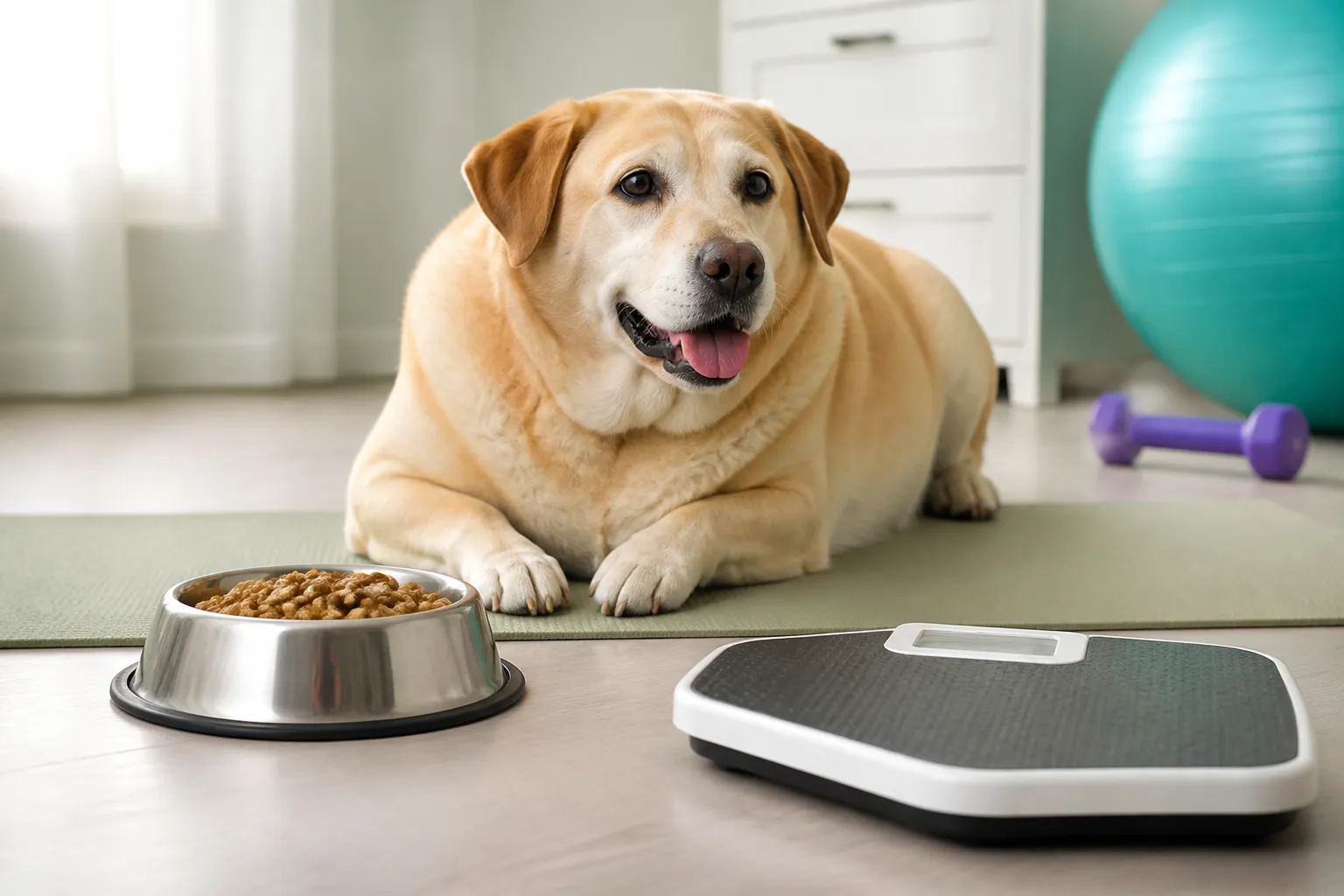
Keep a written or digital record for the first few weeks. Record the main food, treats, chews, supplements, table scraps, medications hidden in food, and training rewards. Small extras can add up, particularly for a small dog. If a dog receives a dental chew or stuffed toy daily, those calories belong in the daily budget.
Food puzzles and slow feeders can make a controlled portion last longer. Scatter feeding in a secure area, using part of the meal for training, or placing kibble in a suitable puzzle can provide mental stimulation without adding calories. Introduce these methods gradually and supervise devices that could break or be swallowed.
Treats and household rules
Treats should be limited and intentional. A common veterinary recommendation is to keep extras to a small portion of daily calories, but the appropriate amount depends on the dog and the overall plan. Ask your veterinarian for a specific allowance if weight loss is difficult.
Reserve a portion of the regular diet as training rewards. This keeps the reward familiar and nutritionally consistent. Small pieces of suitable vegetables may be appropriate for some dogs, but foods safe for people are not automatically safe for dogs. Avoid toxic or hazardous items such as chocolate, grapes, raisins, onions, garlic, alcohol, xylitol, cooked bones, and foods that present choking risks.
Do not use hunger as a test of whether a dog needs more food. Dogs may beg because of habit, attention, boredom, or access to rewarding scraps. Respond with a walk, gentle play, grooming, or calm interaction when appropriate. Everyone in the household must follow the same rule; one unmeasured snack can undermine several careful meals.
Supporting Weight Loss With Activity
Diet controls calorie intake, but movement helps preserve muscle, supports joint function, and improves quality of life. Start at a level your dog can tolerate. An overweight dog may tire quickly, overheat, or develop sore joints, so forcing long runs can cause injury and discourage future activity.
For a healthy dog, several short walks may be better than one demanding outing. Increase duration or pace gradually, observing breathing, gait, enthusiasm, and recovery. Low-impact activities, such as controlled walking or swimming where safely supervised, may suit some dogs with joint discomfort, but a veterinarian should guide exercise for dogs with arthritis, heart disease, respiratory disease, or severe obesity.
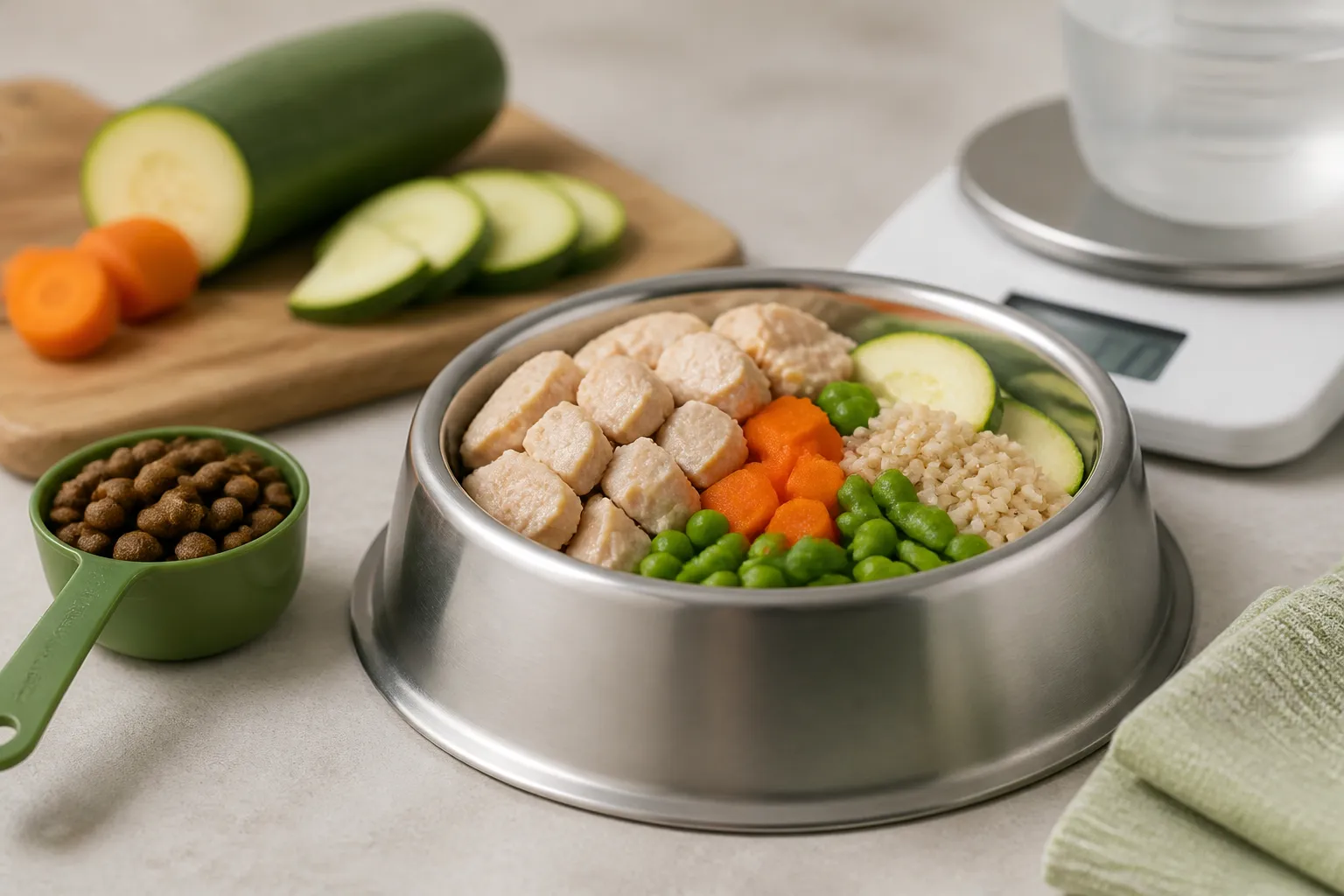
Play can add movement without feeling like formal exercise. Gentle retrieve, scent games, hallway walking, and short training sessions can be adapted to the dog’s ability. Avoid repeated jumping, abrupt turns, and slippery floors when joints or balance are concerns.
Exercise is not permission to feed unlimited rewards. Use the dog’s measured meal for training whenever possible. Also remember that activity trackers and calorie estimates can be imprecise; feed according to observed body-condition progress and professional advice rather than automatically replacing every estimated calorie burned.
Monitoring Progress Safely
Weigh your dog at regular intervals, using the same scale and similar conditions whenever possible. A veterinary clinic may provide the most reliable measurement, particularly for large dogs. At home, a small dog can sometimes be weighed while being held, followed by weighing the person alone and subtracting the difference. Larger dogs may need a pet scale.
A gradual reduction is generally safer than rapid loss. The appropriate rate depends on starting condition, age, health, and diet, so your veterinarian should define the target. Rapid loss, persistent weakness, vomiting, diarrhea, refusal to eat, or marked behavior changes warrant prompt veterinary contact.
Track more than kilograms or pounds. Note waist shape, rib feel, stamina, willingness to climb stairs, coat condition, stool quality, and signs of hunger. Photographs taken from the side and above can help reveal changes that are difficult to notice day by day.
Schedule reassessments according to veterinary advice. If weight remains unchanged after consistent measurement, hidden calories, incorrect serving calculations, reduced activity, or an underlying medical issue may be involved. Do not keep cutting food without guidance. The better solution might be a different formula, a revised calorie target, or diagnostic testing.
Protecting lean muscle
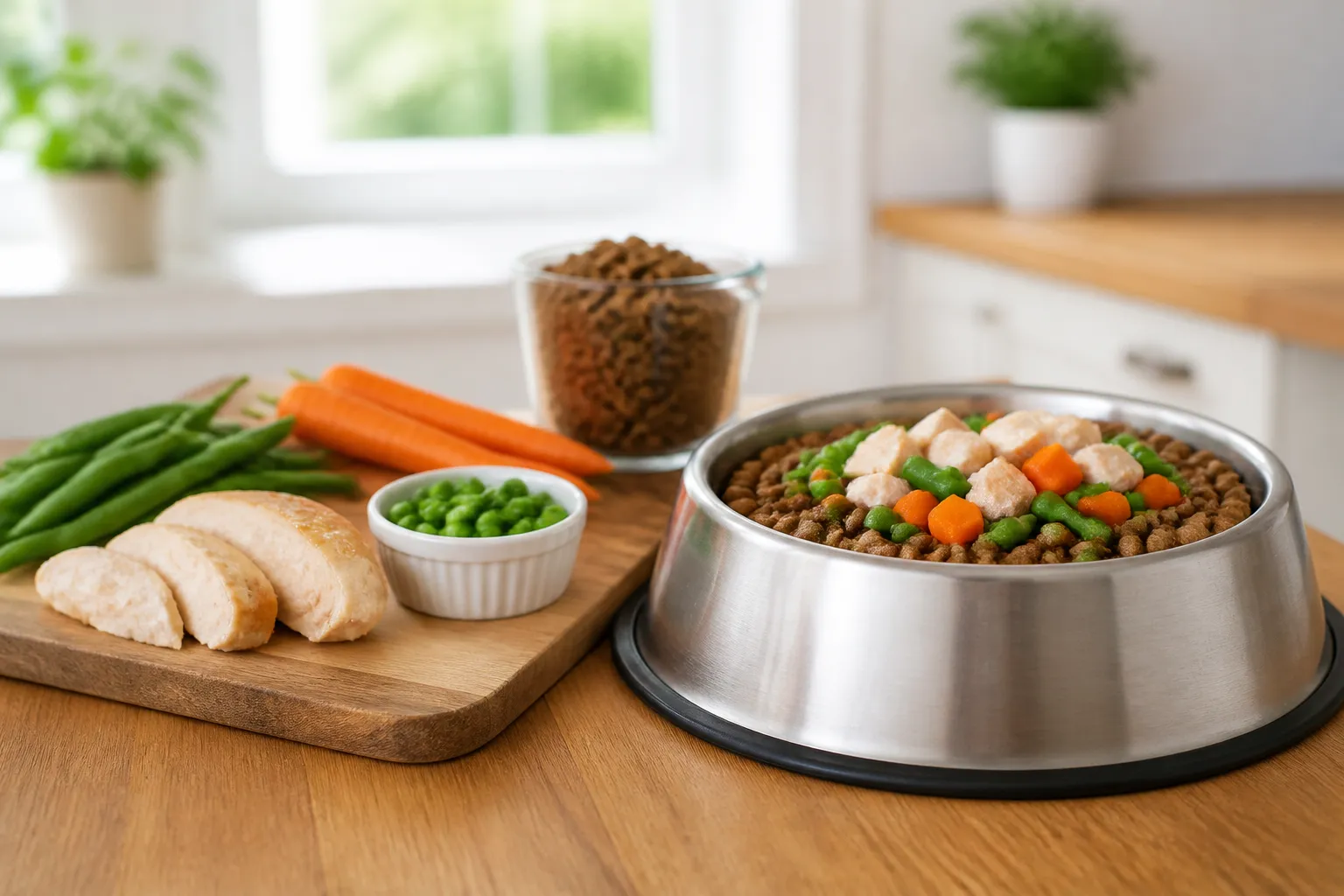
Weight loss should focus on reducing fat while preserving muscle. Adequate protein, gradual loss, and suitable activity all help. A dog that appears thinner but becomes weak, less stable, or unusually tired may be losing too much lean tissue or may have another health problem.
Older dogs and dogs with chronic disease need particular care. Their calorie needs, protein requirements, and exercise tolerance can differ substantially. A veterinary nutritionist may be useful when the case is complicated or when a homemade diet is being considered.
Homemade Diets and Supplements
Homemade diets can appear attractive because ingredients are visible and portions seem controllable. Yet designing a complete diet for a dog requires more than combining meat, vegetables, and rice. Calcium, essential fatty acids, vitamins, minerals, and amino acids must be balanced for the individual animal. A recipe found online may be incomplete or inappropriate.
If you prefer home-prepared food, consult a veterinarian with nutrition expertise and follow the recipe precisely. Substituting ingredients, omitting supplements, or changing cooking methods can alter nutritional content. Regular veterinary monitoring remains important.
Supplements do not replace calorie control. Joint supplements, fiber products, probiotics, or fat burners should be discussed with a veterinarian before use. Some products have uncertain quality, interact with medication, or add calories. Never use human weight-loss medication or appetite suppressants unless a veterinarian specifically prescribes a veterinary treatment.
Selecting a Product Responsibly
When comparing weight-management foods, begin with nutritional adequacy and calorie density. Choose a product appropriate for your dog’s life stage and health needs. Examine feeding directions, but treat them as starting guidance rather than a guaranteed prescription. Individual dogs may require more or less food.
Look for clear calorie information and reliable serving units. Consider whether your dog accepts the texture and whether the food can be stored safely. A nutritionally excellent product is not useful if the dog refuses it or if the household cannot measure it consistently.
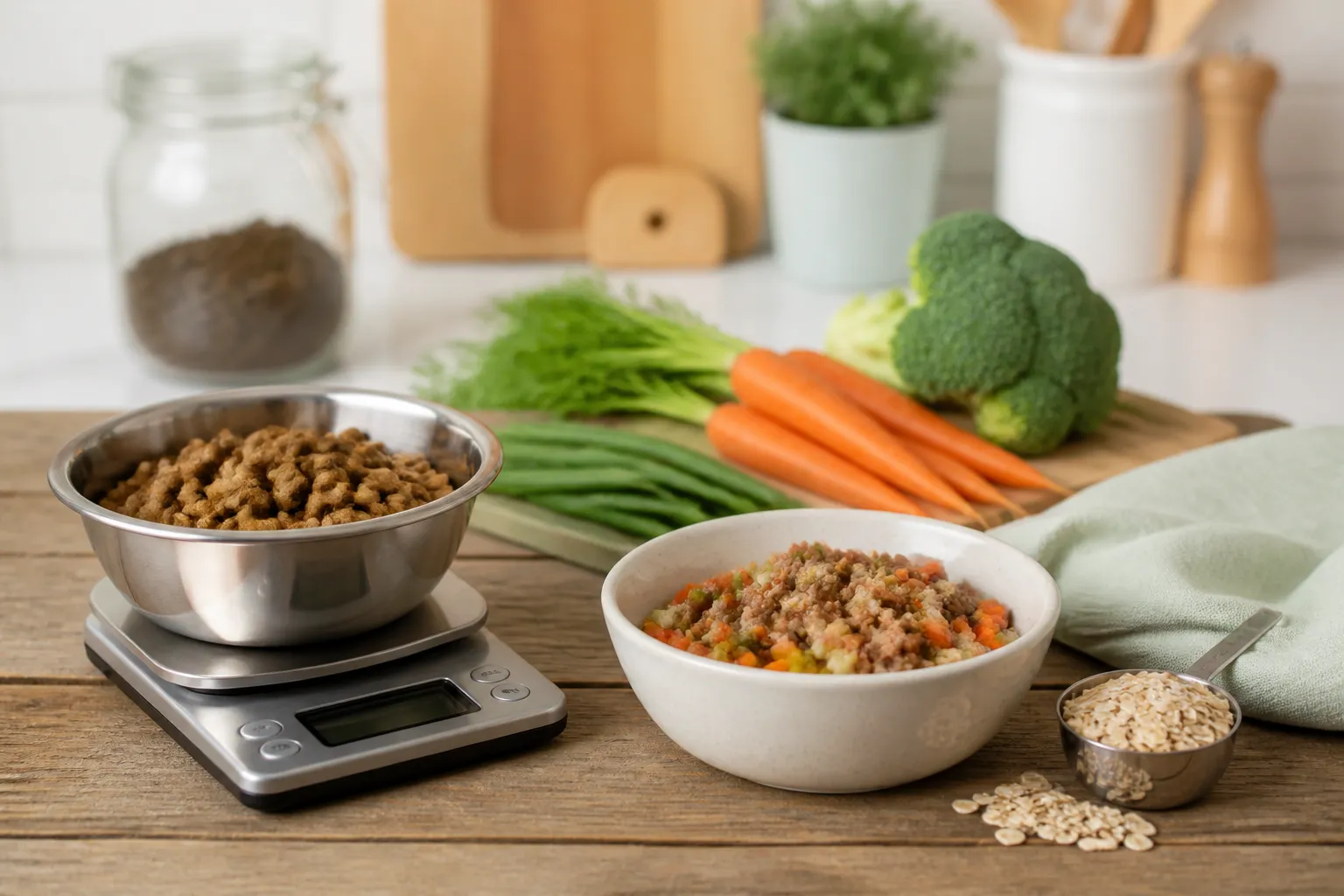
Change foods gradually over several days unless a veterinarian directs otherwise. Mix increasing amounts of the new food with decreasing amounts of the old. Slow transitions may reduce digestive upset, though some medical situations require a faster change. Stop and contact the veterinarian if severe vomiting, diarrhea, facial swelling, breathing difficulty, or refusal to eat occurs.
Common Mistakes to Avoid
One mistake is trusting the bowl rather than a measurement. “One scoop” can vary considerably, and a generous cup can quietly add meaningful calories. Another is counting only meals while ignoring treats, chews, leftovers, and food used to administer medication.
A third mistake is changing several variables at once. If you switch food, add supplements, and dramatically increase exercise simultaneously, it becomes difficult to identify what helped or caused a problem. Introduce changes thoughtfully unless urgent medical advice requires otherwise.
Some owners expect visible results immediately and become discouraged. Body fat does not disappear overnight, and day-to-day scale changes may reflect hydration or digestion. Consistency matters more than dramatic restriction.
Avoid labeling all begging as genuine nutritional need, but do not dismiss persistent hunger automatically. Excessive hunger can indicate an unsuitable diet, insufficient meal volume, medication effects, or disease. Discuss it rather than improvising.
Never punish a dog for seeking food. Food-related frustration can increase stress and may lead to stealing or conflict. Use predictable meals, enrichment, and calm redirection to create a supportive routine.
Frequently Asked Questions
How do I know whether my dog needs to lose weight?
Look for ribs that are difficult to feel, little or no visible waist, a rounded abdomen, reduced stamina, or fat deposits around the neck and tail base. These signs are useful clues, not a diagnosis. Ask a veterinarian for a body-condition assessment and target weight.
Can I feed less of the usual food?
Sometimes, but not always. A modest reduction may be appropriate for a suitable complete diet. A large reduction can leave the dog short of nutrients or intensely hungry. Your veterinarian can determine whether a weight-management formula would provide more food volume and better nutritional coverage.
Should I stop giving treats?
Usually, treats do not need to disappear completely. Count them within the daily calorie allowance, choose small rewards, and consider using part of the dog’s regular meal for training. Avoid high-calorie chews and unplanned table food.
Are grain-free diets better for weight loss?
Grain-free does not automatically mean lower calorie or more effective for weight control. Weight loss depends primarily on total calories, nutritional adequacy, portion accuracy, and adherence. Select food for the dog’s health needs rather than a marketing label.
Can exercise alone make my dog lose weight?
Exercise supports fitness and muscle, but controlling food intake is usually central because activity calories can be difficult to estimate. A dog may compensate by eating more or may be unable to exercise enough safely. Combine measured feeding with gradual movement.
What if my dog is always hungry?
Ask whether the diet provides enough volume, fiber, and protein for your dog’s situation. Slow feeders, food puzzles, divided meals, and low-calorie enrichment may help. Persistent or sudden appetite changes deserve veterinary evaluation, particularly if thirst, urination, weakness, or weight change also occurs.
How quickly should results appear?
Progress is typically gradual, and the appropriate rate varies. Your veterinarian can establish a safe target and review results. If there is no change despite accurate portions, reassess calories, treats, activity, and possible medical factors instead of making extreme cuts.
Is raw food appropriate for weight loss?
Raw feeding does not inherently solve excess weight and may create nutritional, food-safety, or preparation concerns. If considering it, discuss the plan with a veterinarian and ensure the diet is complete, balanced, and appropriate for the dog and household.
Can puppies follow a weight-loss diet?
Puppies need nutrients for growth, so intentional calorie restriction can be risky unless medically supervised. Use a puppy-appropriate diet, monitor body condition, and ask your veterinarian about portions. Growing dogs should not be placed on an adult weight-loss plan casually.
What should I do if my dog stops eating?
A sudden refusal can signal illness, dental pain, stress, medication effects, or food intolerance. Contact your veterinarian, especially if vomiting, diarrhea, lethargy, pain, or dehydration occurs. Do not respond by repeatedly offering rich foods, which may worsen digestive upset and reinforce selective eating.
A Practical Seven-Day Starting Framework
Day one should focus on measurement and observation. Weigh the current food, list every extra, photograph the dog from useful angles, and schedule veterinary advice if a professional assessment has not occurred. Do not begin severe restriction independently.
During days two and three, establish scheduled meals and remove free feeding. Use a container to hold the entire daily allowance. Inform everyone in the household about the plan, including the amount reserved for training.
During days four and five, introduce enrichment that does not add calories. Try a slow feeder, a safe puzzle, scent work, or a short additional walk if the dog is comfortable. Watch stool quality, energy, appetite, and movement.
During days six and seven, review the record honestly. Confirm that food was measured, treats were counted, and exercise was suitable. Continue the plan only within the target set by your veterinarian. A week may establish routine, but it may be too soon to judge final results.
After the first week, maintain the system and weigh the dog at the agreed interval. Make only one planned adjustment at a time. This method protects the dog from abrupt deprivation and helps the household learn which changes are sustainable.
Conclusion
An effective weight-loss diet for dogs is a measured, nutritionally complete plan supported by appropriate exercise and professional monitoring. The best food is not necessarily the most expensive or the one with the most appealing claims. It is the food that meets your dog’s nutritional needs, fits the medical situation, provides manageable portions, and can be served consistently.
Start with body-condition evaluation, determine a realistic target, count every calorie, and use a scale or consistent measuring method. Divide meals, choose treats carefully, add low-calorie enrichment, and increase activity gradually. Monitor weight, shape, strength, appetite, and comfort rather than relying on a single number.
If progress stalls, do not resort to severe restriction or unverified supplements. Recheck the portions, review hidden calories, and involve your veterinarian. With patience and cooperation, weight management can become a practical household routine that improves mobility, daily comfort, and overall wellbeing for your dog.