
Advanced Dog Training: A Practical Guide
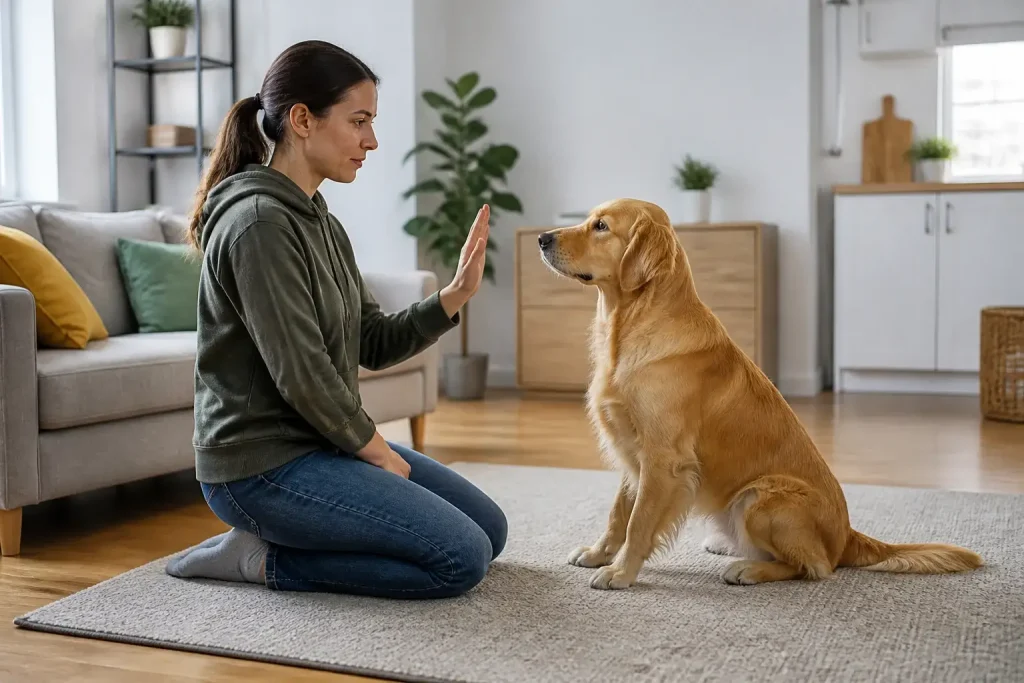
Advanced dog training is not simply teaching a dog more commands. It is the deliberate development of reliable behavior, clear communication, emotional control, and adaptable decision making. A well trained dog should respond in ordinary rooms, busy parks, unfamiliar buildings, and distracting public spaces, while remaining physically and emotionally safe. The goal is not mechanical obedience. It is a cooperative relationship in which the dog understands expectations, the handler manages the environment, and both can recover when a mistake occurs.
This guide explains advanced methods for building lasting results. It covers reinforcement, impulse control, proofing, recall, leash skills, behavior modification, problem solving, and responsible progression. It is suitable for owners who already have basic cues such as sit, down, stay, come, and leave it, and who want greater reliability without rushing the process.
What Advanced Training Really Involves
Advanced training requires three kinds of progress. First, the dog must perform a behavior accurately. Second, the dog must perform it when distractions, distance, duration, or movement increase. Third, the behavior must remain emotionally appropriate. A dog that stays still because it is frightened is not demonstrating the same skill as a dog that calmly chooses to wait.
Training therefore combines learning theory with observation. The handler watches body language, identifies the reason behind behavior, and adjusts difficulty before frustration becomes overwhelming. A dog may ignore a cue because the environment is too difficult, the reward is unimportant, the cue has been repeated too often, or the behavior was never generalized beyond the original teaching location.
Consistency matters, but consistency does not mean rigid repetition. It means using familiar signals, applying fair consequences, reinforcing desirable choices, and preventing rehearsals of unsafe behavior. Everyone who handles the dog should understand the same rules. If one person rewards jumping while another expects four paws on the floor, the dog receives confusing information.
Build a Strong Training System
Define the behavior precisely
Start by describing the behavior in observable terms. “Be calm” is vague; “lie on the mat with all four paws down for two minutes” is measurable. A precise definition helps you notice improvement and select suitable rewards. It also prevents accidental reinforcement. For example, if a dog is asked to wait at a door, opening the door while the dog surges forward rewards rushing, even if the dog eventually moves through politely.
Choose a clear cue and say it once. If the dog does not respond, help it succeed rather than repeating the word several times. Repetition can teach the dog that the first cue is optional. Use a release word, such as “free,” so the dog knows when a stationary behavior has ended. Keep cues distinct, brief, and consistent in tone.
Select effective reinforcement
Reinforcement is anything that makes a behavior more likely to occur again. Food is often efficient, but toys, permission to sniff, access to a person, movement, and opportunities to explore can also be valuable. Reward preference changes with context. A quiet room may require ordinary kibble, while a busy sidewalk may require a more desirable reward.

Deliver reinforcement promptly. The reward should connect clearly with the behavior you want. If a dog sits, then jumps before receiving food, feeding during the jump may strengthen jumping. Begin with frequent rewards, then gradually vary their timing after the behavior is reliable. Do not reduce rewards merely because the dog appears to understand; reinforcement should shift thoughtfully, not disappear suddenly.
Use markers and feedback
A marker, such as a clicker or a brief word, identifies the moment the dog makes the correct choice. It bridges the time between behavior and reward. Marking requires timing, so practice without the dog by saying the marker and imagining the target moment. Avoid marking several seconds after the useful action.
Feedback should be information rather than emotional pressure. If the dog makes an error, pause, reduce difficulty, and try again. Calmly preventing access to a reward can be informative when a behavior is incomplete, but punishment that creates fear, pain, or confusion can damage trust and suppress warning signals. For complex cases, guidance from a qualified, reward based professional is prudent.
Increase Difficulty Systematically
A behavior becomes reliable through controlled changes in three variables: duration, distance, and distraction. Increase only one variable at a time. If a dog can stay for thirty seconds beside you, do not simultaneously move twenty feet away and practice beside a playground. Return to an easier level, then build gradually.
A useful progression is to teach at home, practice in another room, move to a quiet outdoor area, and later introduce moderate distractions. Change the environment in small steps. If performance drops sharply, the exercise has become too difficult, not proof that the dog is stubborn.
Use a success criterion that protects motivation. Several correct repetitions followed by a break are often more productive than one exhausting session. End while the dog is still engaged. Training sessions can be short, but the number and quality of daily opportunities matter. Reward spontaneous desirable choices, including checking in, settling, walking loosely, and disengaging from a distraction.
Impulse Control and Emotional Regulation
Impulse control is not a single command. It is the ability to pause, process information, and choose an alternative behavior. Begin with manageable situations. Ask for a brief pause before opening a food container, attaching a leash, crossing a threshold, or receiving a toy. Reinforce stillness, eye contact, or a hand target, depending on the dog’s needs.
Avoid creating prolonged frustration. A dog that must stare at a forbidden object for too long may become aroused rather than controlled. Instead, teach an active alternative such as turning toward the handler, moving to a mat, or following a hand target. Release the dog frequently so waiting does not feel endless.
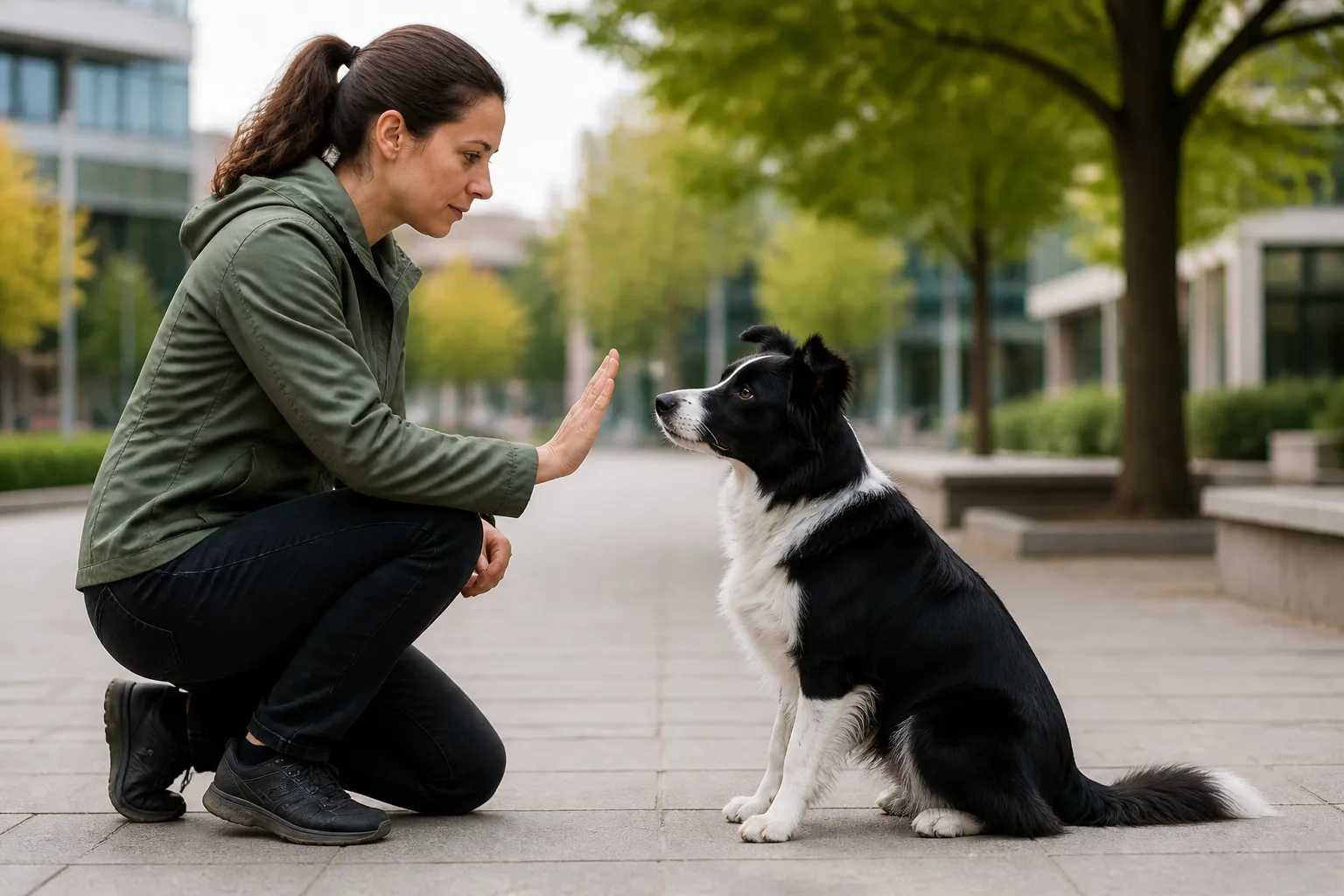
Emotional regulation also depends on sleep, exercise, enrichment, and predictable routines. Physical activity alone does not solve overarousal; intense games may increase excitement in some dogs. Sniffing, chewing, food puzzles, decompression walks, and quiet rest can support learning. If a dog is panicked, lunging, freezing, or unable to eat, increase distance and seek professional help rather than demanding obedience.
Reliable Recall and Outdoor Freedom
Recall is a safety behavior, so build it with exceptional care. Start indoors by pairing the recall cue with valuable rewards. Say the cue once, move away playfully, and reward the dog for turning toward you. Do not use the cue to end every enjoyable activity, deliver unpleasant care, or scold the dog for taking time to return.
Practice on a long line in secure areas before allowing off leash freedom. Reward fast responses generously, then release the dog back to exploration when safe. This teaches that returning does not always end the fun. Add distractions gradually and keep the line attached until performance is dependable in that specific environment.
Emergency recall can use a special cue reserved for serious situations. Teach it with unusually generous rewards and rehearse it occasionally under easy conditions. Never test it casually. A secure fence, properly fitted equipment, local regulations, and reliable supervision remain essential; training does not eliminate environmental risk.
Leash Walking and Public Manners
Loose leash walking means the leash remains slack enough for comfortable movement. It does not require a dog to walk in a strict heel position for an entire outing. Teach the dog that slackness produces forward movement, sniffing, or access to interesting places. When tension appears, stop or change direction calmly, then continue when the leash loosens.
A structured walk can include several modes: relaxed exploration, brief close walking near hazards, and pauses for observation. Use a cue for each mode so expectations are clear. Reward voluntary check ins and turns away from distractions. Avoid wrapping the leash around your hand or relying on equipment that could cause injury if the dog suddenly pulls.
Public manners include ignoring people, waiting politely, settling beneath a table, and passing other dogs without forced greetings. Do not require every dog to interact. Distance is a training tool. Choose quieter times and wider routes when necessary. A dog that can calmly observe without approaching is demonstrating valuable social competence.

Addressing Reactivity and Unwanted Behavior
Reactivity may involve barking, lunging, growling, spinning, or intense staring. It can arise from fear, frustration, excitement, pain, conflict, or learned history. The visible behavior does not identify the cause by itself. A veterinary examination is sensible when behavior changes suddenly, handling becomes painful, or aggression appears.
Management comes first. Prevent rehearsals by increasing distance, using visual barriers, selecting safer routes, and arranging controlled setups. Then pair the trigger with something the dog values while it remains below the point of escalation. The dog should notice the trigger and still be able to eat, move, or respond. Over time, carefully reduced distance may change the emotional association.
Do not flood a dog by forcing prolonged exposure. Do not punish warning signals such as growling, because suppressing communication can make future incidents less predictable. Use secure equipment, avoid situations beyond your skill, and consult a qualified behavior professional for bite risk, severe fear, or repeated aggression.
Problem Solving Through Observation
When training stalls, record what happens before, during, and after the behavior. This simple pattern is often called antecedent, behavior, and consequence. Note location, distance, time of day, people present, physical state, reward used, and recovery time. Patterns can reveal that a dog struggles only after poor sleep, near narrow passages, or when rewards are delivered too slowly.
Change one factor at a time. If the dog fails, make the next repetition easier. Consider whether the cue is clear, whether the reward competes with the environment, and whether the dog has enough practice in related contexts. Avoid labeling the dog as defiant before examining the training arrangement.
Video can help evaluate timing, posture, leash tension, and handler movement. Review recordings without blame. The purpose is to identify information that is difficult to notice while managing the situation.
Maintenance, Generalization, and Setbacks
Dogs do not automatically transfer a behavior from one context to another. A stay learned in a kitchen may not survive a windy park. Generalize deliberately across rooms, surfaces, handlers, times, weather conditions, and distraction levels. Introduce changes gradually and reward generously when the dog adapts.
Maintenance requires occasional reinforcement throughout life. Use variable rewards only after reliability is established, and continue rewarding difficult choices. Refresh safety behaviors regularly. Periodic regression is normal after illness, travel, adolescence, stressful events, or environmental change. Return temporarily to an easier level instead of treating regression as failure.

Training plans should include rest. Repetition without recovery can produce boredom or irritability. Observe whether the dog remains eager, loose bodied, and able to eat. If not, shorten the session, improve the environment, or stop.
Equipment and Safety
Useful equipment may include a comfortable flat collar or harness, a standard leash, a long line, food pouch, treat container, mat, toy, and safe barriers. Fit every item correctly and inspect it regularly. Equipment should support communication and management, not replace teaching.
Avoid leaving a dog attached to a long line without supervision. Keep distance from roads, unstable surfaces, unfamiliar animals, and objects that can snag. For dogs with escape tendencies, use redundant safety measures when appropriate, such as secure identification and carefully fitted equipment.
Professional help is especially important for aggression, severe separation distress, compulsive behavior, traumatic fear, guarding, and sudden behavioral change. Look for transparent methods, humane handling, clear explanations, and willingness to collaborate with veterinary professionals. Be cautious of guarantees, intimidation, and claims that one technique suits every dog.
A Practical Weekly Plan
A balanced week might include brief daily practice of recall, loose leash movement, settling, and handling. Add two or three focused sessions for a specific goal, such as calm observation near bicycles or staying on a mat during meals. Schedule enrichment and decompression walks rather than making every outing a test.
Begin each session by checking readiness. If the dog is tired, hungry, worried, or overexcited, modify the plan. End with an easy success. Record the environment, behavior, reward, and next step. This creates a progressive plan instead of relying on memory.
For example, a dog learning to settle in a café might first practice on a mat at home, then near a quiet doorway, then at an outdoor table during a calm period. Reward lying down, relaxed breathing, and looking away from passersby. Leave before the dog becomes overwhelmed. Later, increase duration or distractions, but not both at once.
FAQ
How long does advanced dog training take?
There is no universal schedule. Time depends on age, history, temperament, health, environment, handler skill, and the complexity of the goal. Simple reliability improvements may appear quickly, while fear, reactivity, and aggression usually require careful management and sustained practice. Measure progress by improved choices and recovery, not by a fixed deadline.
Should advanced training use treats forever?
Food is a practical reinforcement, not a failure or a bribe. Once a behavior is strong, rewards can vary among food, play, access, praise, movement, and environmental privileges. Difficult situations still deserve meaningful reinforcement. Continuing to reward safety behaviors is responsible maintenance.
Is an electronic collar necessary?
No single tool is necessary for advanced training. Electronic collars can create pain, fear, or unintended associations, particularly when used without expert oversight. Focus first on management, clear cues, reinforcement, gradual exposure, and a well fitted harness or collar. Discuss specialized equipment with a qualified professional when genuine safety needs exist.
What if my dog knows a cue but ignores it?
Check whether the environment is too difficult, the reward is weak, the cue is unclear, or the behavior has not been generalized. Avoid repeating the cue. Move closer, reduce distraction, help the dog succeed, and reward the response. If the change is sudden, consider pain or illness and consult a veterinarian.
Can an old dog learn advanced skills?
Yes, many older dogs can learn new behaviors, although sessions may need to be shorter and physically comfortable. Consider hearing, vision, arthritis, cognitive changes, and medication. Favor low impact exercises, clear visual signals when useful, and frequent rest. A veterinary assessment can identify limitations that affect learning.
Conclusion
Advanced dog training is a continuing process of teaching, observing, adapting, and maintaining. Lasting results come from clear definitions, valuable reinforcement, careful progression, emotional safety, and consistent management. Build behaviors in easy settings before testing them in difficult ones. Treat setbacks as information, protect the dog from preventable rehearsals, and seek qualified help when risk or distress exceeds your experience.
The most useful measure of success is not a flawless performance. It is a dog that can understand choices, recover from distractions, communicate discomfort, and participate safely in everyday life. With patient practice and realistic expectations, advanced skills become dependable habits rather than temporary tricks.