
Starting Puppy Training Well
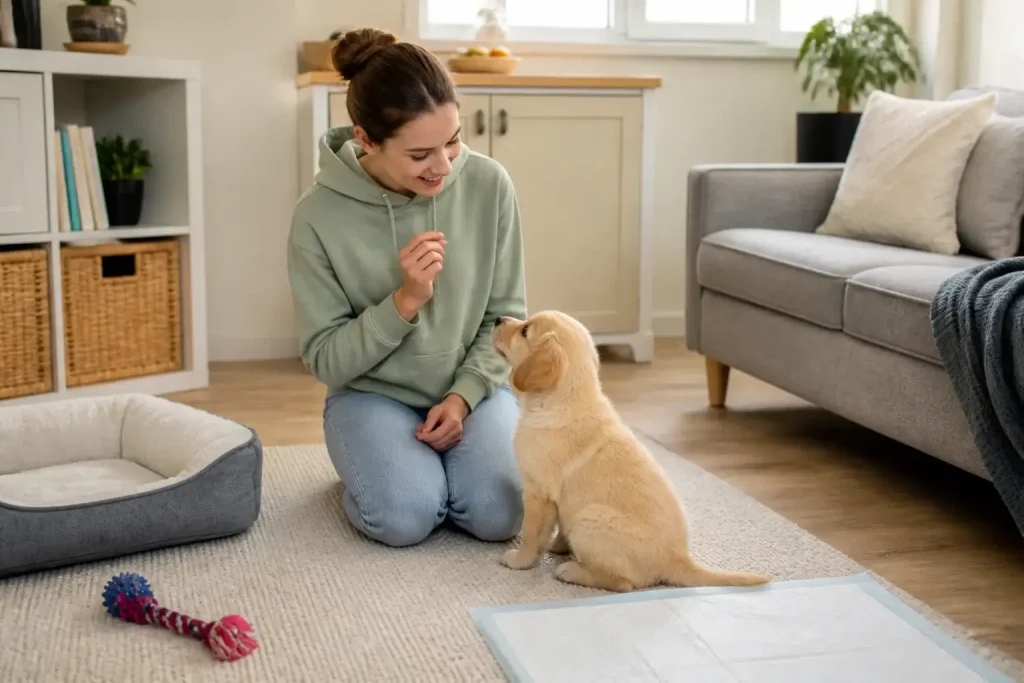
Puppy training is not about demanding perfect obedience from a very young dog. It is a gradual process of teaching communication, building safe habits, and helping a puppy learn how to behave in a human household. The most effective approach combines short lessons, patient supervision, rewards, sensible boundaries, and enough sleep. Begin with the behaviors that affect everyday life: responding to a name, toileting outdoors, settling quietly, walking safely, accepting handling, and coming when called.
Puppies learn constantly, even when no formal lesson is happening. If jumping earns attention, jumping may increase. If chewing furniture provides relief from boredom, furniture becomes attractive. Training therefore includes arranging the environment so desirable choices are easy and mistakes are less rewarding. Close supervision, baby gates, suitable chew toys, and predictable routines prevent many problems before they begin.
Use food, play, praise, or access to something enjoyable as reinforcement. Mark the desired action with a consistent word such as “yes” or with a clicker, then deliver the reward promptly. Timing matters more than volume or excitement. A puppy should understand which behavior produced the reward. Keep sessions brief, perhaps a few minutes, and stop while the puppy remains engaged.
Preparing the Home
Before bringing a puppy home, decide where the puppy will sleep, eat, play, and eliminate. Remove electrical cords, medications, toxic plants, small objects, and unstable decorations. Store food securely and check that fences, balconies, doors, and windows prevent escape. A crate or pen can provide a safe resting area, but it should never be used as punishment.
Choose a comfortable bed, water bowl, washable bedding, safe chew items, a collar or harness, identification, waste bags, and a suitable lead. Ask a veterinarian about food, vaccination timing, parasite prevention, and any breed-specific concerns. Puppies differ greatly in size, energy, sensitivity, and physical development, so equipment and expectations should be adjusted accordingly.
Create a daily rhythm. Meals, toilet opportunities, play, naps, training, and quiet interaction should occur in a reasonably predictable pattern. Predictability reduces confusion and helps adults notice changes. Young puppies often need more sleep than owners expect. Overtired puppies may bite, bark, race around, or ignore familiar cues. A calm nap is frequently more useful than another training exercise.
Choosing Reinforcers
Rewards should be small and easy to consume, especially during repeated practice. Use part of the puppy’s daily food allowance when appropriate, and reduce the size of treats rather than adding unlimited calories. Praise and play are valuable, but not every puppy finds the same reward motivating. Observe what your puppy enjoys, then vary rewards without making them so exciting that the puppy loses focus.
Avoid using fear, physical corrections, intimidation, or prolonged scolding. These methods can suppress behavior temporarily while damaging trust and making handling or learning more difficult. A calm interruption followed by redirection teaches more clearly. If a puppy repeatedly fails, lower the difficulty, improve the environment, or provide a break.
House Training
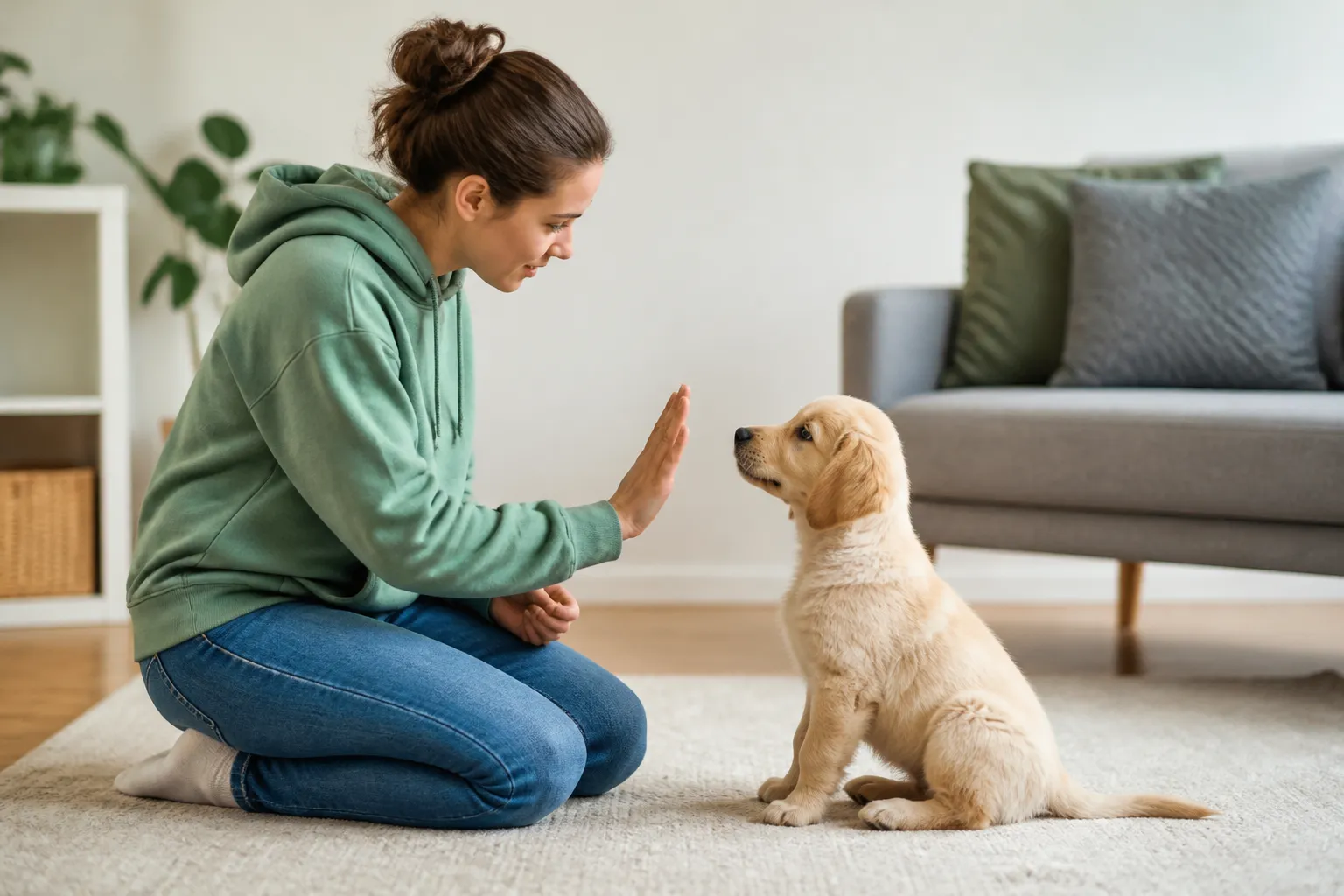
House training depends on timing, supervision, and repetition. Take the puppy outside after waking, eating, drinking, playing, and energetic activity. Very young puppies also need frequent opportunities because bladder control develops gradually. Go to the same general toilet area, remain quiet, and wait. When the puppy finishes, reward immediately outdoors, before returning inside.
Watch for signals such as sniffing, circling, wandering away, sudden restlessness, or heading toward a previous accident. If you notice them, move calmly and quickly. Indoors, keep the puppy near you, use a pen, or attach a lightweight lead temporarily while supervised. When nobody can watch, use a safe confinement area that has been introduced positively.
Accidents are information, not defiance. Clean the area thoroughly with an appropriate enzymatic cleaner so lingering odor does not invite repetition. Do not punish after the event; the puppy is unlikely to connect delayed anger with elimination. Record approximate times if accidents continue, then adjust the schedule. Frequent accidents, straining, diarrhea, or unusual thirst warrant veterinary advice because medical problems can interfere with progress.
Teaching Essential Cues
Name, Attention, and Sit
Teach the name by saying it once in a cheerful voice, then rewarding eye contact or orientation toward you. Practice in a quiet room before adding distractions. The name should predict useful information or pleasant interaction, not repeated reprimands.
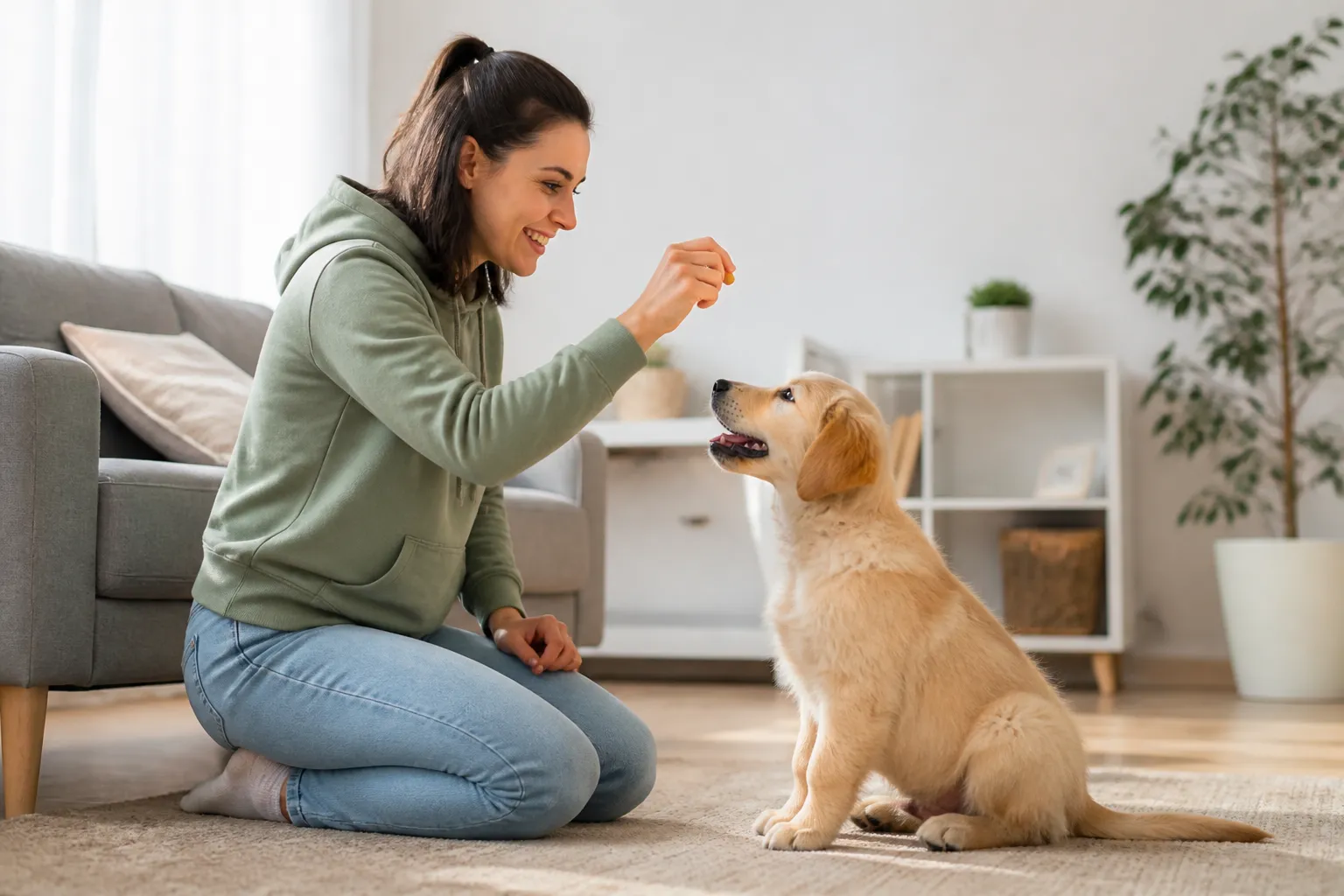
For attention, reward the puppy whenever it voluntarily looks at you. A puppy that regularly checks in is easier to guide outdoors, around visitors, and near hazards. To teach sit, hold a reward near the nose and move it slowly upward and slightly backward. As the puppy’s head follows, the body may lower. Mark the moment the bottom touches the floor, then reward. Avoid pushing the puppy into position.
Add a cue only when the puppy is reliably performing the movement. Say “sit” once immediately before the familiar action, then reward. Gradually reduce the visible lure by using an empty hand, followed by a reward from the other hand. Continue rewarding sometimes after the behavior is complete, while also using praise and access to play.
Come and Leave It
Recall training should begin indoors or in a secure area. Crouch, say “come” brightly, move backward, and reward the puppy for following. Never call the puppy to deliver a frightening experience, end every enjoyable activity, or punish it for arriving slowly. Instead, occasionally call, reward generously, and release the puppy back to play.
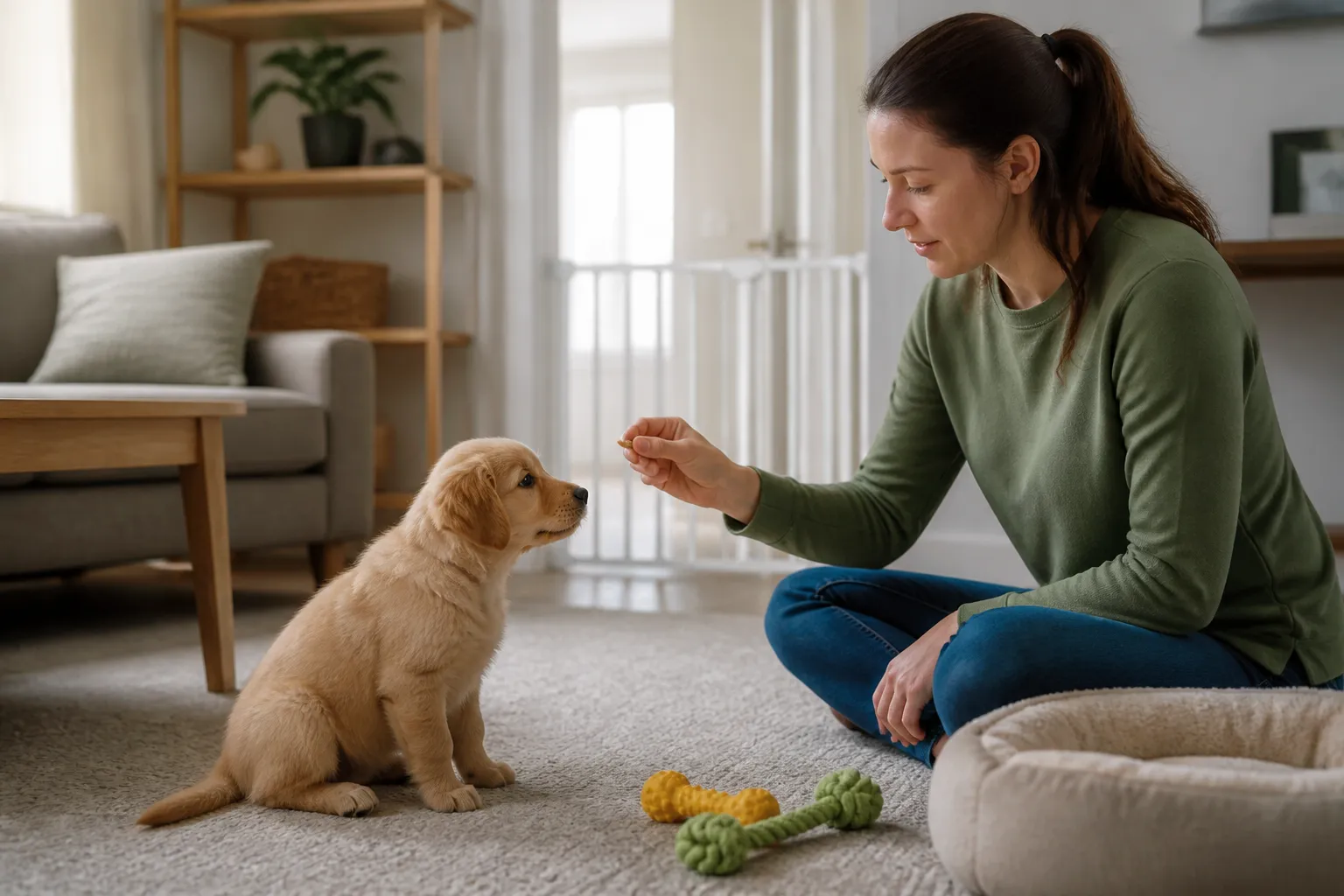
Use a long line outdoors only with suitable supervision and an environment free from entanglement hazards. Increase distance and distractions gradually. A reliable recall is built through many successful repetitions, not one demanding test.
“Leave it” means disengage from an item before taking it. Start with a boring object in a closed hand. When the puppy stops investigating, mark and reward from the other hand. Progress slowly to an object on the floor, then to mild real-life distractions. “Drop” means release something already held. Trade for a reward or another toy; do not chase, pull forcefully, or routinely remove everything without compensation.
Biting and Chewing
Mouthing is normal puppy behavior, especially during play and teething, but painful biting requires consistent guidance. Keep appropriate chew items available in several textures, and move hands away from rough games. If teeth touch skin, pause interaction briefly, then offer a toy. If the puppy becomes more excited when you squeal or pull away, use a quiet response instead.
When biting repeatedly, the puppy may be tired, hungry, overstimulated, or in need of a toilet break. End the activity calmly and provide a quiet rest period. Avoid physical punishment, holding the mouth shut, or deliberately provoking bites. These responses may increase fear and arousal.
Protect furniture by blocking access, supervising closely, and making legal chewing rewarding. Rotate toys to preserve interest. Bitter products are not a substitute for supervision, and any substance used around a puppy should be safe according to veterinary or manufacturer guidance. Seek professional help if biting causes injury, is accompanied by stiff posture or guarding, or does not improve with sensible management.
Socialization and Handling
Socialization means developing comfortable, flexible responses to people, animals, places, surfaces, sounds, movement, and handling. It does not mean forcing a puppy to greet everyone. Introduce new experiences at a distance and intensity the puppy can manage. Pair novelty with food, play, or calm praise, then allow retreat.
Arrange brief, positive exposure to people with different appearances, voices, clothing, and movement. Introduce household sounds at low volume, including appliances, traffic, and doorbells. Let the puppy investigate floors, stairs, grass, safe surfaces, and vehicles gradually. Ask a veterinarian about safe social opportunities before vaccinations are complete; controlled classes or visits may be appropriate, while high-risk public areas may need to wait.
Practice handling in tiny steps. Touch an ear, reward, and stop. Later examine paws, lift lips, brush coat, clip one nail, or hold a collar gently. Pair each action with something enjoyable. Never turn necessary care into a wrestling match. If the puppy freezes, hides, growls, or refuses food, increase distance or stop and seek guidance rather than forcing contact.
Visitors and Children
Before visitors arrive, give the puppy exercise suited to its age, a toilet opportunity, and a safe retreat. Ask guests to ignore the puppy initially, then reward calm approaches. Prevent jumping by keeping attention low until four paws are on the floor. Children need direct adult supervision and clear rules: do not climb on, hug, chase, wake, corner, or take food from the puppy.
Leash Skills and Everyday Manners
Begin leash practice indoors with a comfortable harness or collar. Reward the puppy for orienting toward you, walking beside you, and allowing gentle lead movement. Outdoors, choose quiet locations first. If the lead becomes tight, stop or change direction rather than dragging the puppy. Resume movement when slack returns.
Pulling is often rewarded because it moves the puppy toward an interesting smell, person, or dog. You can teach that loose lead walking earns forward progress, while pulling pauses progress. Keep expectations realistic: a puppy’s walk should include sniffing, exploration, and rest, not constant formal heelwork.
Teach polite greetings separately from walking. Ask a familiar person to approach only when the puppy is calm. Reward sitting, standing quietly, or looking at the handler. If excitement rises, create distance and try again. Barking at dogs may reflect fear, frustration, or overexcitement; do not assume it is stubbornness. Identify the trigger distance at which the puppy can still eat and respond, then gradually work nearer over multiple sessions.
Preventing Common Problems
Jumping, barking, stealing, and counter surfing usually have understandable rewards. Jumping gains attention, barking changes the environment, stealing creates a chase game, and counter surfing may produce food. Replace each behavior with a practical alternative. Reward four paws on the floor, teach a settle on a mat, trade stolen objects calmly, and keep counters clear.
A “settle” behavior is valuable for meals, work, guests, and public settings. Place a mat near you and reward the puppy for standing on it, then for sitting or lying down. Deliver rewards quietly between the paws. Gradually increase duration, movement, and distance. If the puppy leaves, reduce difficulty rather than repeatedly correcting.

Teach independence through brief, positive separations. Give a safe food toy or chew while you step away for a short period, returning before distress escalates. Increase duration slowly. Do not use prolonged isolation as a test. Persistent panic, destructive escape attempts, or continuous vocalization should be discussed with a qualified behavior professional and veterinarian.
Building a Training Plan
Select two or three priorities for each week. For example, week one might emphasize name recognition, toilet routines, and calm handling. Later sessions can add recall, loose-lead practice, and settling. Write down the cue, environment, response, reward, and difficulty. Notes reveal patterns that memory often misses.
Train in layers. First teach the behavior in a quiet place. Then change one factor at a time: distance, duration, distraction, location, or body position. If you increase several factors together, failure becomes difficult to interpret. Return to an easier version whenever the puppy struggles.
Use a simple success rule: reward generously when the puppy is correct, interrupt mistakes without drama, and modify the next repetition. End sessions with an easy behavior. Family members should use similar words, gestures, and household rules. Inconsistency is confusing when one person allows sofa access, another forbids it, and a third rewards jumping.
Troubleshooting Progress
Plateaus are normal. A puppy may perform beautifully indoors and seem to forget everything outdoors. This usually reflects a harder environment, not deliberate disobedience. Lower distractions, increase reward value, shorten the session, and practice at a greater distance from triggers. Adolescence can also bring changing attention and increased independence, so continue reinforcement instead of abandoning earlier foundations.
If the puppy does not respond, check hearing, motivation, physical comfort, fatigue, and emotional state. A cue repeated many times may become background noise. Say it once, help the puppy succeed, and reward the response. Do not keep escalating volume. If behavior changes suddenly, consult a veterinarian, particularly when pain, illness, appetite changes, or unusual fear may be involved.
Professional assistance is appropriate when aggression, severe anxiety, resource guarding, compulsive behavior, or repeated injury is present. Choose a trainer who explains methods clearly, welcomes questions, uses humane reward-based practices, and can coordinate with a veterinarian. The label “trainer” alone does not establish expertise, so ask how difficult cases are assessed and managed.
Frequently Asked Questions
How long should puppy training sessions last?
There is no universal duration. Several brief sessions are generally easier than one long lesson. Stop when attention declines, frustration appears, or the puppy becomes physically tired. Everyday repetitions, such as rewarding a sit before opening a door, can be as valuable as formal practice.
Should I use a crate?
A crate can support sleep, travel, recovery, and safe management when introduced gradually. Feed meals nearby or inside, provide suitable enrichment, and begin with the door open. Increase closed-door time in small steps. A crate is not a solution for separation panic and should never replace exercise, interaction, toilet opportunities, or humane supervision.
What if my puppy refuses treats?
The environment may be too difficult, the reward may be unappealing, or the puppy may be anxious, full, tired, or unwell. Reduce distractions and distance, try play or praise, and keep sessions short. A sudden appetite change deserves veterinary attention.
Is punishment ever necessary?
Effective training does require boundaries, but punishment that frightens, hurts, or intimidates is unnecessary and risky. Management, prevention, reinforcement, and calm interruption usually provide clearer learning. Serious behavior concerns need individualized professional assessment rather than harsher corrections.
How do I know whether socialization is going well?
A comfortable puppy can notice a new experience, take food or engage in play, and recover quickly. Signs of overload include freezing, hiding, frantic pulling, repeated barking, growling, lip licking, or refusal of food. Increase distance, reduce intensity, and allow choice. Progress is measured by confidence, not by the number of greetings completed.
When should I expect reliable obedience?
Reliability develops over time and varies with age, temperament, health, environment, and reinforcement history. A puppy may know a cue in a quiet room but not near wildlife or other dogs. Continue practicing gradually, maintain realistic expectations, and reward useful behavior throughout adolescence and adulthood.
Conclusion
Successful puppy training is a daily pattern of thoughtful prevention, clear communication, and rewarding practice. Teach one manageable skill at a time, protect sleep, supervise closely, and make safe choices easier than unsafe ones. Reward attention, calmness, toileting outdoors, gentle handling, loose-lead movement, and returning when called. Treat mistakes as feedback about timing, difficulty, or environment rather than as evidence of bad character.
The goal is not a robot that obeys every command instantly. It is a confident companion that can understand guidance, recover from unfamiliar experiences, and live safely with people and animals. Patient foundations built during puppyhood continue to support learning later. When health, fear, aggression, or severe distress complicates training, involve a veterinarian and a qualified, humane behavior professional early. Consistency, kindness, and realistic expectations give both puppy and owner the best chance to succeed.