

Anxiety Relief for Dogs: Calm, Comfort, and Care
Dogs can experience anxiety when they face separation, unfamiliar people, loud noises, travel, veterinary visits, illness, pain, or changes in their home. An anxious dog may pace, pant, tremble, bark, hide, cling to a person, drool, destroy objects, soil indoors, or try to escape. These behaviors are not stubbornness or revenge. They are signals that the dog feels unsafe, overwhelmed, or unable to cope.
The most effective approach combines safety, predictable routines, gradual training, environmental support, and veterinary guidance when needed. A calming product can be useful, but it should support a broader plan rather than replace diagnosis or behavior work. Start by identifying the trigger, preventing your dog from being repeatedly overwhelmed, and rewarding relaxed behavior. If anxiety is sudden, severe, worsening, or accompanied by pain, appetite changes, confusion, aggression, or self injury, arrange a veterinary examination promptly.
Anxiety Relief For Dogs: Understanding Canine Anxiety
Anxiety is a state of fear or apprehension that can continue even when an immediate threat is absent. A brief startle may be normal. Anxiety becomes a concern when the response is intense, frequent, prolonged, or disruptive to the dog’s welfare and household routine. Some dogs show obvious signs, while others become unusually quiet, frozen, or withdrawn.
Common triggers
Separation related anxiety occurs when a dog becomes distressed while alone or separated from a particular person. Noise anxiety may follow thunder, fireworks, construction, alarms, or household appliances. Dogs can also react to strangers, other animals, car journeys, grooming, boarding, changes in furniture, moving house, or altered work schedules. Older dogs may develop anxiety alongside sensory decline or cognitive changes.
Pain and medical conditions can contribute to restlessness, irritability, vocalization, or house soiling. Consequently, behavior should not be interpreted in isolation. A dog that suddenly panics when touched may need medical assessment before training begins.
Recognizing early signals
Early signs may include lip licking, yawning outside normal tiredness, turning away, lowered posture, pinned ears, tucked tail, scanning, panting, or repeated repositioning. Recognizing these signals allows you to reduce pressure before panic escalates. Do not force an anxious dog to greet visitors, enter a frightening room, or endure handling. Respectful distance is a practical form of care.
A Practical Relief Plan
1. Establish safety and predictability
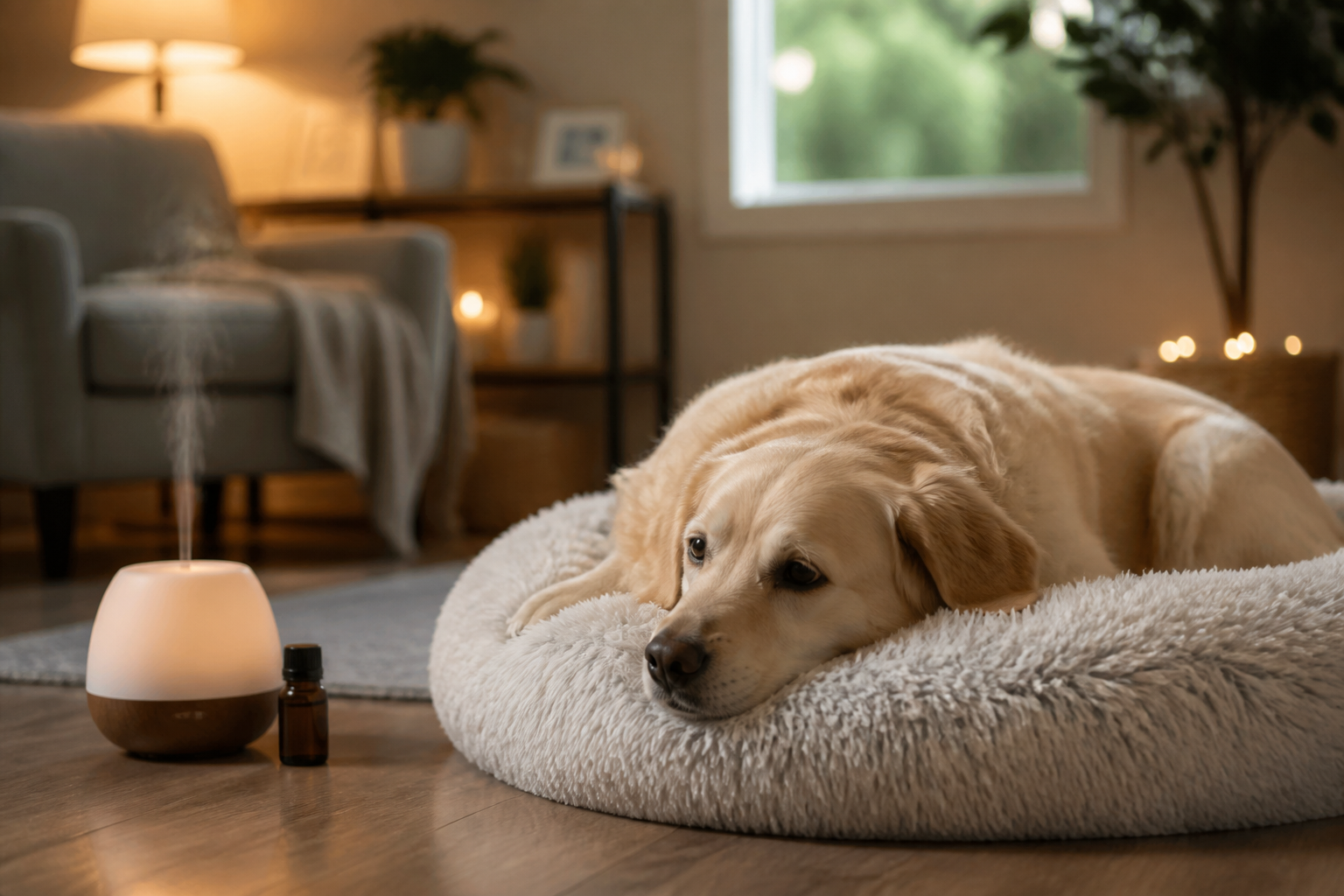
Create a quiet retreat where your dog can rest undisturbed. This might be a room, pen, or open crate furnished with comfortable bedding, water, and familiar items. The space should never be used for punishment. Let the dog choose whether to enter, and keep children and visitors from pursuing the dog there.
Predictable routines can reduce uncertainty. Feed, walk, rest, and practice at broadly consistent times, while allowing reasonable flexibility. Provide regular opportunities for toileting, sniffing, gentle movement, and sleep. Avoid exhausting an anxious dog through intense exercise; overstimulation can make recovery harder.
2. Reduce exposure to triggers
Management prevents rehearsal of fearful responses. Close curtains during visual triggers, use white noise or soft background sound during storms, and keep your dog away from windows if passing activity causes distress. During fireworks, provide the retreat before noise begins. Secure doors, gates, and identification details for dogs likely to bolt.
For separation concerns, avoid leaving the dog alone longer than it can currently tolerate whenever possible. Arrange a trusted sitter, family support, or suitable care while training progresses. Repeated panic can strengthen the association between absence and danger, so prevention matters.
3. Use gradual desensitization
Desensitization means presenting a trigger at an intensity low enough that the dog remains able to eat, think, and respond. For example, a recording of thunder may begin at barely audible volume while the dog relaxes. Increase intensity or duration in small increments only when the dog remains comfortable. If panting, pacing, refusal of food, or frantic behavior appears, reduce the challenge.
Counterconditioning pairs the trigger with something valuable, such as small food pieces, a favorite toy, or calm interaction. The goal is not to distract a panicking dog; it is to change the emotional meaning of the trigger over repeated, successful sessions. Progress may be uneven. Short, frequent practice is usually more useful than rare, demanding sessions.

4. Reward calm choices
Notice and reinforce relaxation before anxiety appears. Quietly reward lying on a mat, looking at a trigger and then disengaging, choosing the retreat, or settling after mild movement. Use soft praise if your dog enjoys it, and deliver food without creating excitement. Avoid repeatedly comforting through frantic touching or excited speech, because your behavior can unintentionally increase arousal.
Never punish barking, destruction, growling, or accidents caused by fear. Punishment may suppress warning signals while increasing distress, and it can make future handling or aggression riskier. Teach an alternative, such as moving to a mat, orienting toward you, or taking a food scatter, when the dog is calm enough to learn.
Choosing Calming Products
A calming product should be selected according to the dog’s trigger, temperament, health, and ability to tolerate the item. Products may include supportive beds, pressure garments, pheromone products, enrichment toys, sound masking, supplements, or veterinarian prescribed medication. Evidence and effectiveness can vary, and an item that helps one dog may bother another.
Comfort items and enrichment
A supportive bed can provide warmth and a consistent resting location, especially for dogs that seek enclosed or cushioned spaces. A food puzzle, lickable toy, or scatter feeding can encourage sniffing and foraging. Use only items suited to the dog’s chewing style, size, and supervision needs. Food enrichment is not appropriate for every medical condition, so account for allergies, weight management, and dietary restrictions.
Pressure garments may help some dogs feel secure, but they must fit comfortably and permit normal breathing, movement, elimination, and temperature regulation. Introduce one gradually in a relaxed setting. Remove it if the dog freezes, pants excessively, scratches, tries to escape, or shows other distress. Never use clothing as a substitute for supervision or training.
Pheromone products are designed to provide species specific chemical signals associated with comfort. They may be worth trying as an adjunct, but responses differ and they should not be presented as guaranteed treatment. Follow label directions and ask a veterinarian before combining products with medical treatment.
Supplements and medication
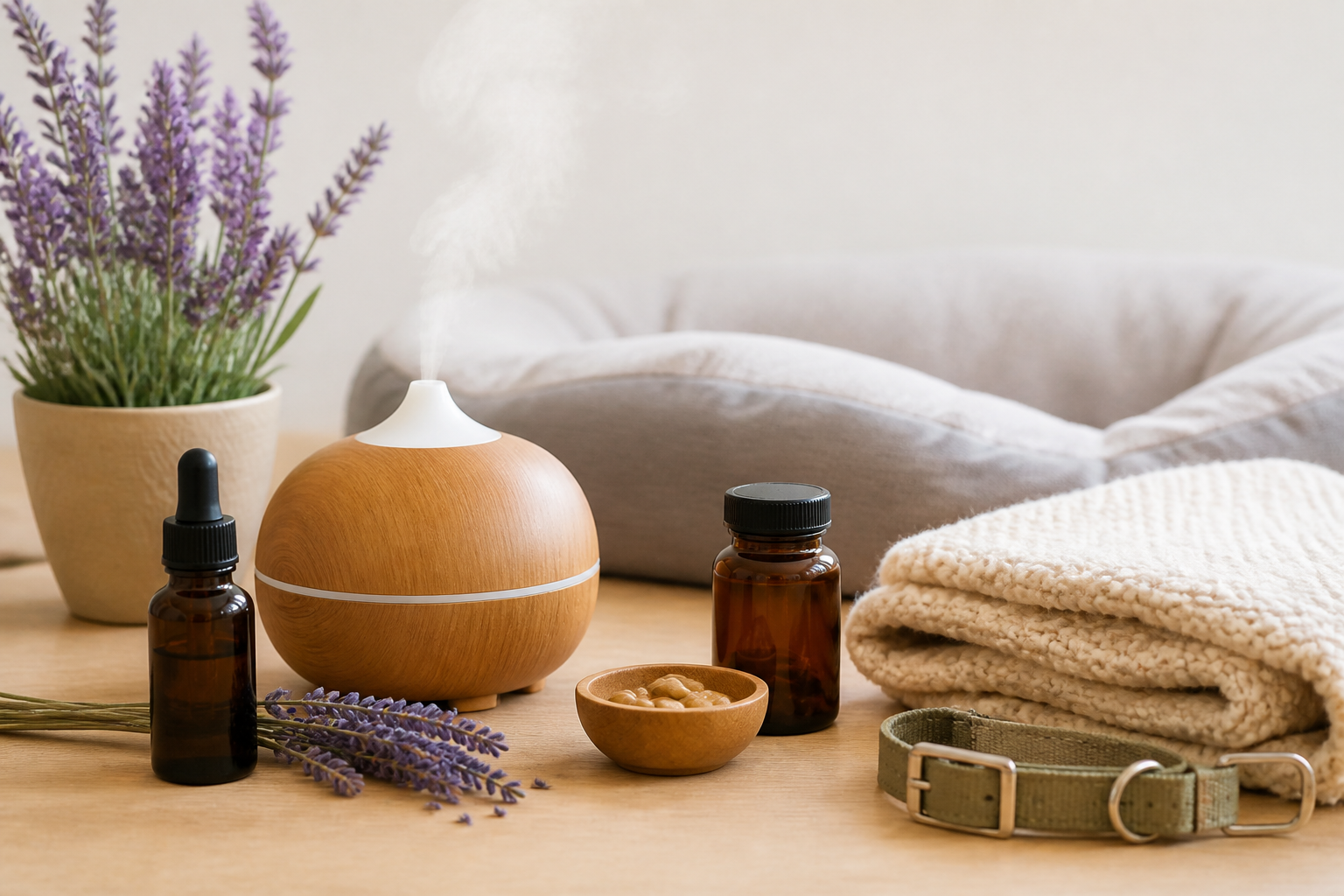
“Natural” does not automatically mean safe, effective, or suitable. Supplements can interact with medications, contain variable ingredients, or cause gastrointestinal effects. Avoid giving human sedatives, painkillers, cannabis products, or leftover prescriptions unless a veterinarian specifically directs their use. Do not use essential oils around or on dogs without professional guidance; concentrated oils can be harmful, and strong scents may increase stress.
A veterinarian can assess pain, illness, behavior history, and medication risks. For moderate or severe anxiety, prescribed treatment may improve learning by lowering distress enough for behavior work to succeed. Medication choice, dose, timing, and monitoring must be individualized. Some treatments are intended for predictable events; others require regular use. Never stop a prescribed medicine abruptly without veterinary advice.
Product Description: A Supportive Calming Solution
An effective calming solution should be practical, comfortable, and easy to incorporate into daily care. Look for a clearly labeled product that explains its intended use, fitting or administration instructions, ingredients when relevant, warnings, and storage requirements. A thoughtfully designed option should help create a familiar routine, not promise instant transformation or replace professional care.
For home use, combine the product with a designated relaxation area. Offer it before the known trigger, allow the dog to investigate voluntarily, and pair its presence with quiet rewards. Introduce only one major change at a time so you can observe whether the dog benefits or becomes uncomfortable. Keep notes about trigger intensity, duration, visible signs, appetite, sleep, and recovery time. These observations help you decide whether to continue, modify, or discontinue the product.
A worthwhile product supports humane management in three ways: it reduces environmental pressure, encourages safe settling, or makes a proven training plan easier to follow. It should never immobilize the dog, block communication, cause heavy sedation without medical oversight, or force contact. Choose comfort over novelty, transparent instructions over dramatic claims, and professional advice whenever health or safety is uncertain.
Building a Daily Calm Routine
A daily routine works best when it balances activity and recovery. Begin with a calm toilet break and a relaxed sniffing walk, if the dog is comfortable outdoors. Sniffing allows information gathering without demanding constant obedience. Follow activity with a quiet rest period. Later, practice a brief skill such as hand targeting, mat settling, or responding to a name indoors.
Protect sleep. Dogs that are repeatedly disturbed may become more reactive and less able to cope. Provide chewable or food based enrichment during appropriate times, but avoid turning every quiet moment into a demand for interaction. Independence grows when the dog learns that resting alone is safe and predictable.
For visitors, prepare before the doorbell rings. Exercise should be moderate, secure the dog behind a gate or in a retreat, and give visitors clear instructions. They should ignore the dog initially, avoid reaching over its head, and allow the dog to approach. If the dog remains worried, maintain distance rather than insisting on social contact.
For travel, introduce the vehicle gradually. Begin near the parked car, reward calm behavior, then progress to brief engine running and short journeys. Use a secure harness, crate, or carrier appropriate for the dog. Never leave a dog unattended in a vehicle, even briefly, because temperatures can become dangerous.
When Professional Help Is Needed
Contact a veterinarian if anxiety appears suddenly, follows an injury, causes persistent appetite or sleep changes, or leads to escape attempts, self injury, aggression, repeated vomiting, or severe distress. Puppies, senior dogs, and dogs with chronic disease may require especially careful assessment. Bring a short video and written record if safe to obtain them; these details can help clarify patterns.
A qualified reward based behavior professional can create a plan for complex fear, separation distress, reactivity, or aggression. Ask your veterinarian for an appropriate referral. Avoid practitioners who recommend intimidation, flooding, pain, or punishment as primary methods. Flooding forces prolonged exposure beyond the dog’s coping ability and may worsen fear.
Progress should be measured by welfare, not perfection. Useful indicators include faster recovery, more voluntary rest, willingness to eat near a mild trigger, fewer escape attempts, and improved ability to choose an alternative behavior. Setbacks can occur after illness, frightening events, or environmental changes. Return to an easier stage rather than abandoning the plan.
Frequently Asked Questions
Can I comfort my anxious dog?
Yes, calm support is appropriate. Sit nearby, speak normally, and offer contact if the dog seeks it. Comfort does not create fear. However, let the dog control distance and avoid crowding, restraining, or repeatedly fussing when the dog is panicking. Pair support with environmental changes that lower the trigger.
Will exercise cure anxiety?
Exercise may support overall wellbeing, but it is not a cure. Gentle movement and sniffing can help some dogs settle, while excessive or highly arousing exercise may leave others more reactive. Match activity to age, health, weather, and temperament. Combine it with sleep, management, and gradual behavior training.
Should I use a crate?
A crate can be useful when a dog already views it as a safe resting place. It should be introduced positively, remain appropriately ventilated and sized, and never be used to confine a panicking dog that may injure itself trying to escape. For some dogs, a gated room or pen is a better option.
How quickly will relief appear?
Timing depends on the trigger, anxiety severity, medical factors, learning history, and consistency of the plan. Environmental adjustments may help immediately, while behavior change commonly requires repeated gradual practice. Be cautious of products promising instant or universal results. Track small improvements and seek help when progress stalls.
Can I combine several calming products?
Combining products increases complexity and may increase risk, especially with supplements, sedating agents, or prescription medication. Introduce changes thoughtfully and discuss ingredients with your veterinarian. Keep packaging available, and stop a product if adverse signs occur. More interventions are not necessarily better than one suitable, well monitored support.
What should I do during fireworks?
Prepare before noise begins. Close windows and curtains, offer a familiar retreat, use safe background sound, and remain available without forcing interaction. Keep identification current and secure exits. Ask your veterinarian in advance about medication if previous events caused severe distress; do not wait until panic is underway to seek an emergency solution.
Conclusion
Anxiety relief for dogs is most reliable when viewed as compassionate care rather than a single purchase. Identify the trigger, protect the dog from overwhelming exposure, create predictable routines, reward calm choices, and introduce comfort products gradually. Treat sudden or severe behavior changes as possible health concerns, not disobedience. With veterinary guidance and humane, stepwise training, many dogs can become safer, more confident, and better able to recover from stressful experiences. The strongest plan respects individual limits, measures real progress, and keeps the dog’s emotional and physical welfare at the center of every decision.