
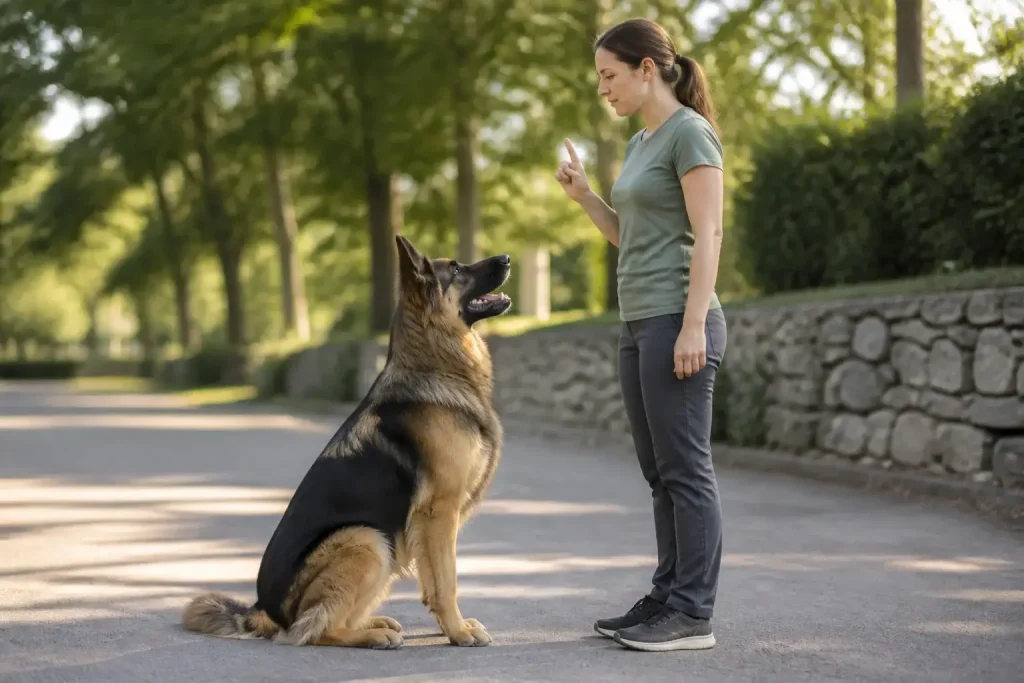
Advanced dog training is the process of teaching reliable skills, thoughtful decision-making, and calm behavior in increasingly difficult situations. It is not simply a collection of impressive tricks. A well-trained advanced dog can respond to cues around distractions, recover from excitement, cooperate with handling, and make appropriate choices when the handler’s guidance is delayed. The most effective program combines clear communication, reinforcement, careful progression, and respect for the dog’s physical and emotional limits.
What Advanced Dog Training Includes
Basic training usually covers name recognition, sit, down, recall, leash manners, and household rules. Advanced training develops those foundations into dependable behavior across places, people, surfaces, sounds, distances, and levels of arousal. A dog may know “stay” in a quiet room yet struggle when a squirrel appears, a visitor enters, or another dog passes nearby. Advanced work teaches the dog how to succeed under those changing conditions.
Important goals can include a long-distance stay, emergency recall, loose-leash walking in busy areas, polite greetings, off-switch behavior, object discrimination, scent work, cooperative grooming, and calm responses to startling events. Some dogs train for sports, assistance tasks, detection activities, or public-access standards. Others need advanced skills simply to live safely and comfortably with their families.
Training should be individualized. Age, breed tendencies, health, previous learning, motivation, and environment all influence the best plan. A young, energetic dog may need impulse-control games and structured outlets. A sensitive dog may require slower exposure and greater distance from triggers. An older dog may benefit from shorter sessions, lower-impact exercises, and a veterinary assessment before demanding physical work.
Build a Reliable Training System
Define the behavior precisely
A cue is useful only when everyone understands what response it requests. “Be good” is too vague to teach. “Go to the mat, lie down, and remain there until released” describes observable actions. Define the starting position, duration, distance, distractions, and release signal before practice begins.
Break complex behaviors into components. For a polished heel, first reinforce attention near the handler, then a chosen position, then several steps, turns, stops, and finally movement through distractions. Smaller pieces allow the dog to earn reinforcement often and reveal exactly where difficulty arises.
Use reinforcement strategically
Reinforcement increases the likelihood that a behavior will occur again. Food is common because it is precise, portable, and valuable, but toys, access to sniffing, play, movement, praise, and opportunities to greet can also reinforce behavior. Identify what matters to the individual dog rather than assuming one reward works everywhere.
Reward placement affects future performance. Delivering food beside your leg can strengthen a close walking position, while tossing it away may encourage movement and a reset. Reinforce the behavior you want, not merely the effort that preceded it. As reliability improves, vary the reward schedule thoughtfully. Do not remove reinforcement abruptly; intermittent rewards can maintain behavior, but difficult work still deserves meaningful payment.
Add a clear release signal
Many dogs become confused because a stay ends when the handler moves, reaches for a leash, or looks away. Teach a consistent release word such as “free.” Begin by saying the release word, then inviting movement or delivering a reward. Gradually teach the dog that remaining in position continues until that signal appears.

A release cue improves clarity for stays, place work, waiting at doors, car exits, food manners, and grooming. It also prevents accidental reinforcement of breaking position. If the dog moves early, calmly reset without turning the mistake into a confrontation.
Progress Through Difficulty
Effective training follows a manageable progression rather than sudden tests. Three useful variables are duration, distance, and distraction. Increase one variable at a time whenever possible. If a dog can remain on a mat for thirty seconds beside the handler, adding a ten-foot distance and a visitor simultaneously may create unnecessary failure.
Work below the dog’s threshold, meaning the point at which emotional arousal prevents useful learning. A dog that notices another dog and still eats, responds, and moves with the handler may be ready for controlled practice. A dog that lunges, freezes, or ignores food needs more distance, less intensity, or an easier task.
Use a simple success guideline: if the dog fails repeatedly, change the setup rather than repeating the same cue more loudly. Reduce duration, move closer, remove a distraction, improve the reward, or return to an earlier step. Successful repetition builds fluency; repeated failure rehearses the unwanted response.
Generalize deliberately
Dogs do not automatically understand that a cue learned in the kitchen also applies at a park, veterinary clinic, elevator, or unfamiliar building. Practice in varied locations while keeping the first repetitions easy. Change surfaces, lighting, handlers, weather, background noise, and distance gradually.
Generalization also includes different equipment and body positions. A dog may respond when the handler stands directly in front but hesitate when the cue is given from a chair or doorway. Include realistic variations after the basic response is fluent.
Advanced Skills That Improve Daily Life
Emergency recall
An emergency recall is reserved for situations requiring immediate movement toward the handler. Choose a distinctive cue that is not used casually. Pair it repeatedly with exceptionally valuable rewards, then practice indoors, in fenced areas, and on a long line before considering greater freedom.
Never use the emergency cue to end every enjoyable activity, deliver punishment, or create an unpleasant event. Occasionally call the dog, reward generously, and release it back to play. In uncontrolled environments, a recall cue is not a substitute for secure fencing, appropriate equipment, or lawful leash use.
Leave it and drop it
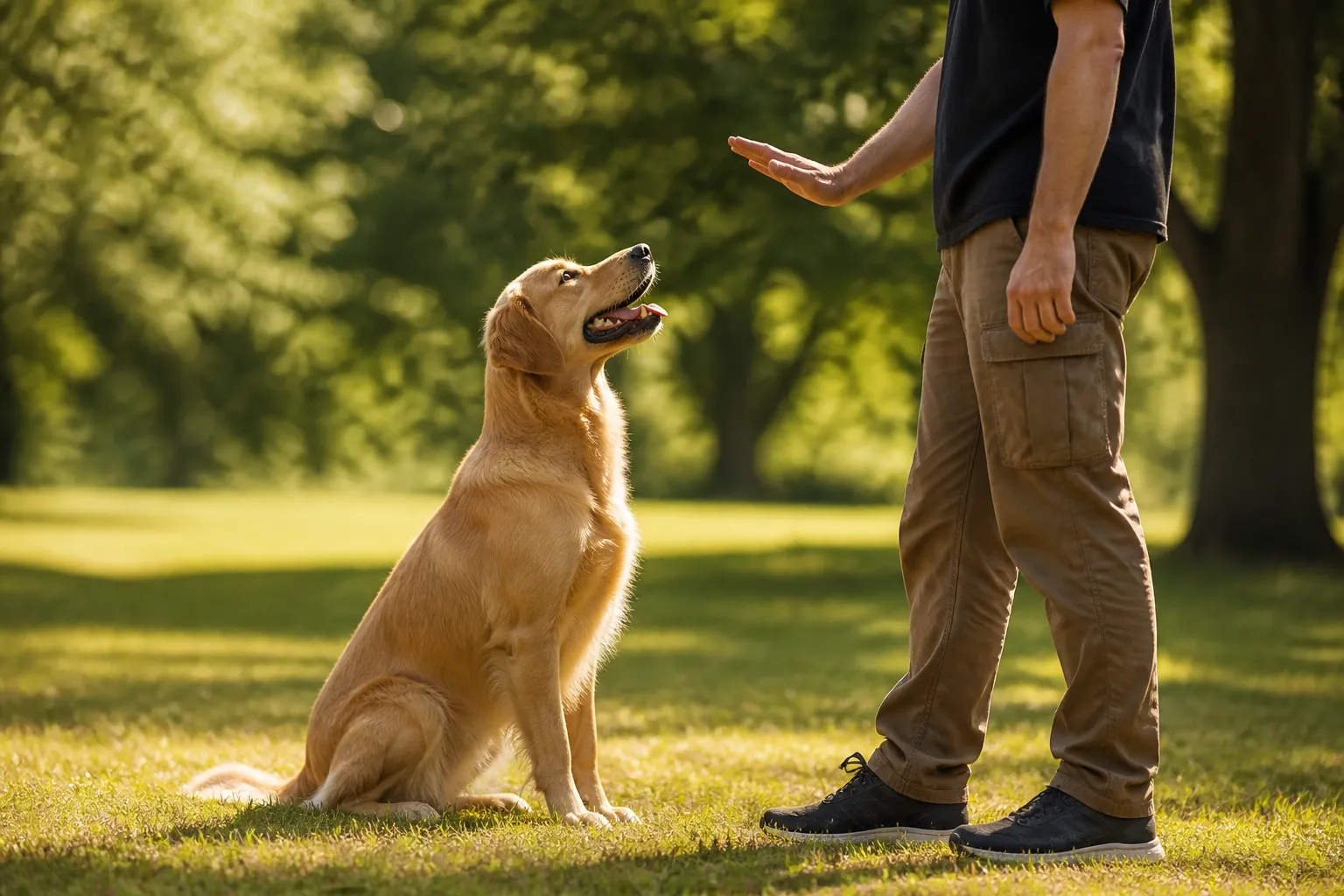
“Leave it” teaches the dog not to approach an available object. “Drop it” teaches release after the dog already holds something. Train them separately. Present a low-value item, offer a better reward, and mark the moment the dog turns away. For drop it, exchange rather than forcibly pulling whenever safety permits.
These skills should not be used to justify leaving dangerous objects accessible. Prevention remains essential, particularly with toxic foods, medication, sharp materials, and small items that can be swallowed.
Settle and stationing
Settle training teaches relaxation, not merely immobility. Reinforce soft muscles, lowered breathing intensity, a resting hip, and the dog’s ability to remain near ordinary household activity. A mat can become a predictable station for meals, conversations, visitors, or work.
Start when the dog is moderately calm. Reward quiet intervals before restlessness appears, then gradually extend the time. Include movement around the room, door sounds, and brief departures. If the dog becomes distressed, shorten the exercise; stationing should not become forced isolation.
Cooperative care
Cooperative care helps a dog participate in nail trimming, brushing, ear checks, medication, bathing, and veterinary handling. Teach a consent behavior, such as resting the chin on a towel, and pause when the dog withdraws if the situation is not an emergency. Pair gentle touch with rewards, beginning on comfortable body areas.
Progress in tiny increments. Touch one paw, reward, and stop. Later hold the paw, show the tool, touch the tool to a nail, and eventually trim a small portion. Pain, fear, or sudden resistance deserves attention from a veterinarian or qualified behavior professional.
Managing Arousal and Reactivity
Arousal is the dog’s level of emotional and physical activation. Excitement can improve play but reduce precision; fear or frustration can produce barking, lunging, avoidance, or redirected behavior. Advanced training therefore includes regulation, not just obedience.
Teach a pattern the dog can perform before arousal rises: orient to the handler, take several steps, find scattered food, or move behind a visual barrier. Pair the appearance of a trigger with distance and reinforcement. The objective is not to force the dog to stare calmly at something frightening. It is to change the association and preserve the ability to respond.

For leash reactivity, select a distance at which the dog can observe the trigger without losing control. Mark calm orientation, feed, and move away before intensity increases. Over time, vary the distance carefully. Do not punish warning signals such as growling without addressing the underlying emotion; suppressing communication can make situations less predictable.
Safety comes first. Use secure equipment, avoid crowded areas during early practice, and obtain professional help when there is biting, serious aggression, repeated escape, or a history of injury. A veterinarian should assess sudden behavior changes because pain and illness can alter responses.
Training with Technology and Equipment
Equipment should support learning, not replace it. A long line can provide controlled freedom during recall practice. A harness may improve management for some dogs, while a properly fitted collar may suit others. Check fit regularly and supervise equipment use.
Food pouches, target sticks, clickers, mats, barriers, scent containers, and portable water can make sessions organized. A clicker or verbal marker identifies the precise moment a behavior earns reinforcement. Choose one marker, charge it by pairing it with rewards, and maintain consistent timing.
Electronic or aversive tools require particular caution. They can suppress behavior without resolving fear, frustration, or confusion, and incorrect use may create additional risks. Because training methods affect welfare and trust, prioritize reward-based instruction, humane management, and guidance from a qualified professional. No device eliminates the need to understand behavior.
A Practical Weekly Plan
Keep a training journal with the behavior, location, distraction level, reward, successes, and difficulty observed. This turns vague impressions into useful decisions. Record whether the dog responded on the first cue, needed repetition, or showed signs of stress.
Schedule several short sessions rather than one exhausting lesson. One session might focus on stationing during household movement. Another could practice recall on a long line. A third could address handling, and ordinary walks could include brief attention and loose-leash exercises. End while the dog is still capable of success.
Include enrichment that meets natural needs. Sniffing, chewing, searching, carrying, social interaction, rest, and appropriate play can reduce pressure on formal training. Physical exercise alone may not teach calmness, and excessive high-intensity activity can leave some dogs more activated. Balance activity with recovery.

Everyone in the household should use the same cues, rules, and reinforcement plan. If one person rewards jumping while another expects four paws on the floor, the dog receives inconsistent information. Visitors can be given simple instructions, such as ignoring the dog until it settles or following a practiced greeting routine.
Common Problems and Corrections
A dog that ignores a cue may not be disobedient. The cue may be unclear, the behavior insufficiently reinforced, the environment too difficult, or the dog physically uncomfortable. Test the cue in an easier setting and check whether the dog understands the expected response.
If performance collapses outside the home, return to generalization steps. Reinforce attention in the new setting, use higher-value rewards, and shorten the session. If the dog becomes dependent on visible food, hide rewards in a pocket or container while continuing to deliver them after correct responses. Then introduce occasional life rewards and variable reinforcement.
If the dog becomes frustrated, examine the rate of reinforcement. Long delays, repeated failed attempts, or physically blocking movement can increase conflict. Teach a reset behavior, such as hand targeting or returning to a mat, and use it to restore clarity.
If progress stops, consider sleep, pain, digestive discomfort, medication, heat, fear, and environmental stress. A behavior plan is not complete unless it accounts for the dog’s welfare.
Choosing Professional Support
A qualified trainer should explain goals, methods, risks, and expected management clearly. Ask how they respond to fear, aggression, mistakes, and lack of progress. Look for humane handling, observable instruction, individualized plans, and willingness to coordinate with a veterinarian or veterinary behaviorist.
Seek specialized help for aggression, severe anxiety, compulsive behavior, separation-related distress, repeated escape, or complex working tasks. Group classes can support social learning, but they are not suitable for every dog. Private coaching may offer safer distance and more precise adjustments.
Be cautious of guarantees, claims that one method works for every dog, pressure to use pain or intimidation, and advice that ignores medical causes. Good professionals welcome questions and explain why an exercise is appropriate.
FAQ
How long does advanced training take?
There is no universal timetable. A simple behavior may become functional within weeks, while reliable recall around major distractions can require ongoing practice. Progress depends on reinforcement history, environment, health, temperament, and training consistency. Measure improvement against the dog’s previous performance, not an idealized schedule.
Should advanced training use treats forever?
Rewards may remain part of a strong training system. They can be delivered less predictably after a behavior is reliable, but difficult environments still justify valuable reinforcement. Praise, play, access to sniffing, and freedom can supplement food, although they are not equally motivating for every dog.
Can an older dog learn advanced skills?
Yes, provided expectations match physical ability and learning history. Use low-impact positions, non-slip surfaces, shorter repetitions, and frequent rest. Before changing behavior suddenly or adding demanding exercise, ask a veterinarian to evaluate pain, mobility, vision, and hearing.
Is off-leash training safe?
Off-leash freedom is appropriate only where legal, physically secure, and suitable for the individual dog. Recall training, emergency planning, environmental awareness, and reliable equipment remain important. A fenced area or long line may provide safer freedom than an open public space.
What if my dog will not work around distractions?
Lower the distraction or increase distance until the dog can respond and accept reinforcement. Build difficulty gradually, use better rewards, and practice short sessions. If the dog cannot recover, shows fear, or behaves aggressively, stop the exercise and seek qualified support.
Does advanced training fix behavior problems?
Training can teach alternative responses and improve management, but it may not resolve medical, genetic, developmental, or emotional causes by itself. Behavior concerns should be assessed broadly. Veterinary care, environmental changes, safety planning, and behavior modification may all be necessary.
Conclusion
Advanced dog training is best understood as a progressive education in communication, regulation, cooperation, and safe choice-making. Define behaviors clearly, reinforce them meaningfully, vary practice environments, and increase difficulty in small steps. Protect the dog from repeated failure, respect signs of stress, and use management whenever training cannot yet guarantee reliability.
The strongest results come from consistency rather than intensity. A thoughtful plan turns everyday moments into practice: waiting at doors, settling during conversation, releasing an object, walking past distractions, and cooperating with care. With realistic goals, humane methods, appropriate professional guidance, and regular review, advanced skills can become dependable habits that improve both freedom and quality of life for dogs and the people who live with them.