
Puppy Training: A Practical Foundation for a Happy Dog
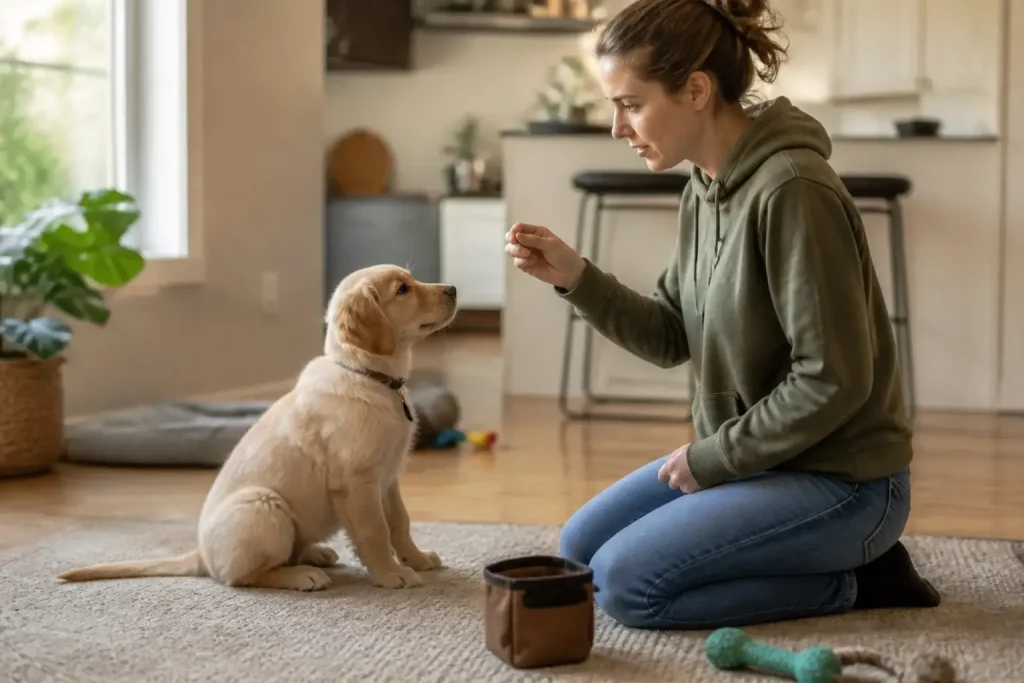
Puppy training is the process of teaching a young dog how to live safely and comfortably with people, animals, and everyday environments. It includes more than sit, stay, and come. Effective training develops communication, household manners, confidence, impulse control, and habits that can last throughout adulthood. The most useful approach is reward based: notice behavior you want, reinforce it promptly, manage situations that invite mistakes, and give your puppy repeated opportunities to succeed.
Begin with realistic expectations. Puppies have developing bodies, short attention spans, limited bladder control, and little experience making choices. A puppy that chews a chair, jumps on visitors, or forgets a cue is not being stubborn in the human sense. The behavior usually reflects normal development, insufficient practice, an unmet need, or an environment that made the unwanted choice easy. Training should therefore be clear, brief, consistent, and humane.
A well-designed puppy training plan combines daily routines, positive reinforcement, safe socialization, supervision, and gradual independence. It should also respect individual differences. Breed tendencies, previous experiences, health, temperament, and the home environment influence learning. When behavior involves fear, aggression, severe separation distress, pain, or sudden change, consult a veterinarian and a qualified reward-based behavior professional.
Choosing a Training Approach
Reward the behavior you want
Positive reinforcement means adding something valuable after a desired action, making that action more likely in the future. Food treats are often efficient because they are clear and motivating, but praise, play, access to a toy, sniffing time, or permission to greet can also function as rewards. Deliver the reward immediately, while your puppy is still performing or has just completed the behavior.
Use small treats and account for them within the puppy’s daily food allowance. You do not need to reward every repetition forever. At first, frequent reinforcement builds understanding. Later, vary rewards and occasionally provide several pieces, a favorite game, or enthusiastic praise. Keep the behavior worthwhile, especially when distractions increase.
Avoid punishment that frightens, hurts, or confuses. Yelling, leash corrections, physical handling, and intimidation can suppress visible behavior without teaching a safe alternative. They may also damage trust or increase anxiety. If your puppy makes a mistake, calmly prevent repetition, clean up when necessary, and teach what to do instead.
Make cues consistent
Choose one word or hand signal for each behavior. If one person says “down” to mean lie down while another uses it to mean stop jumping, the puppy receives conflicting information. All household members should agree on cue words, reward rules, furniture access, and greeting routines.
Train in short sessions, perhaps one to five minutes, several times daily. End while your puppy is still engaged. A successful session can contain only a few repetitions. Practice in easy settings first, then gradually add distance, duration, movement, people, sounds, surfaces, and other distractions. Changing one difficulty at a time makes progress easier to understand.
Preparing the Home
Before training begins, arrange the environment to support good choices. Use baby gates, a pen, a crate if introduced comfortably, closed doors, and secure storage. Keep shoes, cables, medication, rubbish, and small objects out of reach. Provide legal chewing options with different textures, but supervise new items and remove anything that becomes damaged or hazardous.
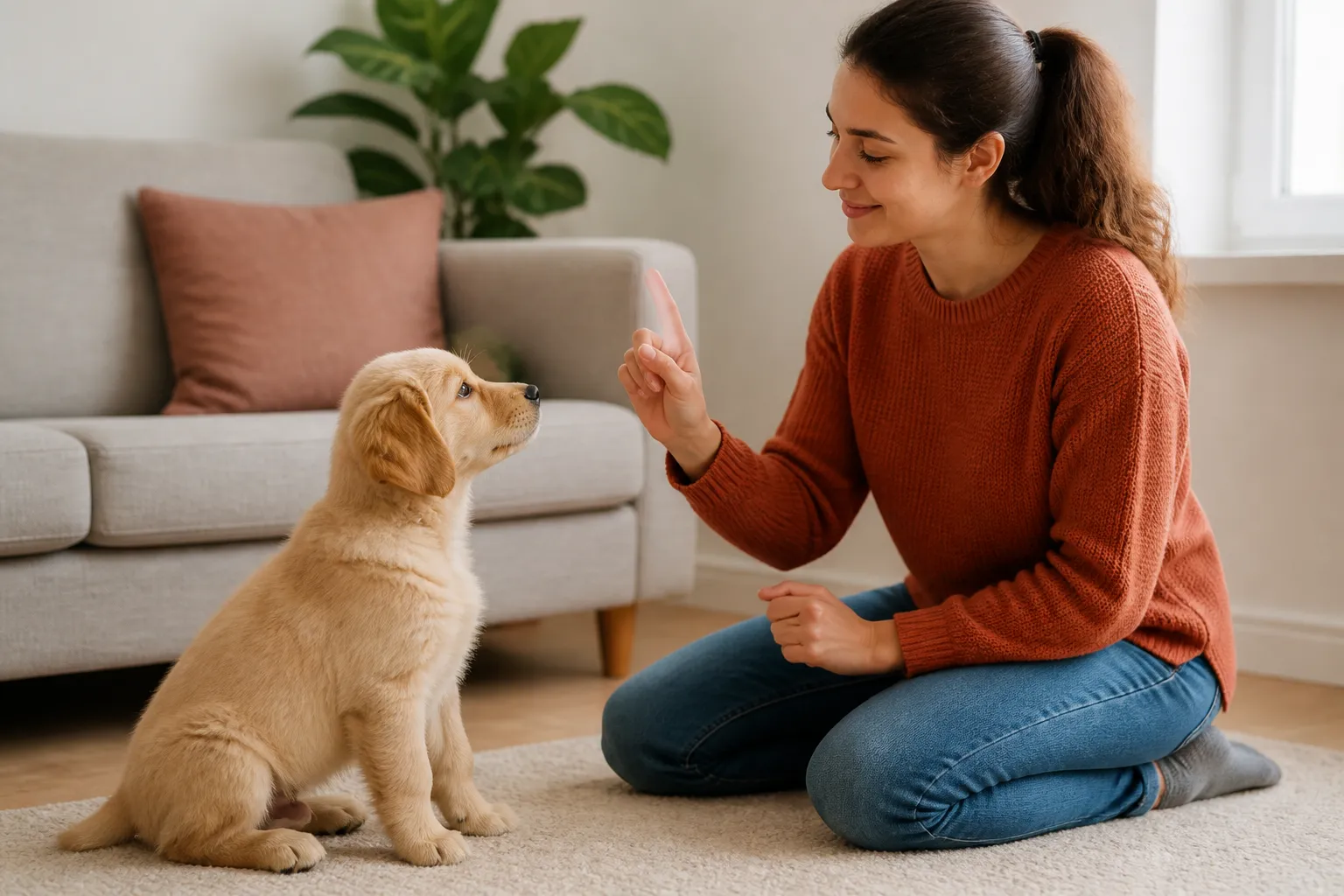
Create predictable areas for sleeping, eating, playing, toileting, and quiet time. A puppy who is overtired may bite, bark, race around, or ignore familiar cues. Scheduled naps are not a punishment; they help a young dog regulate activity. Watch for tired behavior and guide the puppy to a calm resting space before excitement becomes difficult to manage.
Prepare a reward pouch, a suitable leash and harness, cleaning supplies, safe toys, and a written routine. Record meals, toileting, naps, training sessions, and notable triggers. Simple notes reveal patterns, such as accidents after vigorous play or jumping when greetings last too long. They also help you adjust the plan rather than relying on memory.
House Training
House training works best through prevention and timing. Take your puppy to the designated toilet area after waking, eating, drinking substantially, playing, training, and before bedtime. Young puppies may need very frequent opportunities. The exact schedule depends on age, size, health, previous living conditions, and individual control, so observe your puppy rather than following a rigid promise.
Remain nearby and quiet. When toileting begins, you can use a calm cue such as “go potty.” As soon as the puppy finishes, reward generously while still outside. This teaches both location and completion. If nothing happens after a reasonable wait, return indoors under close supervision and try again soon.
Accidents are information, not occasions for blame. If you notice sniffing, circling, sudden wandering, or moving toward a previous accident site, take the puppy out promptly. If an accident starts, interrupt gently without frightening the puppy and go outside. Clean indoor areas with an appropriate enzymatic cleaner so lingering odor does not encourage repeated use.
Supervision is central. A puppy roaming freely can rehearse unwanted toileting faster than you can respond. Use a leash attached to you, a puppy-proof room, a pen, or a safe rest area when direct observation is impossible. If accidents remain frequent despite a sensible routine, discuss possible medical causes with a veterinarian.
Teaching Essential Skills
Name and attention
Say your puppy’s name once in a cheerful voice. When the puppy looks toward you, mark the moment with praise or a reward. Practice in quiet rooms, then outdoors and around mild distractions. The name should predict useful information or pleasant interaction, not constant scolding. Avoid repeating it many times when the puppy is unable to respond.
Sit, down, and settle
Capture natural sitting by rewarding it, or guide the puppy with a treat and reward when the body follows. For down, move a treat slowly toward the floor and between the front paws, then reward when the puppy lies down. Do not force the body into position. Teach “settle” by rewarding calm behavior on a mat, gradually increasing the time between rewards.
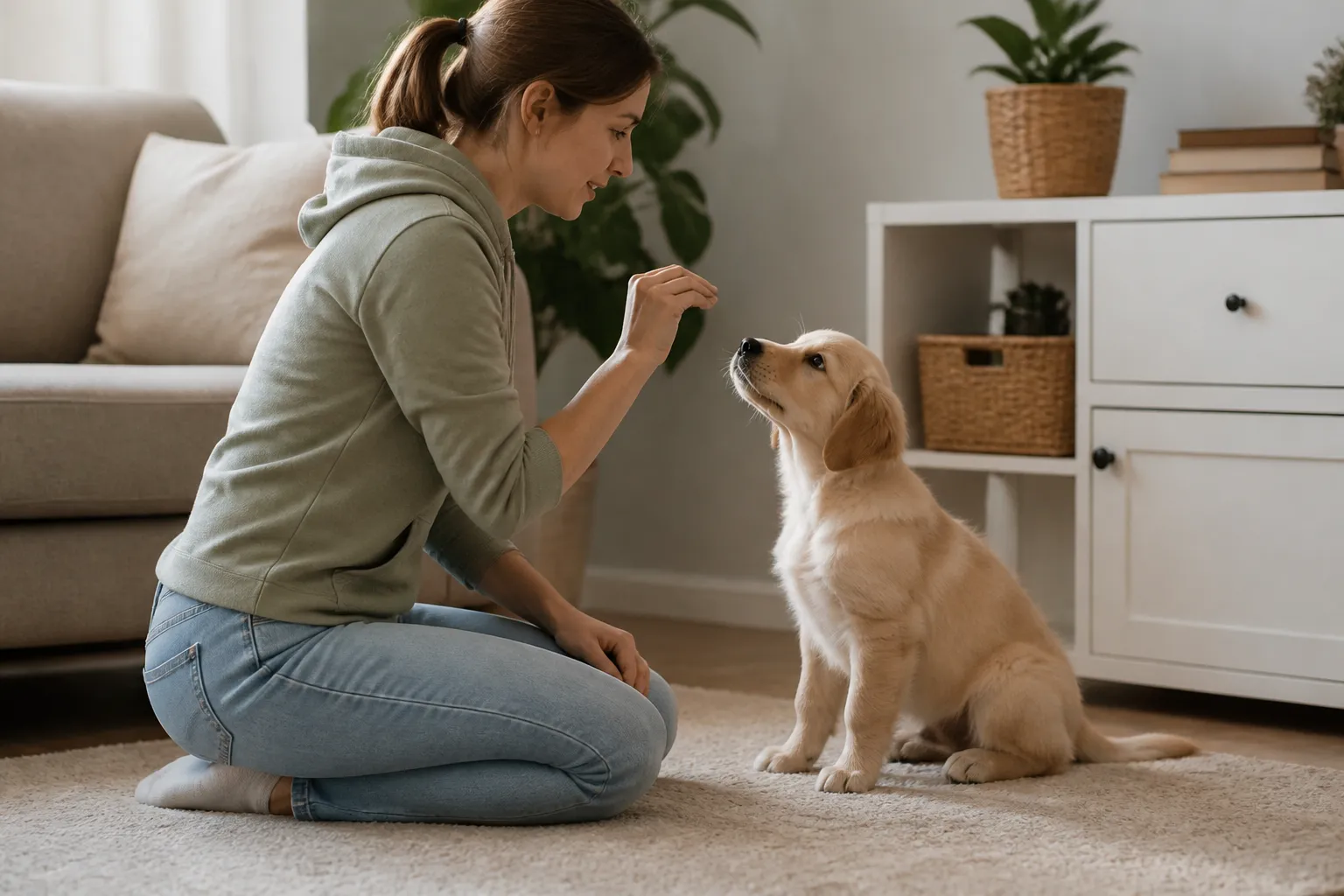
These cues are not magic commands. They are communication tools. A sit can replace jumping, a down can support calm waiting, and a mat can provide a predictable station during meals or visitors. Reinforce them in real situations, but begin with manageable challenges.
Come when called
Recall is a safety skill. Start indoors by moving a short distance away, using an inviting voice, and rewarding the puppy for following. You can crouch, open your arms, or move backward. Progress to a secure outdoor area and then use a long line for additional distance. Never call the puppy to deliver punishment or end every enjoyable activity.
Frequently call, reward, and release the puppy back to play. This prevents recall from meaning that fun always stops. Choose an emergency cue that is rarely used and pair it with exceptionally valuable rewards in controlled practice. Off-leash freedom should wait until recall is dependable in the relevant environment, and local rules should always be followed.
Preventing Biting and Chewing
Mouthing is common because puppies explore with their mouths, play with littermates, lose baby teeth, and become excited easily. It still needs guidance. Keep a toy nearby and calmly offer it when teeth touch hands, clothing, or furniture. Praise engagement with the toy. If biting becomes painful or frantic, pause interaction, stand up, and provide a brief calm break without anger.
Avoid wrestling with hands or encouraging chasing of sleeves. Everyone should respond similarly, because inconsistent games make the rule difficult to learn. Reward gentle play and calm contact. Ensure adequate sleep, meals, toilet opportunities, movement, and mental activity; an exhausted or frustrated puppy often mouths more intensely.
For chewing, rotate safe items rather than scattering every toy at once. Food-stuffed toys, simple scent games, and supervised chewing can occupy the puppy while building independence. Inspect toys regularly. Discard damaged objects, and ask a veterinarian about items that could cause choking, dental injury, intestinal blockage, or other harm.
Socialization and Confidence
Socialization means helping a puppy form positive, flexible associations with people, animals, places, handling, sounds, surfaces, transport, and everyday events. It does not mean forcing interaction with everyone. The puppy should remain under a manageable level of concern, able to eat, play, observe, or move away. If the puppy freezes, hides, trembles, lunges, or refuses food, increase distance and reduce intensity.
Introduce experiences gradually. A puppy might watch bicycles from across a quiet street, hear household appliances at low volume, stand briefly on different safe surfaces, or meet one calm person at a time. Pair each experience with treats and breaks. Let the puppy approach when possible. Do not force greetings, hugs, handling, or contact with unfamiliar dogs.
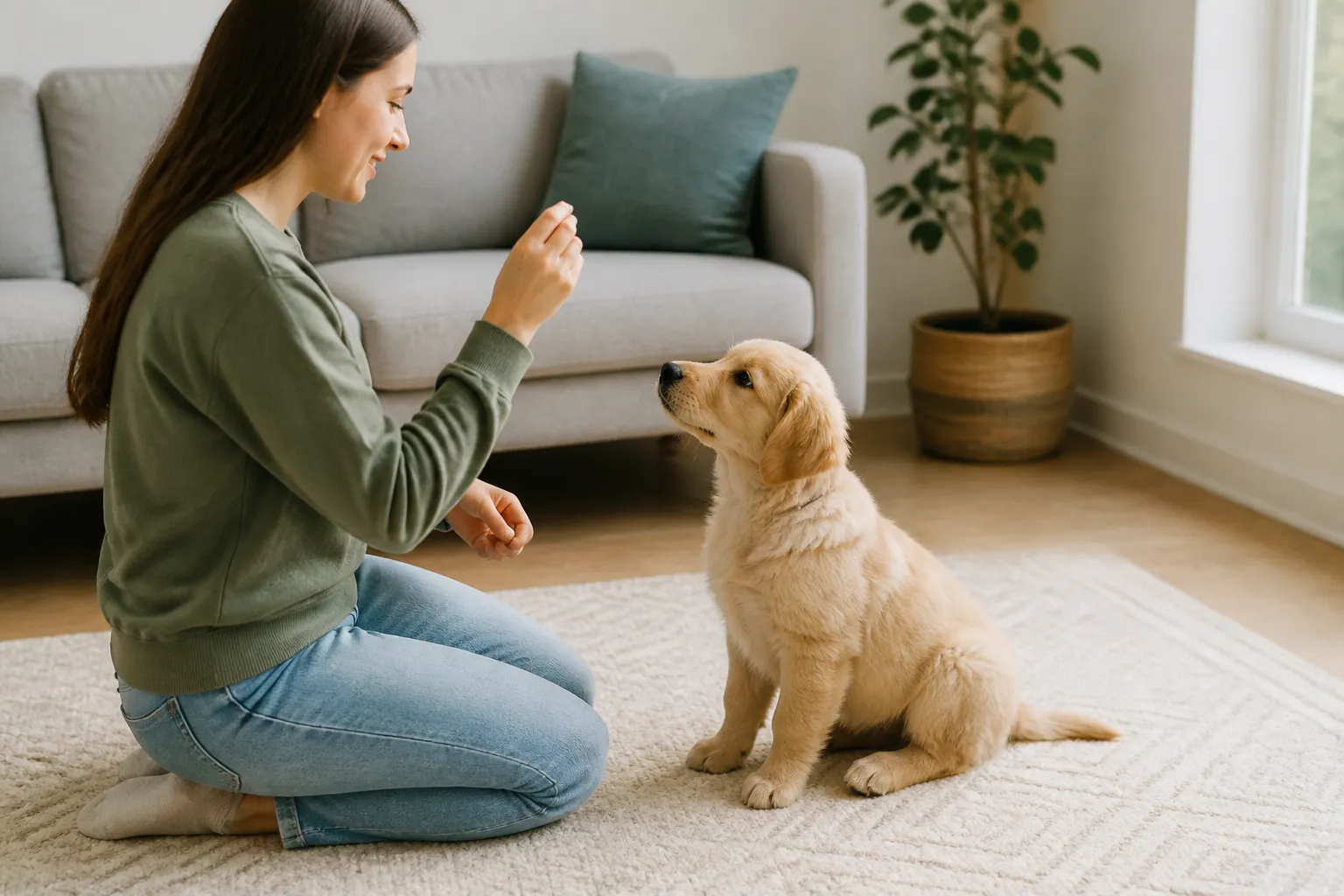
Arrange carefully selected interactions with healthy, appropriately vaccinated dogs when advised by your veterinarian. Puppy classes led by qualified instructors can provide structured learning and controlled exposure. Ask about cleanliness, group size, methods, and vaccination policies. Avoid chaotic dog parks for young puppies or dogs who are frightened, overwhelmed, or not yet skilled at disengaging.
Handling practice should be gentle and brief. Touch ears, paws, collar area, tail, and mouth area while offering rewards, stopping before resistance escalates. This preparation can make grooming, veterinary care, nail trimming, and safety checks less stressful. If handling causes strong fear, seek professional guidance rather than forcing compliance.
Leash Skills and Outdoor Manners
Begin indoors by allowing the puppy to wear a properly fitted harness or collar for short periods while supervised. Pair it with food and play. Attach a lightweight leash and reward the puppy for moving with you. Do not drag the puppy toward a destination. Outside, allow safe sniffing, because exploration is valuable enrichment, but reinforce checking in and returning attention.
When the leash tightens, stop or change direction calmly. Resume movement when slack returns. Reward frequently at first, especially near distractions. Pulling can become self-reinforcing when it reliably moves the puppy toward an interesting smell or person, so manage distance and choose quieter routes while teaching.
Teach polite greetings by rewarding four paws on the floor. If jumping begins, the person should turn away or pause attention, then reengage when calm. Ask visitors to follow the same plan. For safety, prevent greetings with people who cannot participate appropriately, and use a gate or leash during busy arrivals.
Crate, Alone Time, and Calmness
A crate can support rest, travel, management, and house training when introduced as a comfortable space. Feed meals near or inside it, provide safe enrichment, and begin with the door open. Later, close it briefly while you remain nearby, then gradually increase duration. Never use the crate as a place for anger or prolonged isolation beyond the puppy’s ability to cope.
Practice independence in small steps. Give a chew or food toy while you move a short distance away, return before distress appears, and build gradually. Vary departures and returns so they remain ordinary. A puppy who cries briefly may need a toilet break, while persistent panic, destructive escape attempts, drooling, or self-injury requires professional assessment.
Calmness should be taught when the puppy is already capable of it. Reward lying quietly, watching the world, and choosing a toy instead of demanding attention. Avoid making every waking moment exciting. Balanced routines include play, learning, exploration, sleep, eating, and peaceful observation.

Solving Common Problems
Barking has different causes, including alarm, excitement, frustration, fear, attention seeking, and boredom. Identify the trigger before choosing a response. Reduce visual access, increase distance, offer enrichment, and reward quiet observation. Shouting may add stimulation or appear to join the barking. If fear is involved, punishment can worsen the underlying problem.
Jumping usually persists because it sometimes earns attention. Make attention predictable: reward sitting or standing calmly, and withdraw attention during jumping. Visitors may need instructions before entering. Management is not failure; a gate, leash, or prepared mat prevents rehearsal while learning develops.
Pulling, chasing, and stealing objects also benefit from replacement behaviors. Trade a low-value object for a better reward rather than chasing, which can turn theft into a game. Teach “drop” with safe toys, beginning with an easy exchange and returning the toy when appropriate. For chasing moving animals, use secure management and professional help if risk is high.
Fear requires patience. Do not flood a puppy with the frightening stimulus or insist on approach. Work at a distance where the puppy can remain relatively relaxed, pair the trigger with food, and retreat when needed. Sudden aggression, severe fear, or behavior that threatens safety deserves prompt professional support.
A Simple Daily Plan
A useful day might include a toilet trip after waking, breakfast through a food puzzle or training, quiet rest, a short handling exercise, supervised play, another toilet opportunity, a brief leash practice, and a nap. Later, include calm socialization, chewing, recall games, and household observation. The order can change; predictability matters more than a perfect timetable.
Measure progress by behavior in context. A puppy may sit beautifully indoors but struggle when guests arrive. That does not erase learning; it shows that distractions have changed. Return to an easier version, reward generously, and increase difficulty gradually. Progress is rarely linear. Teething, illness, travel, growth, and stressful events can temporarily reduce performance.
Family cooperation is essential. Decide who feeds, walks, trains, supervises, and records concerns. Use shared cues and reward rules. Children should interact under adult supervision and should never be responsible for managing a puppy’s fear, biting, or escape risk. Teach them to invite interaction, pause when the puppy moves away, and leave sleeping or eating dogs alone.
FAQ
When should puppy training start?
Training can begin as soon as the puppy arrives, using gentle household routines, name games, toilet habits, handling, and rewards for calm behavior. Formal cues are only one part of education. Keep sessions brief and adapt expectations to age, health, and concentration.
Are treats necessary?
No, but treats are often a precise and convenient reward, especially while teaching new behavior. You can also use toys, praise, play, access to sniffing, or permission to greet. The reward must matter to that individual puppy and should be delivered promptly.
How long should sessions last?
Many puppies learn best through several sessions lasting a few minutes rather than one long lesson. Stop when attention declines, frustration rises, or success becomes unreliable. Short practice embedded in ordinary activities can be highly effective.
Should I use a crate?
A crate may be useful, but it is optional and must be introduced positively. A pen, puppy-proof room, or gated area can also support management. The puppy needs adequate toilet opportunities, movement, enrichment, and rest, regardless of the chosen setup.
What if my puppy ignores me outside?
Outdoor environments contain powerful distractions. Reduce distance, choose a quieter location, use better rewards, and practice easier behaviors. Avoid repeating cues that the puppy cannot yet follow. Build reliability gradually before expecting attention in busy places.
Is puppy biting normal?
Mouthing is common, but painful or persistent biting should be guided. Redirect to toys, reward gentle behavior, provide sleep and appropriate enrichment, and pause interaction when necessary. Seek advice if biting is escalating, linked to fear, or causing injury.
When is professional help needed?
Consult a veterinarian for sudden behavior changes, possible pain, unusual elimination, or health concerns. Contact a qualified reward-based trainer or veterinary behavior professional for aggression, intense fear, separation distress, compulsive behavior, or safety problems. Early support can prevent patterns from becoming harder to change.
Conclusion
Puppy training is a gradual education in communication, safety, and shared living. The strongest results come from preventing rehearsals of unwanted behavior, rewarding useful alternatives, practicing in small steps, and respecting the puppy’s physical and emotional limits. House training, recall, chewing guidance, socialization, leash skills, calmness, and handling are connected parts of one consistent plan.
Expect mistakes, measure progress in context, and adjust the environment when a task is too difficult. Patience does not mean ignoring unsafe behavior; it means responding clearly without fear or unnecessary force. With thoughtful routines, appropriate supervision, and timely professional support, training can help a puppy become confident, cooperative, and able to participate comfortably in family life.