
Behavioral dog training helps dogs develop safer, calmer, and more flexible responses to everyday situations. Rather than punishing unwanted actions, it investigates what causes behavior, teaches a practical alternative, and rewards the choice people want to see repeated. This approach can address barking, jumping, pulling, fear, guarding, reactivity, separation difficulties, and poor impulse control while protecting the relationship between dog and handler.
The goal is not to create a robot or suppress every natural behavior. A successful plan improves communication, reduces unnecessary stress, and gives the dog reliable skills for living comfortably with people and animals. Progress is usually gradual. Clear expectations, consistent practice, careful management, and appropriate professional support matter more than dramatic corrections or quick promises.
What Behavioral Dog Training Means
Behavioral dog training combines learning principles, observation, environmental management, and humane teaching. Trainers first identify the behavior, the circumstances surrounding it, and its consequences. A dog that barks when visitors arrive may be seeking attention, feeling afraid, guarding a space, or becoming overexcited. Although the visible action looks similar, each motivation may require a different plan.
A useful assessment considers antecedents, behavior, and consequences. The antecedent is what happens immediately before the action, such as a doorbell, unfamiliar dog, or closed crate. The behavior is the observable response. The consequence is what follows, including attention, distance from a trigger, access to food, or removal of pressure. Recording this pattern reveals what maintains the problem and where change can begin.
Training should also consider sleep, pain, hunger, exercise, age, breed tendencies, previous learning, and the dog’s home environment. Sudden aggression, unusual withdrawal, house-soiling, compulsive activity, or a dramatic change in appetite deserves veterinary attention before a training program is designed. Medical discomfort can influence behavior, and training alone cannot resolve an untreated health problem.
Core Principles for Positive Change
Reinforce the Behavior You Want
Reinforcement makes a behavior more likely by following it with something valuable. For many dogs, rewards include small food treats, play, access to sniffing, praise, or movement toward an interesting place. The reward should fit the dog and the situation. A low-value biscuit may fail near a major distraction, while a favorite toy may be unhelpful when the dog is hungry.
Timing matters. Deliver the reward immediately after the desired response, then gradually build duration, distance, or distraction. If a dog sits while a guest approaches, rewarding the sit promptly clarifies that calm behavior produces good outcomes. Waiting until the guest has already greeted the dog may accidentally reinforce jumping or frantic movement.
Avoid Punishment-Based Escalation
Physical corrections, intimidation, shouting, and equipment designed to cause pain can increase fear, frustration, or defensive behavior. They may interrupt an action without teaching what to do instead. Suppressing warning signals can also make risk harder to recognize. A dog that stops growling because it expects punishment has not necessarily become comfortable; it may simply have fewer visible ways to communicate.

This does not mean ignoring boundaries. Humane training includes preventing rehearsal, calmly ending unsafe interactions, and using barriers, leashes, gates, distance, and protective routines. Safety and kindness are compatible when the plan changes the environment as well as the dog’s responses.
Set Up the Environment
Management is not a failure or a shortcut. It is a way to prevent repeated practice of unwanted behavior while learning occurs. Store food securely, use a gate during deliveries, keep a reactive dog away from crowded paths, and provide a quiet retreat. A well-managed environment lowers emotional intensity, allowing the dog to respond rather than react.
Building a Practical Training Plan
Begin with a specific description. “My dog is bad” gives no training direction. “My dog lunges and barks when another dog comes within ten meters” identifies a measurable problem. Define the desired replacement behavior, such as looking at the handler, walking away, standing behind a barrier, or settling on a mat.
Next, identify triggers and thresholds. A threshold is the point at which the dog can no longer think clearly or accept learning. Distance, sound, movement, duration, and context can all affect it. Training below threshold is generally more productive than forcing exposure until the dog erupts.
Choose a reward, a marker, and a manageable starting point. A marker may be a brief word such as “yes” or a clicker sound, followed quickly by the reward. Practice first in a quiet location. Keep sessions short enough that the dog remains successful. Several brief repetitions often produce better learning than one exhausting session.
Progress one variable at a time. If a dog can remain calm for five seconds at home, increase either time, distance, or distraction, not all three simultaneously. When errors increase, simplify the exercise rather than adding pressure. A training plan should be adjusted according to the dog’s response, not according to an arbitrary calendar.
Record observations. Note the trigger, distance, body language, response, reward, and recovery time. Patterns help identify improvement that may be invisible day to day. They also reveal setbacks caused by fatigue, illness, crowded environments, or inconsistent routines.
Addressing Common Behavioral Concerns
Barking and Vocalization
Barking communicates different needs, including alarm, frustration, excitement, fear, and social contact. Determine what happens before and after barking. If barking at a window is reinforced by seeing passersby leave, block the view and teach the dog to move to a mat when activity occurs outside. Reward quiet observation before vocalization escalates.
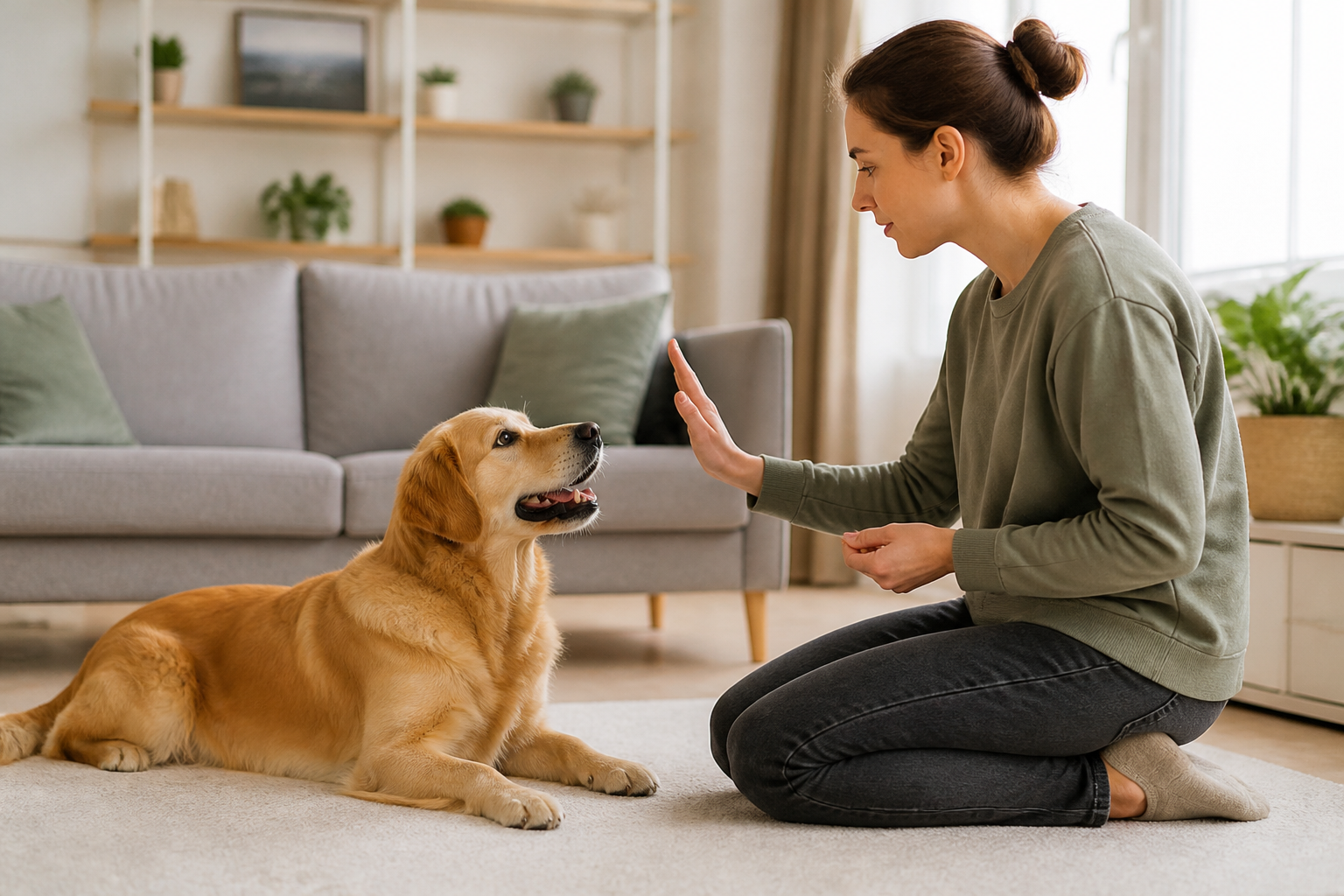
Do not demand silence while leaving the trigger unchanged. Reduce access to the window, increase distance, and teach a replacement response. If barking is directed toward people or animals, avoid close confrontations and seek qualified guidance when safety is uncertain.
Jumping and Mouthing
Jumping often produces attention, movement, or contact. Handlers can turn away, keep greetings calm, and reward four paws on the floor. Everyone in the household should respond consistently. If some people reward jumping and others discourage it, the dog receives an unpredictable lesson that may make the behavior more persistent.
For mouthing, stop rough hand play, offer an appropriate toy, and reinforce gentle interaction. Puppies commonly explore with their mouths, but painful or persistent biting requires careful supervision and professional advice. Children should not be responsible for managing this problem alone.
Leash Pulling
Pulling is usually self-reinforcing because it moves the dog toward smells, people, or places. Begin in a low-distraction area. Reward slack in the leash, voluntary check-ins, and walking near the handler. When tension appears, pause or change direction without jerking. Allowing planned sniffing and exploration can make the walk more satisfying and reduce conflict.
Equipment can improve control, but it does not replace teaching. Choose gear that fits properly and does not create pain or breathing difficulty. A harness, standard leash, and secure identification may be useful, especially during early training.
Fear and Reactivity
Fear-based behavior may include freezing, hiding, barking, lunging, or snapping. Reactivity describes an intense response to a stimulus; it does not by itself identify the emotion or predict dangerous intent. The safest starting point is distance. Pair the trigger with valuable rewards while the dog remains able to eat, move, and respond.
Gradual desensitization changes the intensity of exposure, while counterconditioning changes the dog’s association with the trigger. Flooding, or forcing prolonged exposure, can overwhelm the dog and worsen distress. If the dog has bitten, attempted to bite, or cannot remain safe at workable distances, consult a qualified behavior professional and use strict management.
Resource Guarding
Guarding may involve food, toys, resting places, people, or stolen objects. Never test a guarding dog by repeatedly taking items away or placing hands in its bowl. Such confrontations can increase anxiety and bite risk. Use barriers, trade games, and careful arrangements that prevent theft and protect children.

For significant guarding, individualized professional guidance is important. A specialist can identify risk, teach a safe exchange procedure, and help the household avoid predictable conflicts. Do not punish growling; treat it as information that the dog is uncomfortable.
Separation-Related Distress
A dog with separation-related distress may vocalize, pace, eliminate, destroy objects, or attempt escape when left alone. Video observation can help distinguish separation distress from boredom, external noise, or confinement problems. Training usually involves very gradual absences that remain shorter than the point of panic.
Provide enrichment, predictable routines, and a comfortable resting area, but do not assume a food toy solves severe distress. Veterinary involvement may be appropriate, particularly when panic is intense. Medication, when prescribed by a veterinarian, can sometimes support a broader behavior plan; it should not replace gradual training.
Teaching Essential Replacement Skills
A behavioral program becomes clearer when dogs learn useful alternatives. “Go to mat” can replace rushing at guests. A hand target can guide movement without pulling the collar. “Leave it” can reduce access to unsafe objects, while a trained trade prevents conflict. Recall, emergency turns, settling, and accepting handling also improve daily safety.
Teach each skill in easy conditions before expecting it around triggers. Reinforce generously at first, then vary rewards while maintaining the behavior. Do not reduce reinforcement so quickly that the dog loses motivation. In difficult environments, return to frequent, valuable rewards.
Generalization requires deliberate practice. Dogs do not automatically understand that a behavior learned in the kitchen also applies in a hallway, garden, vehicle, veterinary clinic, or public park. Change locations gradually and preserve enough simplicity for success. Different handlers should use the same cues and reward rules.
Choosing Professional Help
Seek a veterinarian when behavior changes suddenly, pain is possible, elimination patterns change, or anxiety appears severe. A veterinary behaviorist, where available, can evaluate medical and behavioral factors and discuss treatment options. A qualified reward-based trainer can teach skills and help structure practice.
Ask prospective professionals how they handle fear, aggression, guarding, and refusal. Look for clear explanations, humane methods, willingness to collaborate with veterinary care, and realistic discussion of risk. Be cautious of guarantees, dominance-based claims, secret techniques, or advice to provoke a dog to prove control.

Credentials differ by region, so verify training, continuing education, references, and professional standards rather than relying only on a label. For aggression, prioritize safety experience and individualized assessment over group-class popularity.
A Productive Daily Routine
A practical routine may include a short skill session, a decompression walk, supervised enrichment, rest, and carefully planned exposure to a mild trigger. Food puzzles, scatter feeding, scent games, and chewing opportunities can provide appropriate outlets, but enrichment should match the dog’s temperament and guarding history.
Meet physical and social needs without assuming more exercise always fixes behavior. Excessive stimulation can make some dogs more aroused. Sleep and recovery are part of learning. Puppies, elderly dogs, and dogs under stress may need more quiet time than owners expect.
Use household rules that everyone can follow. Decide where the dog rests, how greetings occur, which objects are available, and what happens when the dog needs space. Consistency reduces confusion, but flexibility remains important when the dog is ill, frightened, or overwhelmed.
Measuring Progress and Handling Setbacks
Progress may appear as lower intensity, faster recovery, greater distance tolerance, fewer rehearsals, or more frequent voluntary check-ins. Count these meaningful changes instead of focusing only on whether a problem has disappeared. A dog that still notices a trigger but can turn away and accept food has gained an important skill.
Setbacks are information, not proof that training failed. Review sleep, health, reward value, trigger distance, recent stress, and whether the dog had opportunities to practice the unwanted behavior. Return to an easier level temporarily. Avoid making several major changes at once, because unclear adjustments make it difficult to identify what helped.
Safety planning should be written, especially for bite risk. Identify triggers, warning signs, barriers, leash procedures, visitor instructions, and emergency contacts. Use secure equipment and avoid situations that exceed current skills. Children and visitors should never be expected to interpret subtle canine signals without adult supervision.
FAQ
Is behavioral dog training only for aggressive dogs?
No. It can help with ordinary challenges such as jumping, pulling, barking, recall, settling, handling, and greeting behavior. Aggression is one serious application, but prevention and early intervention are equally valuable. A plan should match the behavior’s cause, intensity, and safety implications.
How long does training take?
There is no universal timetable. Simple skills may improve quickly, while fear, guarding, separation distress, or long-practiced reactions often require sustained work. Progress depends on the dog, environment, consistency, health, trigger intensity, and quality of management. Look for gradual functional improvement rather than a guaranteed deadline.
Can an adult dog still change?
Yes. Older dogs can learn new associations and behaviors, although physical discomfort, sensory changes, established habits, and slower recovery may affect the plan. Use accessible rewards, shorter sessions, and veterinary assessment when needed. Age is not a reason to abandon humane training.
What should I do if my dog growls?
Increase distance, stop the interaction, and assess what caused discomfort. Do not punish the growl or force continued contact. Manage the situation so the dog cannot rehearse escalation, then seek qualified help if the pattern repeats, involves guarding, or creates safety concerns. A growl is valuable communication, not misbehavior to erase.
Are treats necessary forever?
Treats are useful for teaching and difficult situations, but rewards can eventually include play, access, praise, sniffing, and environmental opportunities. Many dogs still benefit from occasional food reinforcement, especially around strong distractions. Maintaining a behavior requires continued reinforcement, though its type and frequency can vary.
Should I use a crate?
A crate may provide a safe resting area when introduced gradually and never used as punishment. It is not appropriate as a forced solution for panic, confinement distress, or prolonged isolation. Some dogs prefer pens, rooms, or open beds. Choose the arrangement that supports safety and relaxation.
When is a group class unsuitable?
A group class may be unsuitable when a dog is highly fearful, reactive, aggressive, medically unwell, or unable to recover around other dogs. A private setting can reduce pressure and permit individualized management. Ask the instructor about adaptations before enrolling, rather than hoping the dog will simply adjust.
Conclusion
Behavioral dog training is a process of understanding, prevention, teaching, and reinforcement. Start with a precise description, investigate possible medical and environmental influences, keep the dog below threshold, and teach alternatives that work in real life. Reward useful choices, manage risk, and increase difficulty gradually.
The strongest plans respect both safety and emotional welfare. They do not promise instant transformation or depend on fear. Instead, they build predictable communication and give dogs practical ways to succeed. When behavior involves biting, severe panic, guarding, sudden change, or unsafe escalation, combine humane training with veterinary and qualified professional support. Consistent small improvements can produce durable positive change for dogs and the people who care for them.