
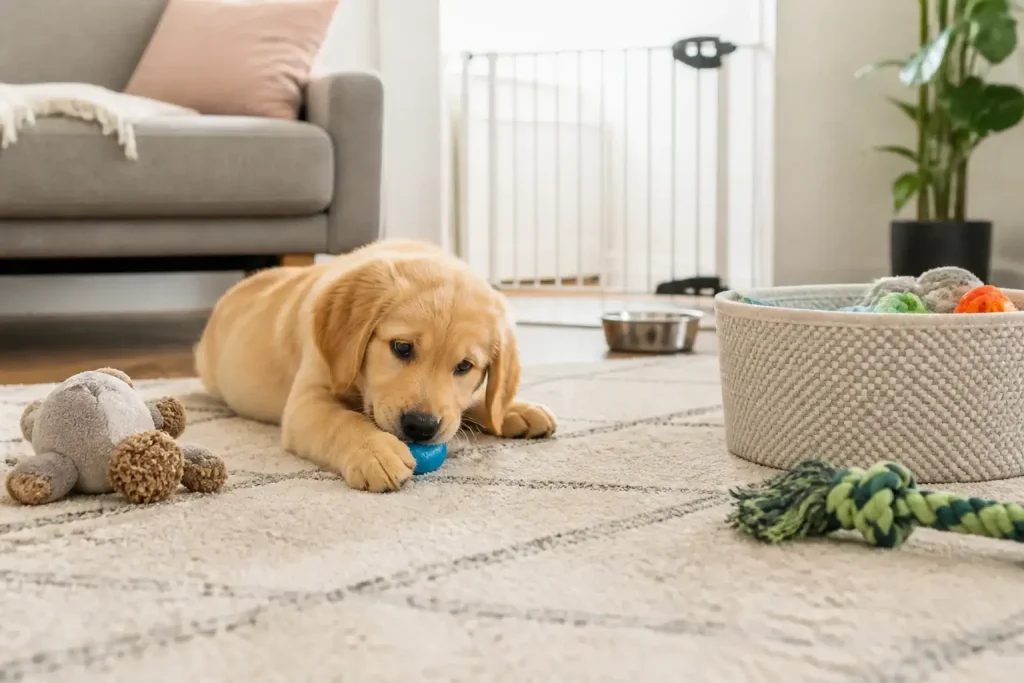
Puppy behavior management is the practical process of teaching a young dog how to live safely, calmly, and cooperatively with people. It is not about suppressing every energetic, curious, or inconvenient behavior. Instead, it combines prevention, communication, reinforcement, routine, and patient guidance so desirable habits become easier for the puppy to repeat. A well-managed puppy is not perfect; it is learning what works, what is safe, and how to recover from excitement.
The most effective approach begins with realistic expectations. Puppies investigate with their mouths, sleep frequently, become distracted quickly, and often lose control when tired or overstimulated. Biting, barking, jumping, accidents, chewing, and pulling are common developmental challenges, not proof of a bad temperament. Your task is to arrange the environment, respond consistently, and teach an alternative behavior before frustration becomes the household’s main strategy.
Puppy Behavior Management: Start With Management Before Training
Management prevents rehearsal of unwanted behavior while training builds a replacement. If a puppy repeatedly steals socks, jumping onto furniture becomes rewarding, or races through an open door, the behavior gains practice and often becomes harder to change. Use baby gates, a pen, closed doors, secure storage, a leash indoors when appropriate, and thoughtfully selected chew items. These tools are not shortcuts or punishments. They reduce opportunities for mistakes while the puppy’s skills are developing.
Create a puppy zone containing a comfortable resting place, water, safe toys, and easy-to-clean flooring. Keep valuable objects, medicines, wires, and small items out of reach. Supervise actively when the puppy is loose. If you cannot watch, use a safe confinement area or arrange appropriate care. Management should be temporary and flexible: as reliability improves, gradually provide more freedom rather than granting the whole home at once.
Build a Predictable Daily Rhythm
A dependable rhythm helps a puppy anticipate toileting, meals, play, rest, and interaction. Exact times are less important than repeated patterns. Take the puppy outside after waking, eating, drinking substantially, playing, and leaving confinement. Reward outdoor elimination immediately, using calm praise and a small treat if suitable. If an accident occurs, clean the area thoroughly with an appropriate enzymatic cleaner and avoid scolding. Punishment can make the puppy hide elimination without teaching the correct location.
Plan alternating periods of activity and sleep. Puppies may become mouthy, frantic, or disobedient when overtired. A quiet rest period after play can prevent an escalation that looks like deliberate misbehavior. Watch body language: rapid pacing, repeated biting, inability to settle, and frantic attention seeking may indicate a need for a break rather than more exercise.
Teach Through Reinforcement
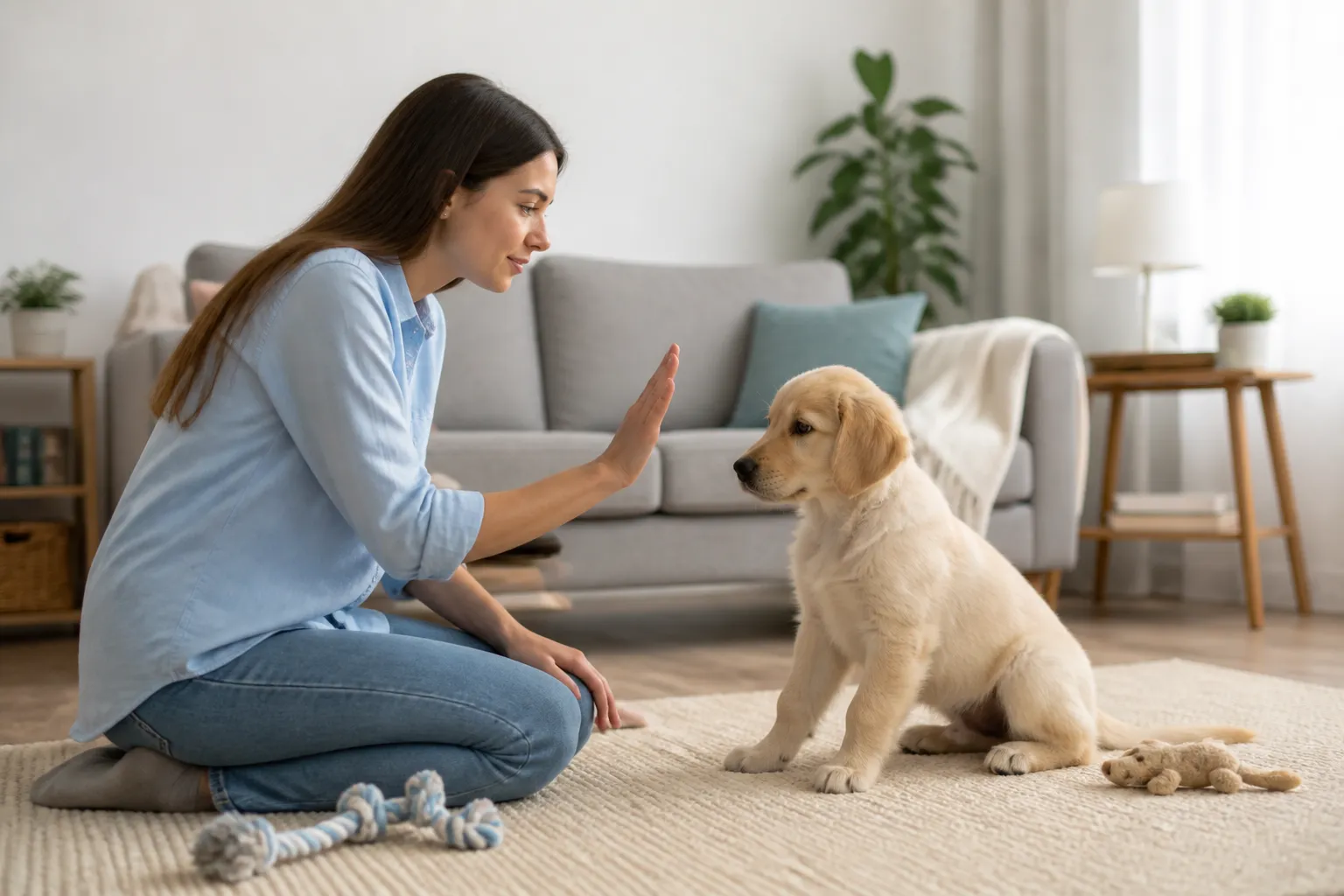
Reinforcement means making a behavior more likely by following it with something the puppy values. Food is often useful, but praise, play, access to sniffing, and gentle social attention can also reward behavior. Deliver the reward promptly, while the puppy is still performing or has just completed the desired action. Clear timing helps the puppy understand which choice earned success.
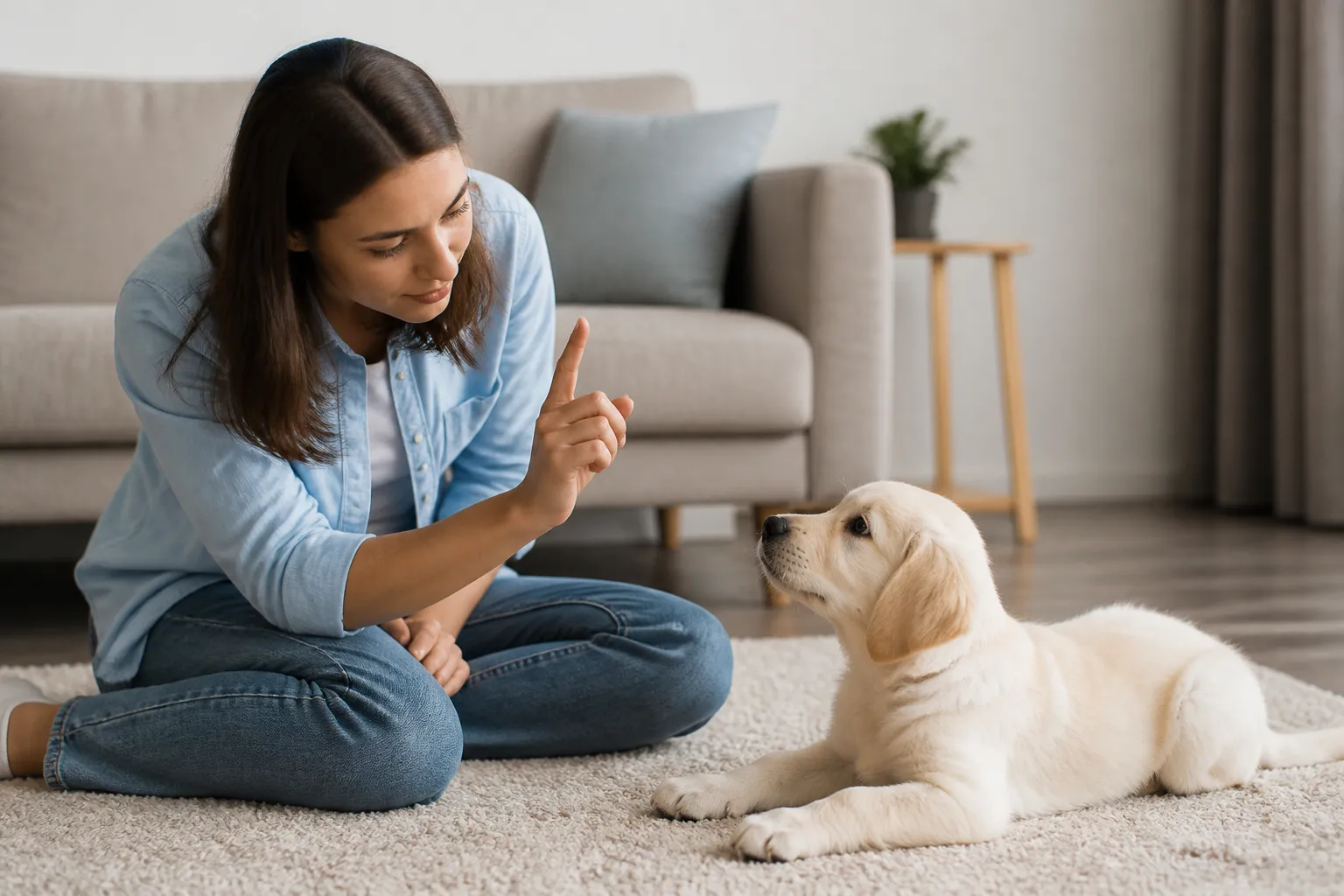
Begin in a quiet area. Say the puppy’s name once, wait for a glance, and reward that orientation. Practice several brief repetitions, then stop. Gradually add distance, mild distractions, and different rooms. If the puppy fails repeatedly, the exercise is too difficult; reduce the challenge instead of repeating the cue louder. Training should leave the puppy eager to participate.
Teach practical behaviors such as sit, hand targeting, coming when called, settling on a mat, dropping an object, and walking beside you. These skills are not merely tricks. A hand target can move a puppy without grabbing. A mat behavior creates a calm option during meals. “Drop” protects possessions and supports safe play. A recall can help in emergencies, although it should be developed carefully and supported with a long line or secure area until dependable.
Reinforce Calm Choices
Many families reward excitement unintentionally by opening doors while a puppy jumps, tossing toys during frantic barking, or delivering attention during nipping. Notice calm moments before the puppy demands interaction. Quietly place a treat on the floor, stroke only if the puppy remains relaxed, or begin play after four paws are down. Over time, the puppy learns that composure makes good things happen.
Do not require prolonged stillness from a young dog. Reward tiny improvements: pausing, loosening the body, looking away from a distraction, or settling for a few seconds. Increase duration gradually. Calmness is a trained skill, not simply a personality trait.
Handle Common Puppy Problems
Mouthing and Biting
Puppies explore with their mouths and often bite during play, teething, fatigue, or excitement. Offer an appropriate toy before hands become the target. If teeth touch skin, freeze the hand, briefly end interaction, and redirect to a toy when the puppy is able to engage appropriately. Avoid wrestling with hands, shouting, or physically pinning the puppy. These responses can increase arousal, create fear, or turn attention into an accidental reward.
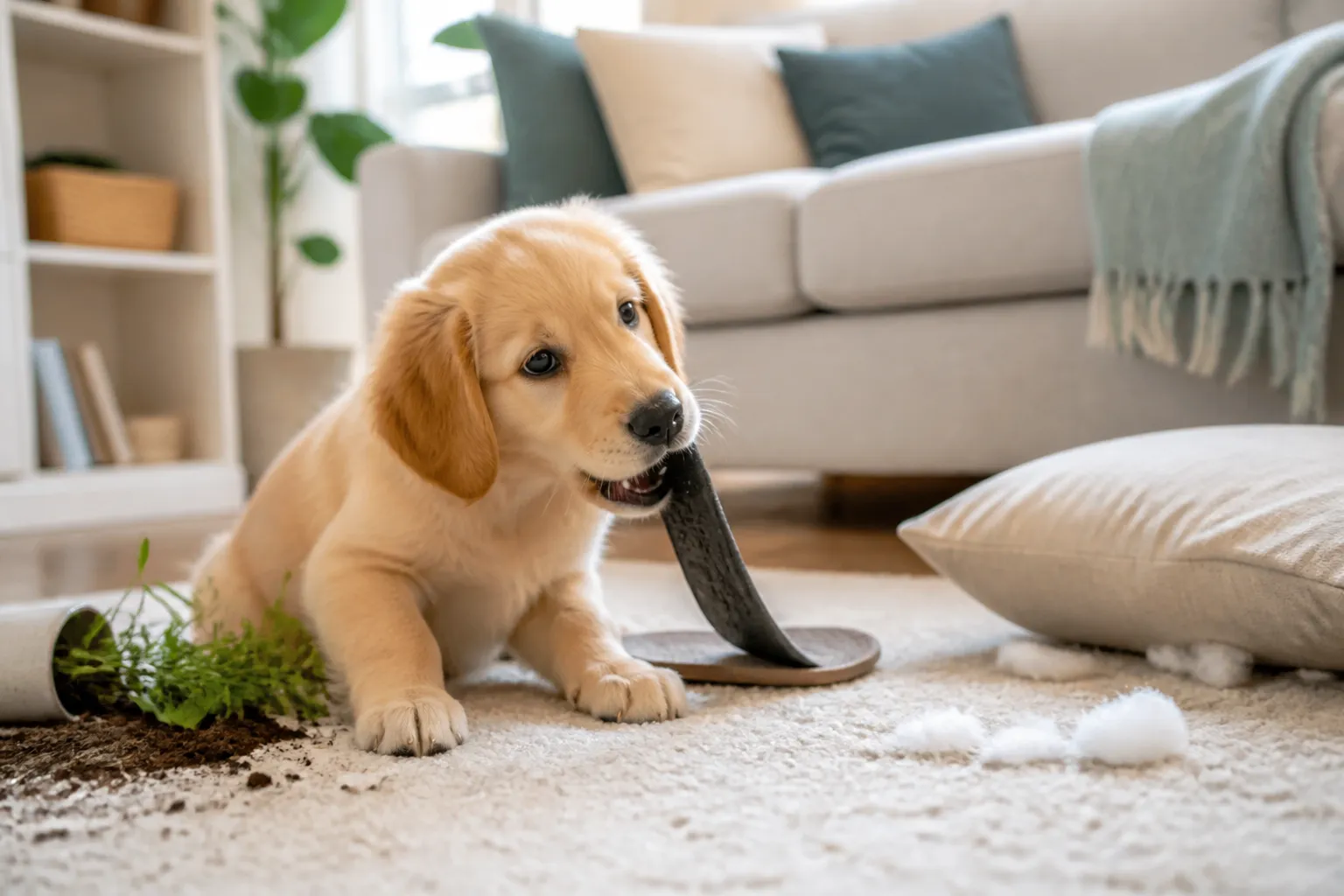
Use clothing, barriers, and calm pauses to prevent repeated rehearsal. Provide suitable chew textures, but supervise every item and remove anything that becomes damaged or small enough to swallow. If biting is intense, persistent, accompanied by stiff body language, or difficult to interrupt, consult a qualified behavior professional and a veterinarian.
Jumping Up
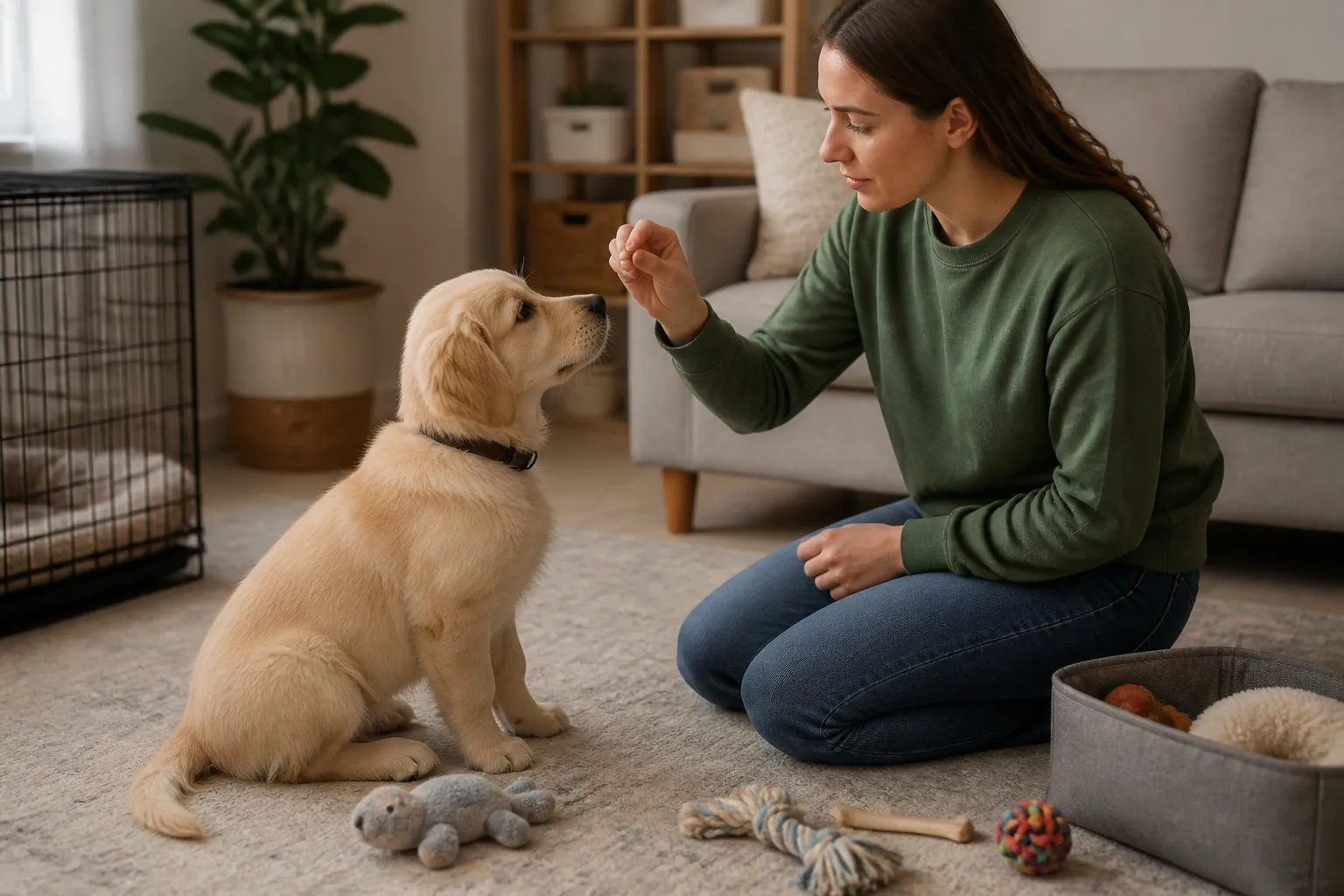
Jumping usually succeeds because it produces attention. Turn away, become still, or step behind a barrier until four paws return to the floor. Then reward the calm greeting. Ask visitors to follow the same procedure. For especially excited arrivals, use a leash, gate, or mat routine before opening the door. Practice with familiar people in short sessions rather than expecting success during a highly stimulating visit.
Barking
First identify the cause. A puppy may bark from alarm, frustration, play, loneliness, discomfort, or a desire for access. Responding effectively depends on the function. Reduce visual triggers with curtains, increase distance from frightening stimuli, provide a food puzzle during predictable events, or teach a quiet pause after a brief bark. Do not reward demand barking with immediate access, yet do not ignore distress indefinitely. A puppy that is panicked, isolated, or physically uncomfortable needs support, not a louder command.
Chewing and Stealing
Chewing is normal, but household objects must not become the puppy’s default entertainment. Rotate safe toys so they remain interesting, provide supervised chewing opportunities, and increase rest and enrichment when destructive behavior rises. If the puppy steals an object, do not chase. Offer a better reward, say a consistent exchange cue, and retrieve the item after the puppy releases it. Chasing can transform theft into an enjoyable game.
Toileting Mistakes
Take the puppy outside frequently enough to prevent avoidable errors, especially after sleep, food, excitement, and confinement. Use a consistent toilet area and reward promptly. Keep a simple record of meals, outings, and accidents; patterns often reveal when timing needs adjustment. Never rub a nose in a mess or punish after the event. If accidents persist, increase supervision and consult a veterinarian about possible medical contributors.
Socialization With Safety and Choice
Socialization is the gradual introduction of a puppy to people, animals, surfaces, sounds, handling, travel, and everyday environments. The goal is not to greet everything. The goal is to help the puppy remain comfortable and learn that unfamiliar experiences can be safe. Follow veterinary guidance regarding disease exposure and vaccination while choosing low-risk opportunities, such as observing the world from a clean location, meeting calm people, or attending an appropriately managed class.
Pair new experiences with food, play, distance, and escape options. Let the puppy approach rather than forcing contact. Signs of stress may include tucked posture, freezing, lip licking, yawning, turning away, hiding, frantic movement, or refusal of food. Increase distance and simplify the situation when these signs appear. Socialization that overwhelms a puppy can worsen fear, so quality matters more than quantity.
Teach cooperative handling gradually. Touch one ear, reward, and stop. Later, lift a paw, examine the collar area, brush briefly, or simulate a veterinary procedure. Use high-value reinforcement and breaks. Never force prolonged handling unless immediate safety requires it; seek professional guidance for difficult grooming or medical care.
Exercise, Enrichment, and Rest
A puppy needs suitable movement, mental activity, social contact, and substantial rest. Exercise should be age- and health-appropriate; avoid designing a routine around exhaustion. Repetitive high-impact activity, forced running, or excessive jumping may be unsuitable for growing bodies, depending on the individual dog and veterinary advice. Short walks for exploration, gentle play, sniffing, and training often provide more useful enrichment than simply covering distance.
Food puzzles, scatter feeding, scent games, cardboard search activities using safe materials, and toy rotation encourage problem solving. Introduce each activity simply, supervise it, and adjust difficulty so the puppy experiences success. Enrichment should not become a source of frustration or ingestion risk.
Rest deserves deliberate protection. Provide a quiet sleeping area away from constant traffic, children, and other pets. Teach household members not to disturb a resting puppy. If the dog cannot settle, lower stimulation, guide it to the rest area, and reinforce quiet behavior. A tired puppy is not always ready for more exercise; sometimes it needs sleep.
Children, Visitors, and Other Pets
Children should never be responsible for managing a puppy alone. Teach them to avoid chasing, hugging, cornering, taking food, or disturbing sleep. Provide an adult-supervised interaction plan: children can toss treats, request simple behaviors, or play with a toy while an adult controls intensity. A gate or pen gives everyone a safe way to pause.
Introduce visitors gradually. Ask them to ignore the puppy initially, avoid looming, and reward calm orientation. Once the puppy is relaxed, allow brief interaction. For other pets, use barriers, leashes, separate resources, and short sessions. Feed animals apart, prevent chasing, and provide each pet with protected retreat space. Supervision should continue until behavior is reliably safe, not merely friendly during a few early meetings.
Respond to Fear, Frustration, and Aggression
Behavior labels are less useful than observing context, body language, triggers, intensity, and recovery. Growling is communication that the puppy is uncomfortable; punishing it may remove a warning without resolving the emotion. Increase distance, stop the interaction, and identify what made the situation difficult. Do not deliberately expose a fearful puppy to overwhelming stimuli in an attempt to force adaptation.
Aggressive behavior, repeated snapping, guarding, severe panic, or sudden behavior change warrants prompt professional assessment. A veterinarian can investigate pain or illness, while a qualified reward-based behavior consultant or veterinary behaviorist can design a safety plan. Avoid advice based on dominance, intimidation, shock, or physical punishment. Such methods can increase fear and conflict and may damage trust.
Choose Helpful Training Products
Useful puppy products support safety, management, and learning. A properly fitted harness can make walks easier to manage; a flat collar may hold identification, but equipment should never be used to jerk or choke. A sturdy pen, pressure-mounted or hardware-mounted gates suited to the space, washable bedding, chew toys, food-stuffing toys, a treat pouch, and an enzymatic cleaner form a practical foundation.
Select products according to the puppy’s size, chewing habits, supervision level, and environment. Inspect toys regularly and discard damaged items. Avoid products that splinter, break into swallowable pieces, or encourage dangerous restraint. A clicker can provide precise timing, but a verbal marker works equally well when used consistently. Products cannot replace supervision, sleep, training, or professional advice; they make those practices easier to apply.
A Simple Training Plan
Choose two or three priority goals for the first week, such as outdoor toileting, name response, and calm greetings. Record what happens before each problem, the behavior itself, and what follows. This ABC pattern—antecedent, behavior, consequence—can reveal practical changes. If jumping follows door opening and produces attention, change the door routine and reward an alternative.
Train for one to five minutes, several times daily, depending on the puppy’s capacity. End after a successful repetition. Use ordinary household moments: reward waiting before meals, looking at you near a distraction, releasing a toy, or settling while you work. Review progress weekly, not hourly. Temporary setbacks are normal after travel, illness, teething, environmental changes, or reduced sleep.
Frequently Asked Questions
How should I stop puppy biting?
Prevent access to hands, offer toys, pause interaction when teeth touch skin, and protect rest periods. Reward gentle engagement. If the behavior is severe, escalating, or paired with fear, seek professional help.
Is crate training necessary?
A crate is optional, but a safe confinement area can support travel, rest, house training, and veterinary care. Introduce it gradually with food, open-door exploration, and short calm periods. Never use it as prolonged isolation or punishment.
How long does training take?
There is no universal timetable. Puppies develop at different rates, and reliability depends on reinforcement, environment, health, sleep, and consistency. Expect gradual improvement with occasional regression. Build difficulty in small steps.
Should I punish accidents or barking?
Punishment after an accident cannot teach location. Punishing barking without addressing its cause can increase fear or frustration. Prevent triggers, teach alternatives, and reward appropriate behavior instead.
When can my puppy meet other dogs?
Follow your veterinarian’s guidance on local disease risks and vaccination. Favor healthy, gentle, well-managed dogs and controlled settings. Avoid chaotic groups where the puppy cannot retreat or recover.
What if family members use different rules?
Hold a brief household meeting and write down shared cues, boundaries, rewards, and management procedures. Consistency does not require identical personalities; it requires predictable consequences for the puppy.
How much should I use treats?
Use small, suitable rewards and account for them within the puppy’s overall feeding plan. Some repetitions can use praise, play, access to sniffing, or life rewards. Ask a veterinarian for individualized nutritional guidance.
Conclusion
Successful puppy behavior management is a daily system, not a single command or product. Prevent unsafe rehearsal, provide sleep and enrichment, teach useful alternatives, reward calm choices, and introduce new experiences at a tolerable pace. When problems appear, investigate causes instead of assigning blame. Clear routines and humane training make learning easier for both puppy and household.
Begin with one manageable change today: secure the environment, schedule a calm toilet outing, practice a name response, or reward four paws on the floor. Track small improvements and adjust difficulty thoughtfully. With patience, supervision, and timely professional support, your puppy can develop reliable habits while preserving confidence, curiosity, and trust. That combination creates the genuinely happy home every new dog and family deserves.