

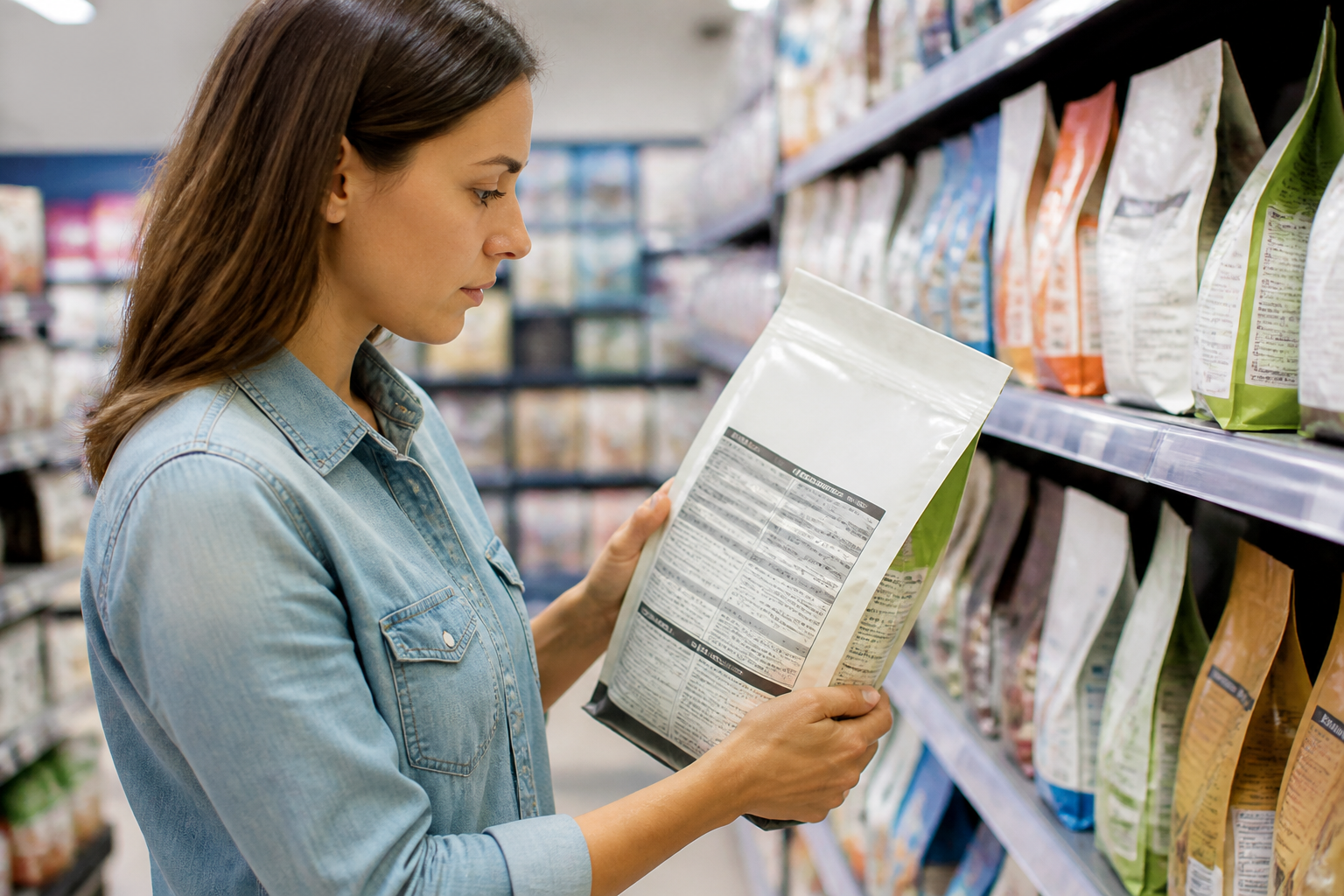
Reading a dog food ingredient list correctly means looking beyond the first attractive word on the package. The list can reveal the recipe’s main ingredients, protein sources, added nutrients, and potential concerns, but it cannot answer every question about nutritional adequacy by itself. Use it alongside the guaranteed analysis, feeding directions, adequacy statement, calorie information, and advice from a veterinarian when your dog has a medical condition.
Ingredients are generally listed by weight before processing. That rule is useful, yet moisture changes how foods compare. Fresh chicken contains considerable water, while chicken meal has had most water removed. Consequently, a fresh meat ingredient may appear before a concentrated meal even though the meal contributes more protein after cooking. The best reading method combines ingredient order with the form of each ingredient and the food’s complete nutritional statement.
Start with the Label’s Purpose
Before judging individual ingredients, identify what the product is intended to be. Look for a statement describing the food as complete and balanced for a particular life stage, such as growth, adult maintenance, reproduction, or all life stages. This statement is more important than whether the ingredient list includes a fashionable item.
A food labeled for intermittent or supplemental feeding is not designed to provide a dog’s entire diet. It may be useful as a topper, treat, or short-term component, but feeding it as the sole food can create nutritional imbalances. Foods formulated for puppies, pregnant dogs, or nursing dogs have different nutritional expectations from foods intended for healthy adult maintenance.
The label should also identify the manufacturer or responsible company, feeding directions, net quantity, calorie content, and contact information. These details do not prove quality, but they help you evaluate whether the package provides enough information for a responsible choice.
Read Ingredients in Context
The first ingredients
The opening ingredients usually make up the largest portion of the recipe by weight before cooking. Examine the first several entries rather than focusing only on the first one. A list beginning with named animal ingredients, grains, legumes, or vegetables may describe a perfectly suitable formula, depending on your dog’s needs and the product’s nutritional adequacy.
Named ingredients are generally more informative than vague category terms. “Chicken,” “beef,” or “salmon” identifies a source, while “meat” or “animal fat” provides less detail. Less specific wording is not automatically unsafe, but it gives you fewer clues about the formula. A food using several versions of a similar carbohydrate, such as rice, rice flour, and rice bran, may distribute that ingredient across separate entries. This can affect its apparent position on the list.
Do not assume that the first ingredient alone determines quality. A recipe can start with fresh meat, followed by several starches, while another can start with a concentrated meat meal and contain more animal-derived protein overall. Ingredient order is a starting point, not a complete nutritional verdict.

Fresh meat and meat meals
Fresh or frozen meat includes water, which is lost during extrusion, baking, or canning. Meat meal is rendered and dried, so it is more concentrated. If chicken appears first and chicken meal appears later, both may contribute meaningfully. If only fresh chicken appears near the top and plant ingredients dominate afterward, the final protein profile may differ from what the front label suggests.
Meals should not be rejected simply because the word sounds processed. A named meal can be a practical source of concentrated protein and minerals. Conversely, “meat meal” offers less source information than “turkey meal.” Evaluate the complete recipe, not a single term.
Animal by-products
By-products are parts of an animal other than skeletal muscle. They can include organs and other edible tissues, depending on the ingredient definition and manufacturing standards. Organs may supply valuable nutrients, so the word “by-product” does not automatically indicate poor quality. The meaningful questions are whether the source is identified, whether the food is complete and balanced, and whether the company provides clear information.
Understand Protein Claims
Protein percentage is not protein quality alone
The guaranteed analysis typically lists crude protein, crude fat, crude fiber, and moisture. Crude protein measures nitrogen-containing material, not the exact amount of usable protein from each source. Two foods with the same protein percentage can provide different amino acid profiles and digestibility.
Dogs require specific amino acids, not merely a high number on the label. Animal tissues can be useful sources, but appropriately formulated plant ingredients can also contribute to a complete diet. A higher protein percentage is not automatically better for every dog. Puppies, highly active dogs, senior dogs, and dogs with kidney or other medical problems may need individualized guidance.
Compare dry and wet foods fairly
Wet food often appears lower in protein because its moisture content is high. To compare products, convert nutrient percentages to a dry matter basis. The basic calculation is:
dry matter percentage equals 100 minus moisture percentage.
Then divide the listed nutrient percentage by the dry matter percentage and multiply by 100. For example, a canned food containing eight percent protein and seventy-five percent moisture has twenty-five percent dry matter. Its protein on a dry matter basis is eight divided by twenty-five, multiplied by 100, or thirty-two percent.

This calculation improves comparisons, but it does not reveal amino acid balance, calorie density, or digestibility. Treat it as one tool rather than a final ranking system.
Calories matter
Two foods with similar ingredients and guaranteed analysis can supply different calories. Follow the package’s calorie statement, usually expressed per kilogram and sometimes per cup, can, or other familiar measure. Feeding amounts are starting points, not universal prescriptions. Monitor body condition, weight trend, stool quality, appetite, and activity, then adjust portions with professional guidance when needed.
Examine Fats, Carbohydrates, and Additives
Fat sources
The ingredient list may include named animal fats, fish oil, vegetable oils, or broader terms such as animal fat. Named sources provide greater transparency. Fish oils can supply long-chain omega-three fatty acids, but the label may not state the exact amount of specific fatty acids. If your dog needs a therapeutic level, ask a veterinarian rather than estimating from ingredient order.
Fat is energy dense and supports skin, coat, and palatability, but excessive calories can promote weight gain. Dogs with pancreatitis, gastrointestinal disease, or other conditions may require a carefully controlled fat level. Never judge fat solely by whether it comes from an animal or plant source.
Carbohydrates and grains
Dogs can digest properly cooked starches, and grains are not inherently fillers. Rice, oats, barley, corn, and wheat can provide energy, fiber, vitamins, minerals, and texture. Some dogs have genuine intolerances or allergies, but broad claims that all grains are harmful are not a reliable way to interpret labels.
Legumes and potatoes may also provide carbohydrate and nutrients. The important issue is the entire formula, its nutritional adequacy, and your dog’s response. If a veterinarian recommends an elimination diet, do not casually substitute another food containing overlapping ingredients.
Fiber
Crude fiber is a limited measurement and does not describe every type of dietary fiber. Fiber can support stool formation, intestinal function, and satiety, yet too much or the wrong balance may cause gas or loose stools. Ingredients such as beet pulp, cellulose, bran, or certain vegetable fibers have different properties. A dog with chronic digestive symptoms needs an individualized plan rather than a label-based guess.
Preservatives, colors, and flavorings
Preservatives help prevent spoilage, especially in foods containing fat. Some consumers prefer natural preservatives, while others accept approved synthetic preservatives because stability and safety depend on correct use. “Natural” does not automatically mean safer, and an unfamiliar chemical name is not automatically dangerous.
Artificial colors are usually unnecessary for a dog’s nutritional needs because dogs do not select food based on the same visual cues people do. Their presence may influence your preference, but color alone does not determine nutritional value. Flavorings can improve acceptance, particularly in veterinary diets or foods for selective eaters, yet they should not distract from the adequacy statement and calorie content.
Vitamins and minerals
The final portion of many lists includes vitamin and mineral supplements. These support requirements that whole ingredients alone may not reliably meet. Chelated minerals, specific vitamin forms, taurine, and other nutrients can appear in the premix. Do not assume that a long supplement list means the food is superior; it often reflects careful formulation.
Spot Marketing Language and Common Traps
Front-of-package phrases are often designed to attract attention. “With chicken” may legally indicate a smaller inclusion than “chicken dinner,” while “flavored with” communicates even less about quantity. Terms such as premium, holistic, natural, ancestral, or superfood may have limited value unless the label defines them and the underlying diet meets your criteria.
A recipe can also contain an ingredient associated with a health claim in a very small amount. Seeing blueberries, herbs, or a named oil does not prove a meaningful benefit. Ask whether the ingredient appears high enough in the list to matter, whether its nutrient contribution is documented, and whether the complete food is appropriate for your dog.
Ingredient splitting is another reason to read beyond the first line. Several forms of peas, potatoes, or rice may appear separately. This does not automatically make the recipe deceptive, because each ingredient may have a legitimate functional role, but it means the combined contribution of related ingredients deserves attention.
Compare Foods Using a Practical Process
Step one: identify your dog’s requirements
Write down your dog’s age, size, activity level, reproductive status, body condition, known allergies, medical diagnoses, and current symptoms. A healthy adult with stable weight can usually be evaluated differently from a growing puppy or a dog on a prescription diet.
Step two: confirm adequacy and intended use
Find the nutritional adequacy statement and verify that it matches your dog’s life stage. Confirm whether the food is complete or supplemental. If the statement is absent, unclear, or inconsistent with your intended use, choose another product or contact the manufacturer.

Step three: inspect the main ingredients
Read the first several ingredients, note named protein sources, identify concentrated meals, and observe the major carbohydrate sources. Consider ingredient splitting, but avoid declaring a food unsuitable from one pattern alone.
Step four: compare analysis and calories
Compare dry matter protein and fat when products have different moisture levels. Check calories per familiar serving and calculate how much food your dog would actually receive. A lower calorie formula may be useful for weight management, but portion control remains essential.
Step five: evaluate transparency
Prefer labels that provide clear ingredient names, feeding directions, calorie information, company contact details, and a credible adequacy statement. Transparency cannot guarantee that every dog will thrive, but it makes informed decisions easier.
Step six: transition and observe
Change foods gradually over several days unless a veterinarian directs otherwise. An abrupt change can cause digestive upset even when both foods are sound. Record appetite, stool consistency, vomiting, itching, ear problems, weight, and energy. At the checkpoint after the transition, assess body condition and bowel habits. If symptoms appear, stop assuming the ingredient list explains everything; consult a veterinarian and consider returning to the previous diet if advised.
When Ingredient Lists Are Not Enough
Ingredient lists cannot reliably diagnose an allergy, identify every contaminant risk, prove digestibility, or reveal how a recipe performs for an individual dog. They also cannot establish that one food is universally better than another. Manufacturing controls, nutrient testing, formulation expertise, storage, and feeding practices all matter.
For a suspected food allergy, veterinary elimination trials are more dependable than repeatedly changing commercial foods. A dog may react to a protein, but itching, diarrhea, recurrent ear disease, and vomiting can have many causes. Testing one ingredient at a time without a controlled plan often produces confusing results.
Dogs with kidney disease, urinary disorders, pancreatitis, diabetes, severe obesity, chronic gastrointestinal disease, or other medical conditions may need precise nutrient targets. In these situations, a standard over-the-counter ingredient comparison should not replace veterinary advice. Therapeutic diets are formulated around nutrient profiles, not merely attractive ingredients.
FAQ
Should the first ingredient always be meat?
No. Ingredient order is useful but incomplete. Fresh meat contains water, and meat meal is concentrated. Review several ingredients, the guaranteed analysis, calorie content, and adequacy statement together.
Are by-products bad for dogs?
Not automatically. By-products can include nutrient-rich organs and tissues. A named source and complete nutritional statement provide more useful information than rejecting the term by itself.
Are grains unhealthy?
For most dogs, properly formulated grains can provide digestible energy, fiber, vitamins, and minerals. Individual sensitivities exist, but a grain-free label is not automatically healthier.
How can I compare canned and dry food?
Use dry matter calculations, then consider calories, protein and fat levels, ingredient sources, and your dog’s response. Moisture differences make direct percentage comparisons misleading.
Is a long ingredient list a warning sign?
Not necessarily. Vitamins and minerals can make a list long. Focus on adequacy, transparency, main ingredients, calories, and suitability rather than counting entries.
What does “natural” prove?
It may describe how ingredients are sourced or processed under applicable labeling rules, but it does not guarantee superior nutrition, safety, or suitability. Read the complete label.
Should I avoid preservatives?
Preservatives help protect food from spoilage. Evaluate the specific product, storage instructions, and your dog’s needs. “Natural” and “synthetic” are not complete safety categories.
How often should I change foods?
There is no universal schedule. If a food supports healthy weight, stools, appetite, and energy, unnecessary changes may create digestive upset. Change gradually when a nutritional or medical reason exists.
Conclusion
A correct reading begins with the adequacy statement, not the front-of-package promises. Next, study the first several ingredients, distinguish fresh meat from concentrated meal, interpret protein and fat on a comparable dry matter basis, check calories, and consider your dog’s life stage and health. Treat marketing terms as clues rather than proof, and remember that by-products, grains, preservatives, and supplements require context.
The most persuasive label is not the one with the trendiest words. It is the one that clearly identifies its intended use, supplies meaningful nutritional information, and fits your dog’s measurable needs. Observe the results after a gradual transition, use body condition and stool quality as practical checkpoints, and seek veterinary help when symptoms, allergies, or medical conditions complicate the decision. With this method, ingredient lists become useful evidence instead of a source of confusion.