
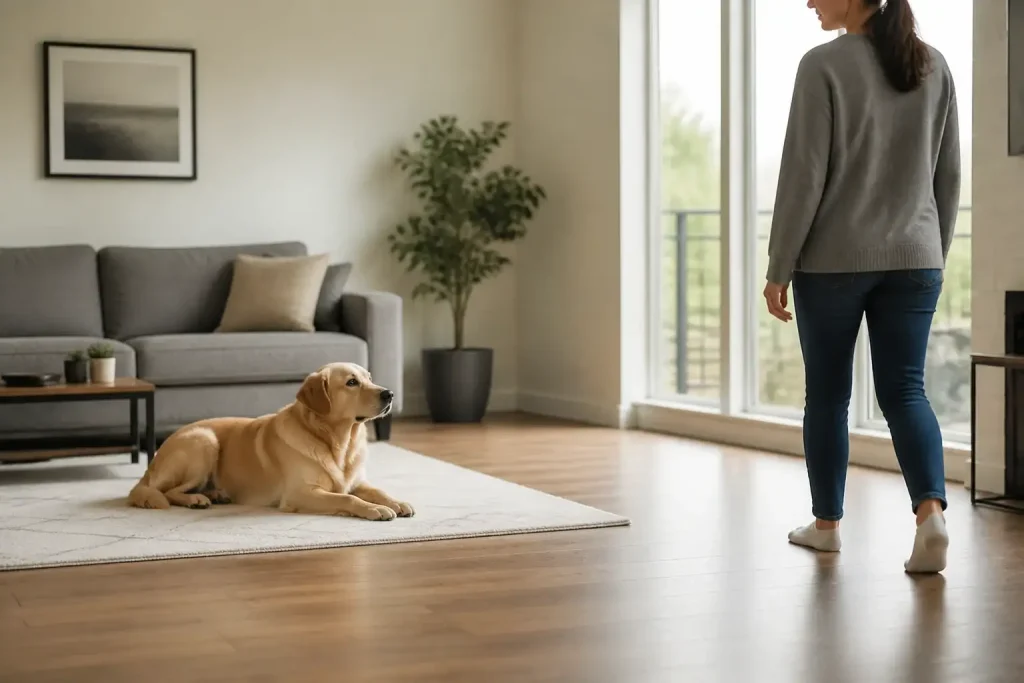
Teaching a Dog to Hold a Stay While the Handler Moves
A reliable stay means your dog remains in a chosen position until you give a release cue, even when you change location, direction, or speed. The most effective way to teach it is to separate the skill into small challenges: first build stillness, then add handler movement, distance, duration, and distractions. Increase only one difficulty at a time, reward correct choices promptly, and return to the dog before releasing whenever possible.
This exercise is more than a party trick. It can help a dog wait safely at a doorway, remain settled during grooming, pause while you carry an object, or hold position during training and veterinary handling. It also teaches the dog that your movement is not automatically an invitation to follow.
Training should be calm, brief, and supervised. Use rewards your dog values, a quiet location, and a release word such as “free” or “okay.” Choose a separate marker, such as “yes,” to identify the instant the dog performs correctly. Avoid repeating the stay cue over and over. Repetition can make the cue sound like background noise rather than a clear instruction.
Prepare the Exercise
Before adding movement, decide exactly what “stay” means. Many handlers want the dog to keep all four paws in place, while others focus primarily on maintaining the sit, down, or stand. Define your standard before training, and apply it consistently. A dog should not be corrected for a rule it has never clearly learned.
Select a starting position that your dog already knows. A sit is often convenient, but a down may be easier for dogs that naturally settle, and a stand can be useful for handling practice. Give the position cue first. Once the dog is correctly positioned, say “stay” in a neutral voice, pause briefly, mark the behavior, and deliver a reward while the dog remains still.
Place the reward near the dog rather than luring the dog toward you. Feeding in position helps communicate that staying put is what earns reinforcement. If the dog stands, take food away calmly and reset without scolding. The goal is to make the correct response easy to understand, not to create anxiety about mistakes.
Use a leash if the environment requires one, but do not use it to hold the dog physically in place. A leash is for safety, not for forcing compliance. Remove toys, food bowls, visitors, and other distractions until the dog understands the basic game.
Choose a Release Cue
A release cue ends the stay. It should be different from praise or the marker. “Good” may become confusing if you use it casually, while “free” or “all done” can clearly signal that movement is now allowed. Say the release cue once, then encourage the dog to move with a small gesture or a tossed treat.
The release is part of the behavior, not an optional extra. If the dog learns that staying ends whenever you reach for a reward, shift your weight, or turn away, the dog may begin guessing. A predictable release gives the exercise a clear beginning and end.
Build Duration Before Movement
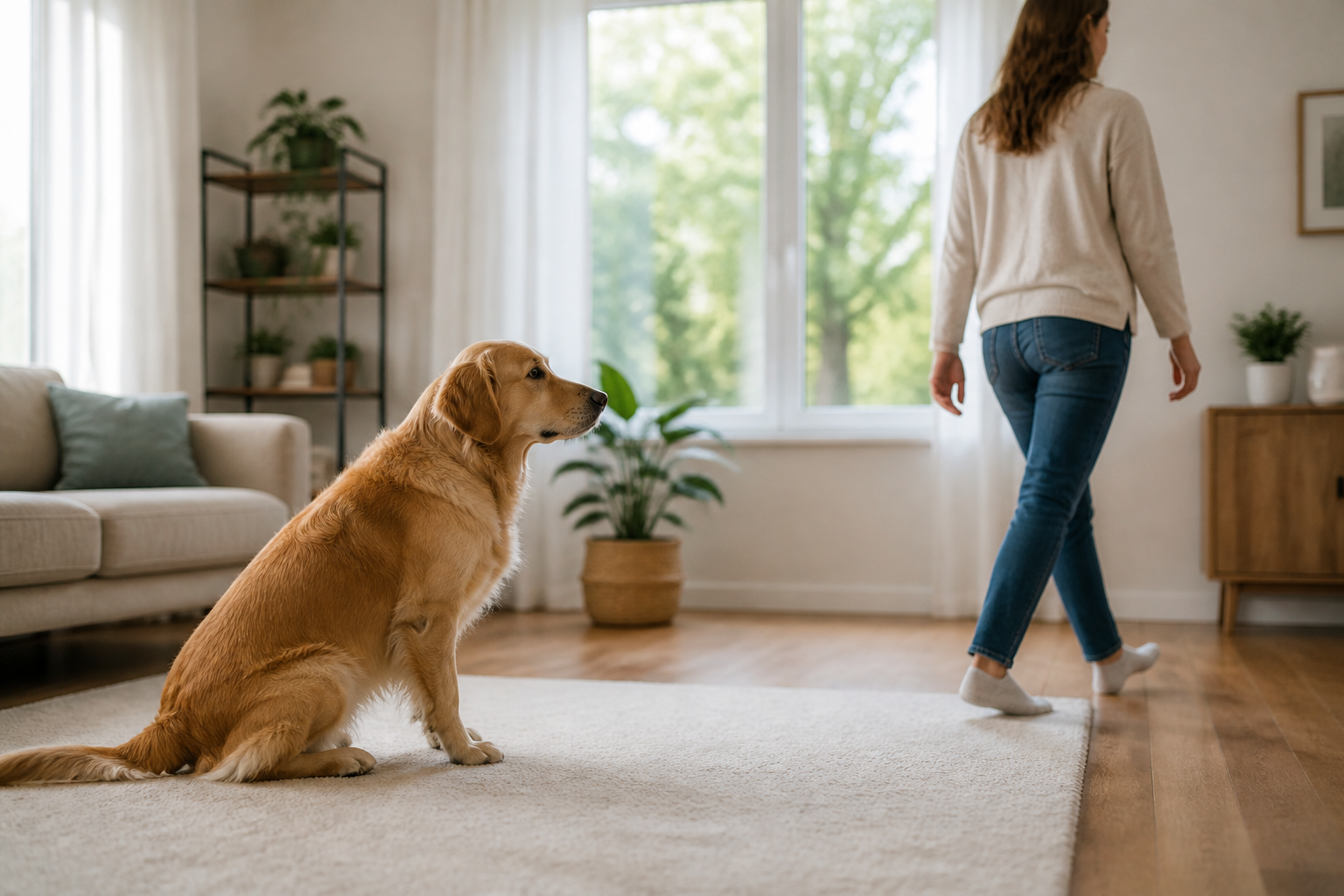
Start with a duration your dog can complete easily, perhaps one or two seconds. Give the position cue, add “stay,” wait, mark, reward, and release. Repeat several successful trials. Then lengthen the pause gradually, using small increases rather than jumping from two seconds to half a minute.
Watch the dog’s body language. A lifted paw, leaning forward, tense muscles, repeated head turns, or a widening stance may indicate that the current challenge is too difficult. These signs are useful information. Reward sooner, shorten the interval, or return to an easier version before the dog breaks position.
A practical checkpoint is five successful repetitions at the current duration, with the dog remaining relaxed and responding promptly to the release cue. If one trial fails, do not treat it as stubbornness. Lower the difficulty for the next attempt. Training becomes clearer when success is common and errors are informative rather than dramatic.
Vary duration slightly instead of increasing it in a rigid pattern. For example, ask for three seconds, then two, then four, then three. Unpredictable reinforcement can help the dog remain attentive, but the average challenge should still rise gradually. Do not make every repetition longer, because the dog may learn to anticipate failure near the end.
Add Small Handler Movements
Once duration is comfortable, introduce movement without adding distance. Begin by shifting your weight from one foot to the other. Pause, mark, reward, and release if the dog holds position. Next, move one hand, turn your shoulders, look briefly to the side, or take one small step in place.
The key checkpoint is whether the dog maintains the original position while watching you without creeping forward. If the dog moves, calmly reset and make the next repetition easier. For instance, return from a full step to a weight shift, or reward after a shorter pause.
Progress through movement in a planned sequence:
- Shift weight.
- Move an arm.
- Turn your head.
- Turn your shoulders.
- Pivot partly away.
- Take one step sideways.
- Take one step backward.
- Walk around the dog briefly.
Do not assume that one type of movement predicts another. A dog may remain steady while you step sideways but follow when you turn your back. Each change should be introduced as a separate learning problem.
Keep your gestures ordinary and controlled. Large, sudden movements can create excitement or concern, especially in sensitive dogs. If your dog has a strong history of following motion, begin with movements that are almost boring. The aim is to teach that your movement does not change the instruction.
Increase Distance Carefully
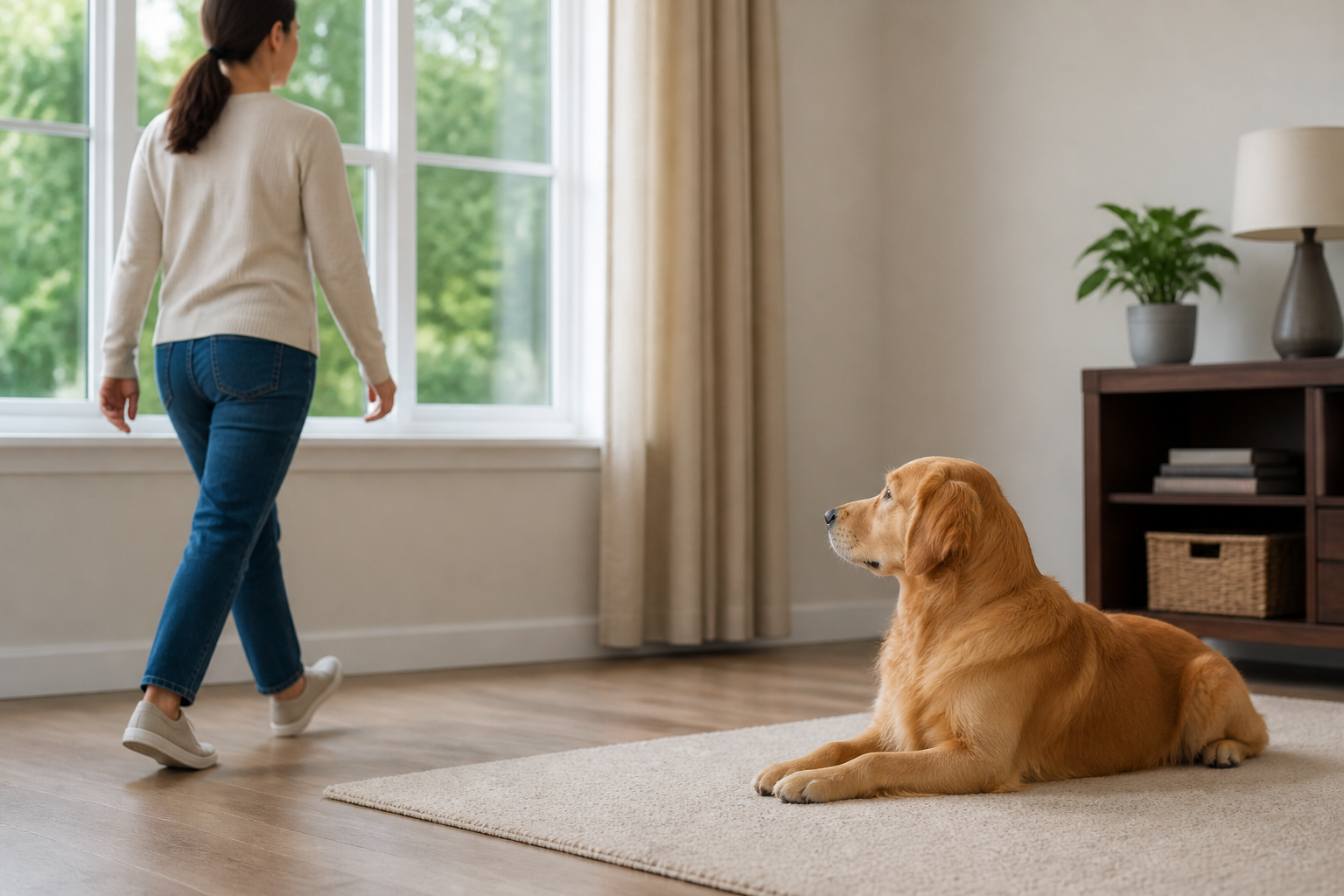
After the dog can tolerate nearby movement, add distance. Take one step away, pause briefly, return, mark, reward, and release. Returning to the dog before releasing reduces the chance that the dog learns to rush toward you. It also allows you to reinforce the position directly.
Gradually try two steps, a short diagonal, and a brief turn away. Distance and duration interact, so avoid increasing both at once. A ten-second stay with you nearby may be easier than a two-second stay while you walk across the room. If you add distance, temporarily shorten the time.
Use a simple training plan. For one session, keep the duration short and practice several distances. During another session, remain close while developing a longer duration. This separation makes it easier to identify what caused a mistake and what adjustment will help.
An observable checkpoint is the dog holding the chosen position while you reach the planned distance, wait briefly, and return without the dog stepping toward you. If the dog breaks before you return, do not call the dog back to its place as a punishment. Reset quietly, reduce distance, and reward the shorter success.
Return and Release Correctly
Your return can accidentally become a cue to move. Walk back calmly, stand beside the dog for a moment, reward while the dog remains positioned, and then give the release cue. Occasionally return, reward, and ask for another short stay instead of releasing immediately. This prevents the dog from assuming that your return always ends the exercise.
However, avoid trapping the dog in an unexpectedly long session. A stay should remain fair and predictable. Release frequently enough that the dog understands the purpose of the cue and remains willing to participate.
Add Direction Changes and Realistic Movement
Dogs often respond differently when a handler walks toward them, away from them, or across their path. Practice each direction separately. Begin with one step, then return and reward. If walking toward the dog causes backing up or jumping, approach more slowly, use a shorter distance, and reinforce before the dog reacts.
Next, practice passing behind the dog. Some dogs turn to keep the handler in view; others stand and follow. Move only as far as the dog can tolerate, then return. You may initially need to arc around the side rather than disappear behind the dog. Build confidence by making your return quick and predictable.
Practice carrying harmless objects only after ordinary movement is reliable. A bag, towel, or lightweight container changes your posture and may attract attention. Start with the object held low and still. Then take one step, reward, and release. Never begin with items that could spill, break, or create a safety hazard.
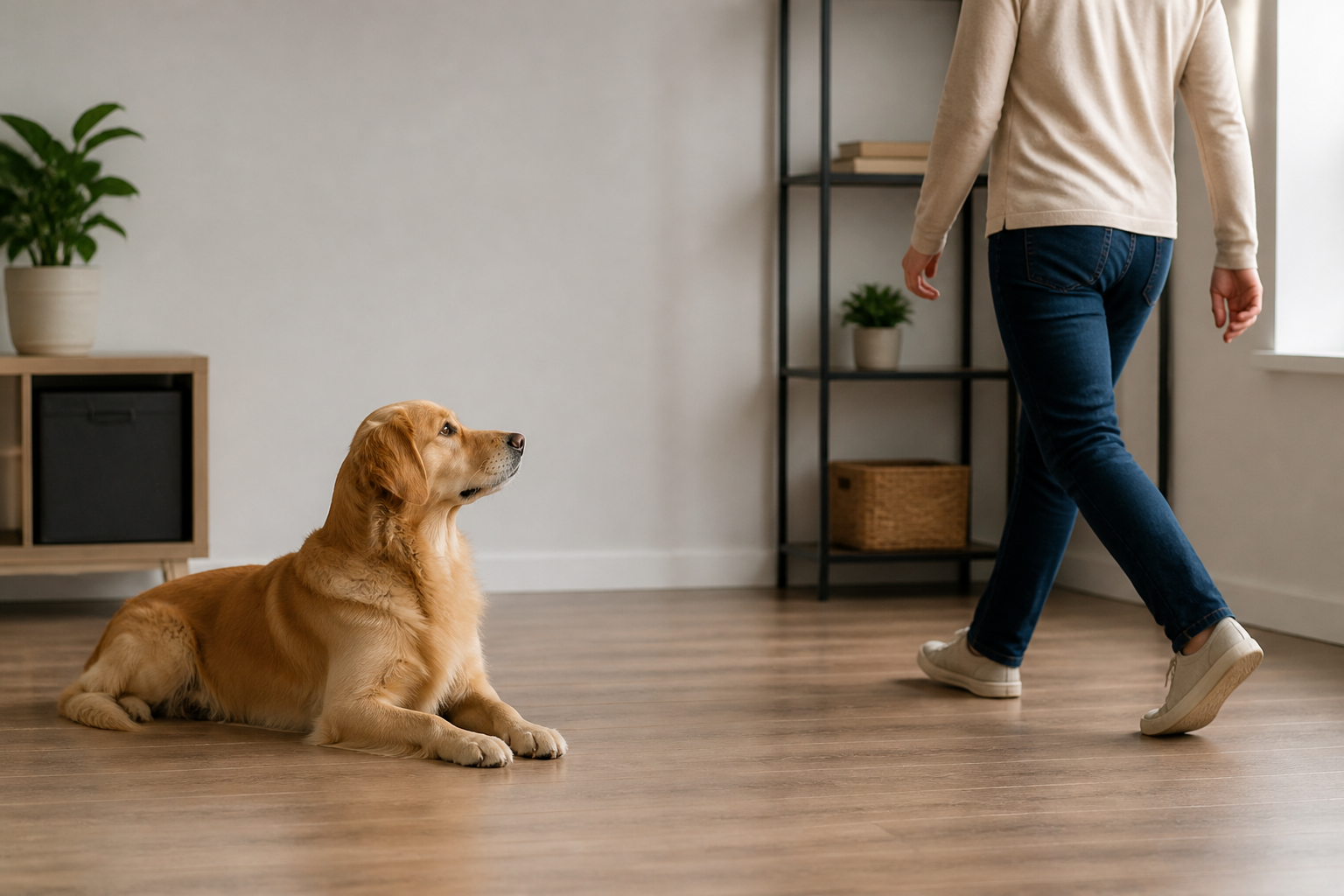
Include household routines that matter to you: walking to a chair, opening a cabinet, picking up a toy, or moving toward a doorway. Train each routine in a quiet version before adding realistic distractions. The dog needs to learn the general rule, not memorize one exact location.
Prevent Common Mistakes
A frequent error is asking for too much too soon. Handlers may practice a long stay, walk away, turn around, and add noise in the same trial. When the dog fails, it is unclear which part was difficult. Change one variable at a time, and keep a record of what the dog successfully completed.
Another mistake is rewarding only at the end. Early in training, frequent reinforcement keeps the dog engaged and clarifies the required behavior. As reliability improves, you can gradually vary the timing, but continue rewarding enough to maintain the skill.
Avoid looming over the dog, tightening the leash, or repeating “stay” in an urgent voice. These actions can add pressure without explaining what to do. If the dog breaks, use a neutral reset. Ask for the position again, lower the challenge, and reinforce success.
Do not punish a dog for coming to you after the release cue, especially if you called the dog. Safety depends on a positive response to recalls and releases. If the dog leaves early, simply prevent rehearsal when possible, adjust the setup, and practice an easier repetition.
Do not train to exhaustion. Short sessions of several minutes can produce better learning than a long session filled with frustration. Stop after a successful repetition, provide a break, and return later. Young dogs, highly active dogs, and dogs in stimulating environments may need especially brief sessions.
Add Distractions in Layers
Distractions should be introduced gradually. Begin with mild changes, such as a different room, a quiet sound, or another person sitting nearby. Then add movement, toys, food, outdoor smells, or a familiar dog at a distance. Keep enough space that your dog can still think and respond.
Use a distraction budget. If the environment becomes more difficult, reduce duration and distance. For example, ask for a three-second stay beside a quiet sidewalk before attempting a longer stay. Reinforce frequently and move farther from the distraction if the dog struggles.
A dog that fails around distractions has not necessarily forgotten the behavior. The context may be new, or the reward may no longer compete with the environment. Use more valuable treats, increase distance from the distraction, lower the duration, or return to a quieter place.
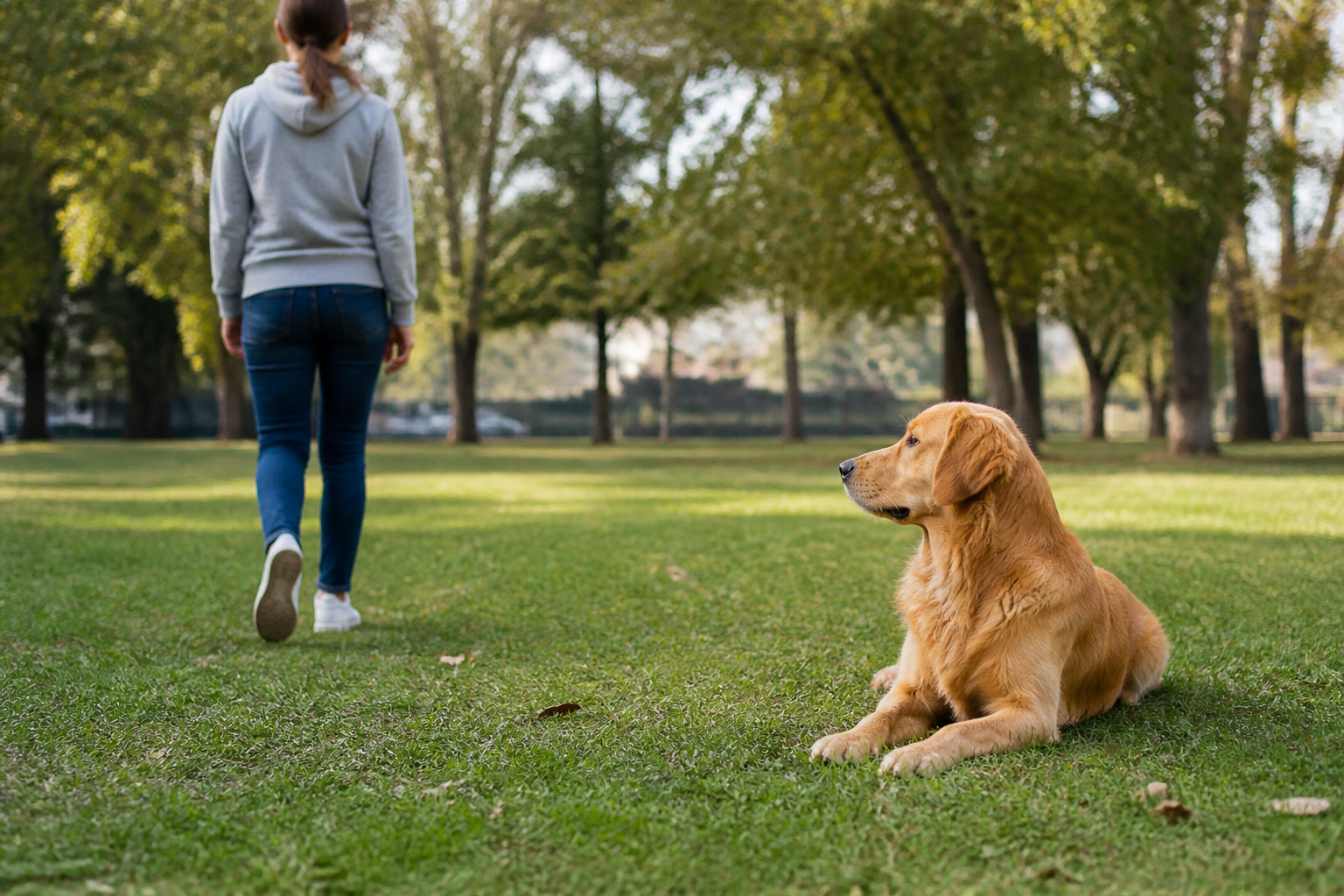
Practice generalization across surfaces, rooms, lighting, handler clothing, and positions. Dogs do not automatically apply a behavior everywhere. A stay learned on a living-room rug may need separate practice on grass, pavement, or a training mat.
Safety and Ethics
Never use a stay to place a dog in danger. Do not ask for an unprotected stay near traffic, open water, aggressive animals, unstable surfaces, or an unsecured doorway. A trained behavior can fail, particularly under fear, pain, excitement, or unusual environmental pressure.
Use barriers, a leash, or another safe management method when mistakes could have serious consequences. A stay is not a substitute for supervision. Children should not be responsible for testing a dog’s reliability, and visitors should not be used as distractions without a controlled plan.
If your dog repeatedly cannot remain still, consider physical discomfort, fear, confusion, or excessive difficulty. A sudden change in behavior deserves attention. Consult a veterinarian for possible health concerns, and seek help from a qualified reward-based trainer for behavior or training problems.
Troubleshooting Guide
If your dog stands immediately, shorten the interval and reward sooner. Check whether you are accidentally leaning forward, moving toward the dog, or holding a treat where the dog can see it. Rebuild the position without movement, then add a tiny shift.
If the dog follows when you step away, return to one step and make the pause very brief. Reward at the dog’s position, not after it reaches you. A barrier can prevent wandering during early practice, but do not use it as a substitute for teaching.
If the dog vocalizes, pants excessively, or appears worried, reduce difficulty and examine the environment. Stress can interfere with learning. Use a familiar position, greater distance from distractions, and a calmer pace. Stop if the dog cannot relax.
If the dog anticipates the release, vary the duration and avoid preparing to release in the same way every time. Keep your hands still, pause after returning, and occasionally reward another stay. If anticipation persists, make sessions easier and reinforce calm waiting.
FAQ
Should I teach “stay” separately from the position cue?
Yes. The position cue tells the dog where to place the body; “stay” tells the dog to maintain that position. Teaching them as related but distinct signals makes the exercise clearer. You can eventually use the position cue and stay together, but the dog should understand both parts.
Is it better to train a sit, down, or stand stay?
Choose the position that fits your goal and your dog’s comfort. A sit is convenient for many household situations, a down may support longer relaxation, and a stand can be useful for grooming or handling. Avoid requiring a position that causes pain or physical strain.
Should I use treats every time?
Frequent rewards are valuable while the behavior is developing. Once the dog is reliable, vary reinforcement gradually by combining food, praise, play, and access to desired activities. Do not remove rewards suddenly, especially when introducing new locations or distractions.
What if my dog gets up after I return?
You may be releasing too quickly or approaching in a way that excites the dog. Stand quietly beside the dog, reward the position, and wait briefly before releasing. If necessary, shorten the distance and practice calmer returns.
How long should a training session last?
Keep sessions short enough that the dog remains interested and successful. Several minutes may be sufficient, particularly for young or easily distracted dogs. End with a correct repetition and provide rest. Quality matters more than completing a fixed number of trials.
When can I use the stay in public?
Use it in public only after reliable practice in progressively distracting environments. Begin with safety equipment and generous distance from triggers. Continue supervising, and treat public performance as a trained skill that requires maintenance rather than a permanent guarantee.
Conclusion
Teaching a dog to hold a stay while the handler moves is a gradual process of clarity, reinforcement, and careful progression. Start with a familiar position, define a release cue, build brief duration, and add tiny movements. Then develop distance, direction changes, realistic tasks, and distractions one variable at a time.
Measure progress through observable behavior: the dog remains in position, stays relaxed, accepts reinforcement, and waits for the release cue. When performance declines, reduce the challenge instead of applying more pressure. Safe management, short sessions, and reward-based training protect both learning and trust. With consistent practice, handler movement becomes ordinary background information rather than a signal for the dog to follow.