

Anxiety Relief for Dogs: Calming Tips for Happier Pets
A calm dog is not created by punishment or forced exposure. Anxiety relief begins by identifying what frightens your dog, reducing unnecessary stress, and teaching safe responses gradually. Common triggers include separation, thunderstorms, fireworks, travel, unfamiliar people, other animals, pain, and changes at home. Some dogs show obvious shaking or barking; others hide, pace, lick their lips, refuse food, or become unusually quiet.
Start with a veterinary examination if anxiety is new, severe, worsening, or accompanied by aggression, appetite changes, house-soiling, or physical symptoms. Medical problems can influence behavior, and a veterinarian can help distinguish anxiety from pain, illness, or age-related cognitive changes. With the right plan, many dogs become more settled, but progress usually requires patience, consistency, and careful observation.
Recognize the Signs and Triggers
Anxiety is a state of fear or worry, not deliberate disobedience. A dog may yawn, pant, drool, tremble, crouch, keep its ears back, avoid eye contact, cling to a person, or scan the environment repeatedly. Some dogs react by barking, lunging, destroying objects, escaping, or urinating indoors. These behaviors communicate distress, even when they are inconvenient.
Keep a simple trigger diary. Record the date, setting, event, early warning signs, intensity, and recovery time. Note whether your dog had eaten, exercised, slept, or experienced pain. Patterns often emerge: a dog may react to the sound of keys before a person leaves, rather than to the absence itself. Another may fear rain because thunder, pressure changes, darkness, and household activity occur together.
Watch for early signals instead of waiting for a full panic response. If your dog stops accepting a favorite treat, turns away, or begins pacing, the situation may already be too difficult for learning. Lower the intensity immediately by increasing distance, closing curtains, moving to a quieter room, or ending the activity.
Create a Reliable Safe Space
Choose a quiet area where your dog can rest without being disturbed. This might be a crate with the door open, a bed in an interior room, or a familiar corner behind a baby gate. Add comfortable bedding, water, and a safe chew if your dog uses one appropriately. The space should never function as punishment.
Build positive associations during calm periods. Toss treats into the area, offer meals there, or provide a food puzzle while you remain nearby. Let your dog enter and leave freely at first. If the dog pants, scratches, or tries to escape, the space may need more distance from the trigger, a more open entrance, or a slower introduction.
During fireworks or storms, reduce sensory input by closing windows and curtains and using steady background sound. White noise, gentle music, or a household appliance may soften sudden noises, though it will not eliminate them. Stay calm and offer quiet reassurance. Comfort does not reward fear; frantic handling, however, can increase arousal.

Use Gradual Desensitization
Desensitization means presenting a trigger at an intensity low enough that your dog can remain relaxed. Counterconditioning pairs that manageable exposure with something valuable, such as small treats, play, or calm praise. Together, these methods can change the dog’s emotional response, but rushing them can make fear stronger.
Begin with a version of the trigger that your dog notices but does not fear intensely. For a dog worried about departures, pick up keys, reward calm behavior, and sit down again. Later, step outside briefly and return before distress begins. For a noise-sensitive dog, a professionally prepared recording played very softly may help, provided the dog remains comfortable.
- Identify the earliest visible sign of concern and choose an exposure below that level.
- Pair the trigger with high-value food or another reward while your dog stays relaxed.
- Repeat short sessions, ending while success is still clear rather than waiting for fatigue or panic.
- Increase duration, volume, distance, or complexity one change at a time.
- If your dog reacts, reduce the challenge and allow recovery before trying again.
A useful checkpoint is loose body language, normal breathing, and willingness to eat. If your dog freezes, hides, vocalizes, or refuses food, the step is too hard. Adjust by lowering volume, shortening time, adding distance, or returning to an easier stage for several sessions.
Support Predictable Daily Routines
Predictability can reduce uncertainty. Feed, walk, rest, and practice at broadly consistent times, while allowing reasonable flexibility. Dogs do not need every minute controlled, but repeated patterns help them anticipate what happens next. Provide adequate sleep, because an overtired dog may react more strongly to ordinary events.
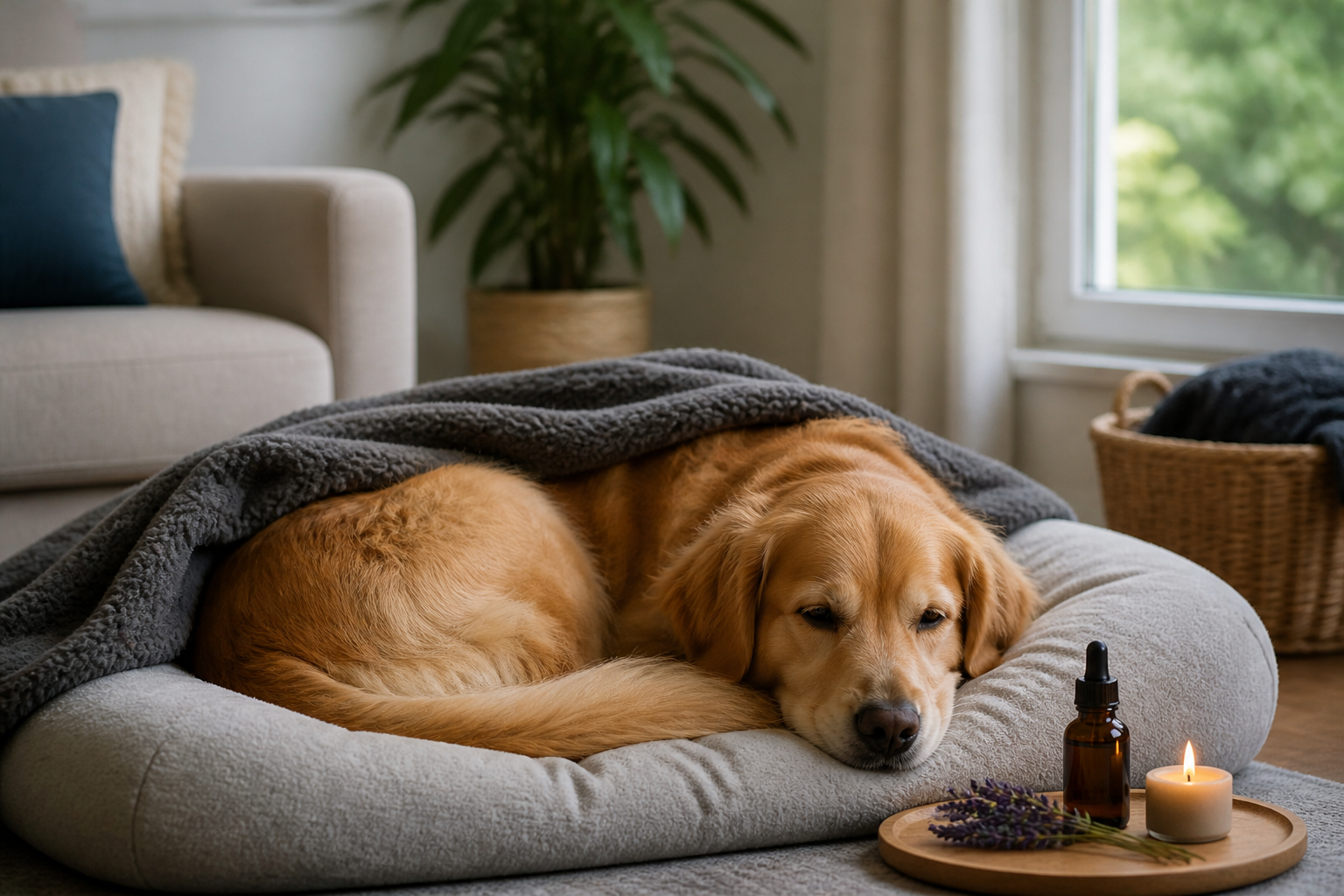
Exercise can support emotional balance, but intensity is not the only goal. Sniffing walks, gentle exploration, training games, and food-search activities allow dogs to use natural behaviors. Avoid forcing strenuous exercise during heat, illness, injury, or severe fear. A frightened dog may need decompression, not a longer walk through a crowded area.
Teach simple cues such as touch, go to bed, and find it using rewards. These skills give your dog predictable actions during mild stress. Practice when the dog is calm, then use them in slightly distracting settings. Do not expect a cue to override panic; learning is limited when fear is overwhelming.
Reduce Separation-Related Distress
Dogs with separation anxiety may vocalize, pace, destroy doors, soil indoors, or attempt escape shortly after a person leaves. A camera can help reveal what happens after departure, but do not use it to repeatedly trigger distress. Ask a professional for guidance if the dog injures itself or cannot tolerate even brief absences.
Make departures boring and gradual. Practice picking up departure items without leaving, then leave for a duration shorter than the point at which anxiety begins. Return quietly, wait for calm, and repeat at varied but manageable intervals. Avoid increasing time in a straight line every session; occasional easier repetitions help maintain success.
Food toys may occupy some dogs, but they are not a complete treatment. A panicked dog may ignore food. Arrange companionship, a sitter, or other management when necessary, and avoid leaving the dog alone for periods that repeatedly produce severe distress while training is underway.
Manage Noise, Visitors, and Public Spaces
For storms and fireworks, prepare before the event. Walk earlier, secure doors and identification, close curtains, and keep your dog indoors. Never force a dog toward a window, noise source, visitor, or unfamiliar animal. Let the dog choose distance, and tell guests to ignore the dog initially.
Visitors can toss treats from a distance without reaching or staring. A leash may provide control, but it should not be used to drag the dog closer. Give the dog a retreat option and separate animals when supervision is uncertain. Children should learn to respect the dog’s space, bed, food, and warning signals.
In public, select quiet routes and visit less crowded places. Increase distance from triggers before your dog reacts. If another dog appears, cross the street, turn around, or use parked vehicles as visual barriers. Success means recovering calmly, not enduring the closest possible encounter.

| Approach | When useful | Main caution |
|---|---|---|
| Management | During unavoidable triggers | Reduces exposure but does not teach new coping skills |
| Training | When the dog can remain below panic | Progress must be gradual |
| Veterinary support | Severe, sudden, or persistent anxiety | Needs individualized assessment |
| Professional behavior help | Complex fear, aggression, or failed progress | Choose qualified, humane guidance |
Consider Veterinary and Professional Help
Consult a veterinarian when anxiety interferes with eating, sleeping, exercise, safety, or daily functioning. Seek prompt help for self-injury, repeated escape attempts, sudden behavioral change, collapse, breathing difficulty, or possible toxin exposure. Do not give human medication, leftover prescriptions, essential oils, or supplements without veterinary advice. Products marketed as natural are not automatically safe or effective.
A veterinarian may discuss behavior modification, environmental management, and, when appropriate, medication. Medication does not replace training; it may lower fear enough for learning to occur. Follow instructions carefully, observe changes, and report unwanted effects. Never alter a prescribed dose independently.
A qualified veterinary behaviorist or reward-based trainer can design a plan around the trigger, threshold, home environment, and safety risks. Ask what methods will be used. Avoid professionals who recommend intimidation, pain, flooding, or punishment for fearful behavior. Suppressing warnings can make a situation less predictable and may increase danger.
Common Mistakes to Avoid
Flooding means exposing a dog to an intense trigger until it stops reacting. A quiet dog may be emotionally shut down rather than comfortable. This approach can damage trust, so controlled exposure below threshold is safer.
Punishment after destruction, barking, or accidents does not explain the desired alternative. It can connect the owner with frightening consequences and increase anxiety. Clean accidents without drama, manage access, and teach an alternative routine.
Another mistake is changing too many variables at once. If you introduce a new crate, supplement, training method, and schedule simultaneously, you cannot tell what helps or harms. Change one major element when practical, track responses, and allow enough time to observe a pattern.
Do not measure progress only by perfect behavior. A dog that recovers in ten minutes instead of an hour, accepts food near a trigger, or chooses its safe space has made meaningful progress. Expect setbacks after illness, relocation, frightening events, or disrupted sleep. Return to an easier stage rather than abandoning the plan.
Frequently Asked Questions
Can I comfort my anxious dog?
Yes. Calm, gentle contact and quiet companionship are appropriate if your dog seeks them. Avoid restraining, crowding, or repeatedly fussing over the dog. Offer a choice: stay nearby, provide the safe space, and let the dog move away. Your goal is security, not forced interaction.
Will more exercise cure anxiety?
Exercise may help general wellbeing, but it does not cure every anxiety problem. A dog frightened by departures, noises, pain, or unfamiliar people needs trigger-specific management and training. Excessive exercise can worsen fatigue or arousal. Choose suitable activity and watch recovery, appetite, and body language.
Should I use a calming vest?
Some dogs appear more settled with gentle, comfortable pressure, while others dislike clothing. Introduce a vest during relaxed moments, reward acceptance, and check breathing, movement, skin, and temperature. It should never be tight, worn unsupervised if unsafe, or treated as a replacement for behavior support.
Are calming supplements safe?
Safety depends on the ingredient, dose, health conditions, and other medications. Evidence and product quality vary. Discuss any supplement with your veterinarian, especially for puppies, older dogs, pregnant animals, or dogs with liver, kidney, or neurological problems. Stop and seek advice if concerning effects appear.
How long does improvement take?
There is no universal timetable. Mild, well-managed concerns may improve with consistent practice, while long-standing fear, separation anxiety, or multiple triggers can require extended support. Measure small changes weekly, keep sessions short, and seek help when progress stalls or distress remains severe.
What if my dog bites when afraid?
Prioritize safety immediately. Increase distance, separate the dog from visitors and children, and avoid grabbing, cornering, or punishing the dog. Arrange veterinary assessment and qualified behavior help. Use secure management while learning a plan. Any bite should be taken seriously, even if the injury seems minor.
Conclusion
Effective anxiety relief combines prevention, patient training, and professional support when needed. Identify triggers, protect your dog from overwhelming exposure, reward relaxed behavior, and advance only when the dog remains comfortable. A predictable routine, safe retreat, enrichment, and humane handling create better conditions for learning.
Start with one manageable problem rather than attempting to change everything. Track body language and recovery, celebrate practical improvements, and adjust the plan when your dog struggles. If anxiety is severe, sudden, medically complicated, or unsafe, contact a veterinarian promptly. Helping a worried dog is not about demanding bravery; it is about making safety understandable, repeatable, and real.