
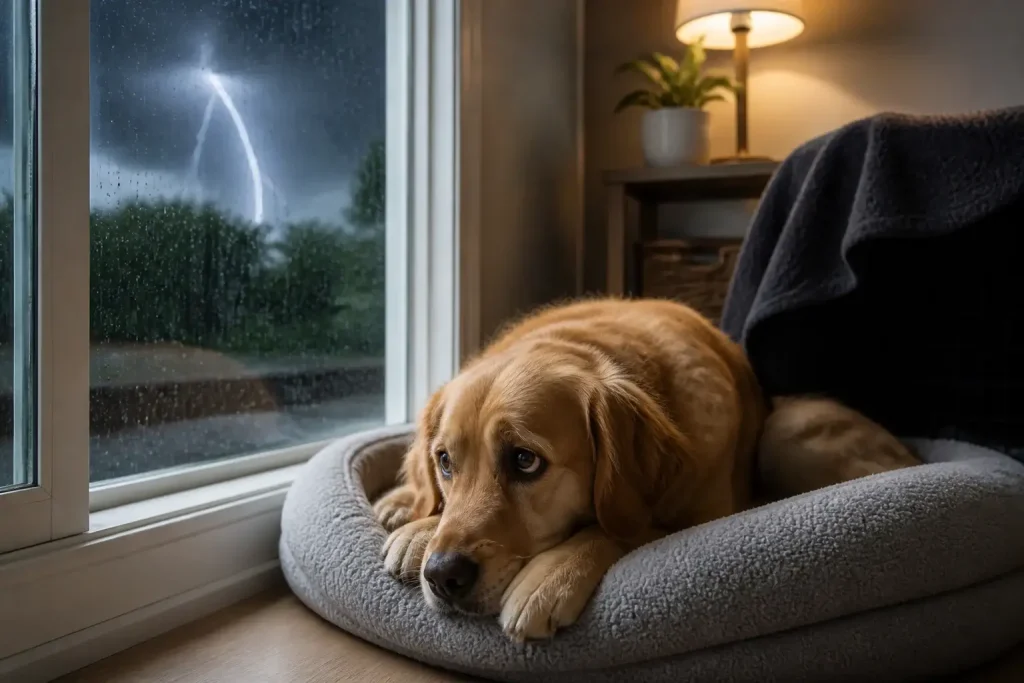
Thunderstorm anxiety desensitization works best as a gradual training plan, not as forced exposure during a storm. The goal is to teach your dog that thunder-related sounds predict safety, food, rest, and control. Begin when weather is calm, keep sessions below the level that causes fear, and involve a veterinarian when anxiety is severe, sudden, or accompanied by escape attempts.
A frightened dog may pant, pace, hide, tremble, bark, drool, cling, urinate, or try to break through doors and windows. Storm fear can involve more than thunder. Wind, rain, pressure changes, flashes, static, and your own response may become part of the pattern. Because several triggers can arrive together, progress is usually gradual and uneven.
What desensitization means
Desensitization means presenting a trigger at such a low intensity that the dog notices it without becoming distressed. Counterconditioning pairs that mild trigger with something valuable, such as tiny pieces of chicken, a favorite toy, or relaxed attention. Together, these methods can change the dog’s emotional response over repeated, successful sessions.
This is different from flooding, which exposes a dog to intense fear and waits for the reaction to stop. Flooding can worsen fear, create escape behavior, and damage trust. Never play thunder recordings loudly, confine a panicking dog, or take a dog outside during dangerous weather to “get used to it.”
Before training, identify the earliest signs of discomfort. A dog may stop taking food, turn its head, lick its lips, yawn, freeze, scan the room, or move toward an exit before obvious trembling begins. These signs are useful because they tell you when to reduce intensity immediately.
Prepare a safe training environment
Choose a quiet room where your dog already rests comfortably. Close windows if outside sounds are distracting, place a familiar bed nearby, and remove objects that could cause injury during sudden movement. A covered crate may help some dogs, but it should remain an optional refuge, never a place for forced confinement.
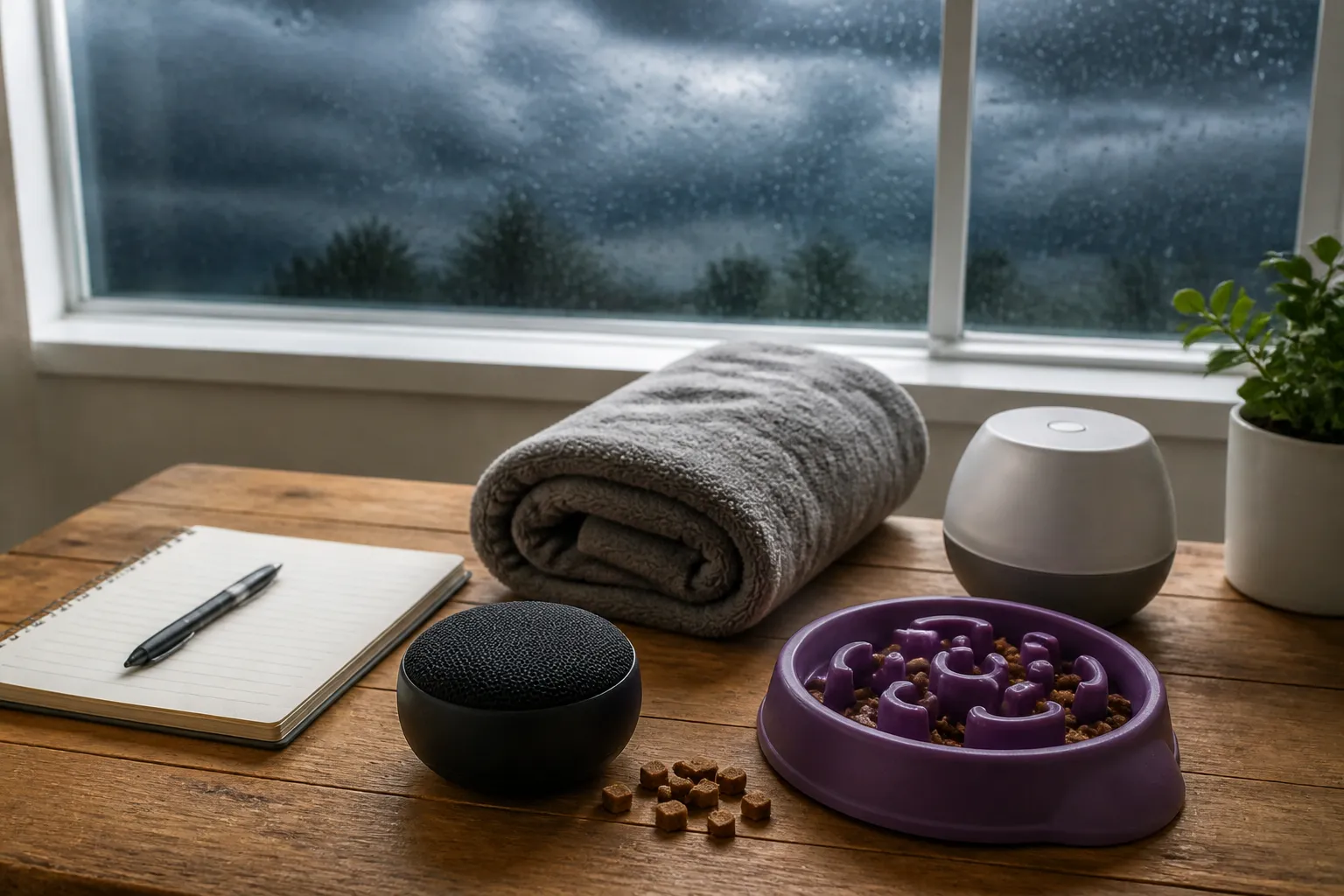
Create a predictable routine before each session. Offer a short sniffing walk if weather is safe, allow toileting, prepare treats, and remove competing distractions. Use high-value food in very small pieces so rewards remain frequent without making the dog uncomfortably full. If your dog refuses food, the exercise is already too difficult or the reward is not valuable enough.
A safe room should not become a trap. Keep exits available during practice, supervise closely, and check that collars, harnesses, gates, windows, and doors cannot cause injury. During actual storms, make sure identification information is current and never leave a fearful dog outdoors.
Establish a baseline
Observe your dog during calm weather and record ordinary behavior. Note whether the dog can eat, respond to its name, lie down, play, and recover after a minor sound. You can use a simple scale: relaxed, alert, mildly concerned, distressed, or panicked. The labels matter less than consistent observation.
Record the sound, volume, distance, duration, body language, food acceptance, and recovery time. A brief note helps reveal patterns and prevents you from increasing difficulty based on memory or optimism. Training should move forward only when the dog repeatedly remains relaxed at the current level.
Build the sound association gradually
Use a reputable recording of thunder or a carefully selected sound file, played through a device with reliable volume control. Start at the lowest audible level, often quieter than expected. Play a short sound, immediately offer a treat, then stop. The sound should predict the reward, while the session stays brief enough to prevent tension.
Repeat several pairings, then pause. Watch your dog rather than focusing on the device. If the dog continues eating, keeps a loose body, and returns attention to you, the level may be appropriate. If the dog startles, searches for the source, stops eating, or leaves, lower the volume or increase distance from the speaker.
Progress one variable at a time. Increase volume slightly only after multiple calm sessions. Later, vary the timing, recording, speaker location, or sound duration, but do not change everything together. Real storms are unpredictable, so flexible learning matters, yet unpredictability should be introduced slowly.
- Play a very quiet thunder sound for a short moment while your dog is relaxed.
- Deliver a valuable reward immediately, then stop the sound and allow a calm pause.
- Repeat only while the dog eats, remains loose, and can respond normally.
- Increase one difficulty factor by a small amount after several successful sessions.
- Return to an easier level whenever stress appears, and end with a simple success.
The checkpoint is observable: your dog can hear the sound, accept food, and resume normal behavior without prolonged scanning or avoidance. If that checkpoint disappears, do not persuade, lure, or correct the dog. Reduce the sound, create more distance, shorten the session, or stop for the day.
Add storm-related cues carefully
Once recordings are easy, introduce other cues separately. You might pair a gentle rain recording with food, then distant wind, then a brief flash of light created by ordinary environmental changes. Never use frightening electrical effects or unsafe equipment. The purpose is controlled learning, not realism at any cost.
Your dog may react to changes in your behavior. During storms, people may rush to close windows, speak anxiously, or repeatedly check the dog. Practice calm, ordinary movements while the sound remains easy. You can offer comfort; calm reassurance does not reward fear, because fear is an emotional state rather than deliberate disobedience. Avoid dramatic reactions that add stimulation.
Teach a portable relaxation behavior, such as settling on a mat. Begin without storm sounds. Reward the dog for stepping onto the mat, lying down, lowering its head, and remaining there briefly. Add duration in small increments. Later, introduce very quiet recordings while the dog settles, maintaining rewards for relaxed choices.
Use enrichment without creating pressure
Food puzzles, licking activities, chewing, sniffing games, and simple training can help some dogs regulate arousal. Offer these only if your dog willingly engages. A dog too frightened to eat or play needs less intensity and more distance, not a more exciting puzzle.
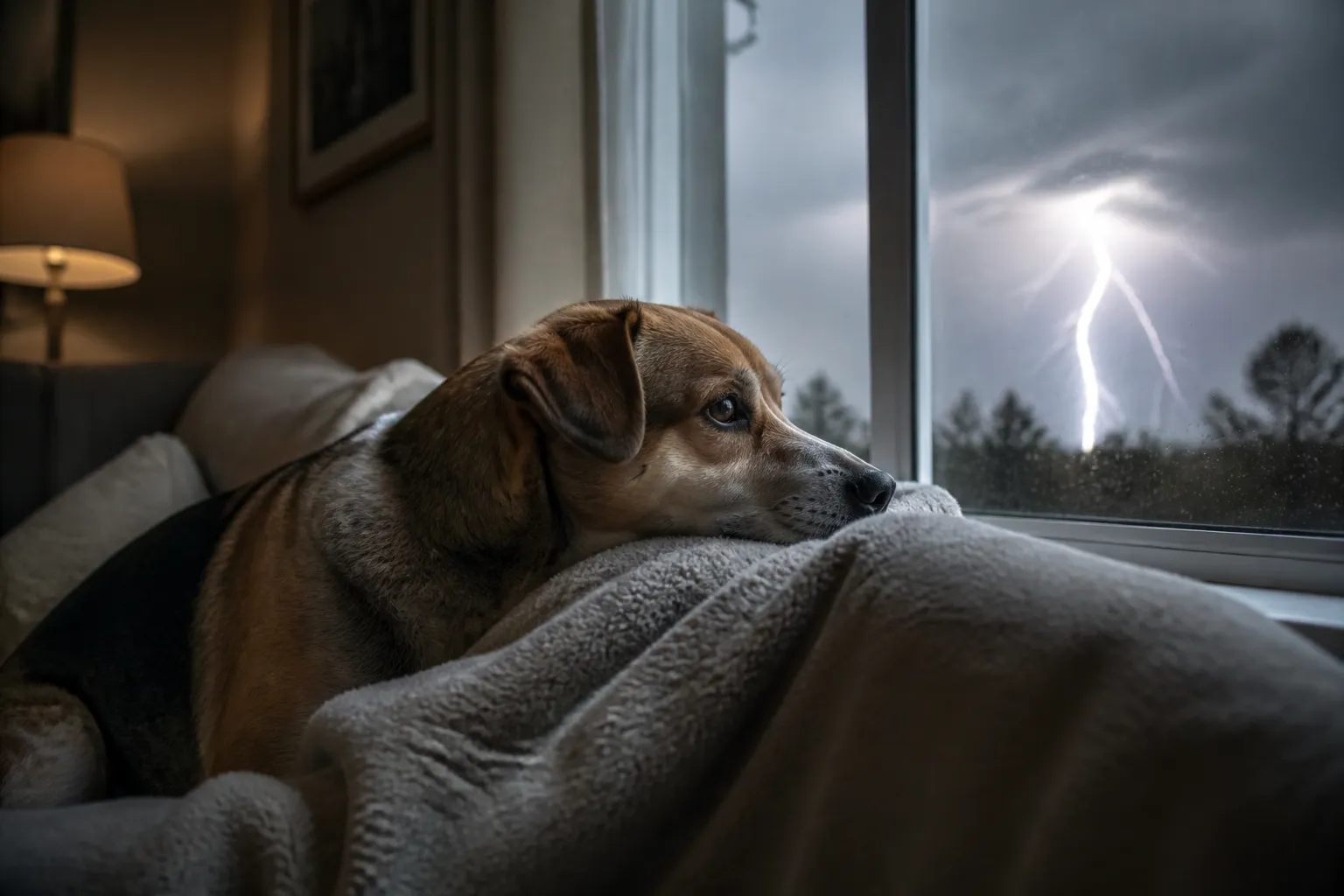
A quiet background sound may soften sudden noises. Fans, gentle music, or white noise can be useful, but they do not replace desensitization. Test them during calm periods so you know whether your dog finds them soothing or irritating. Keep ventilation and temperature comfortable, especially if panting occurs.
Plan for real thunderstorms
Training sessions occur under controlled conditions; storms do not. Before forecasted weather, prepare the safe room, close curtains, charge devices, secure gates, and bring outdoor pets inside. Walk and toilet your dog before the storm when conditions are safe. During lightning, heavy wind, or flooding, do not risk outdoor activity.
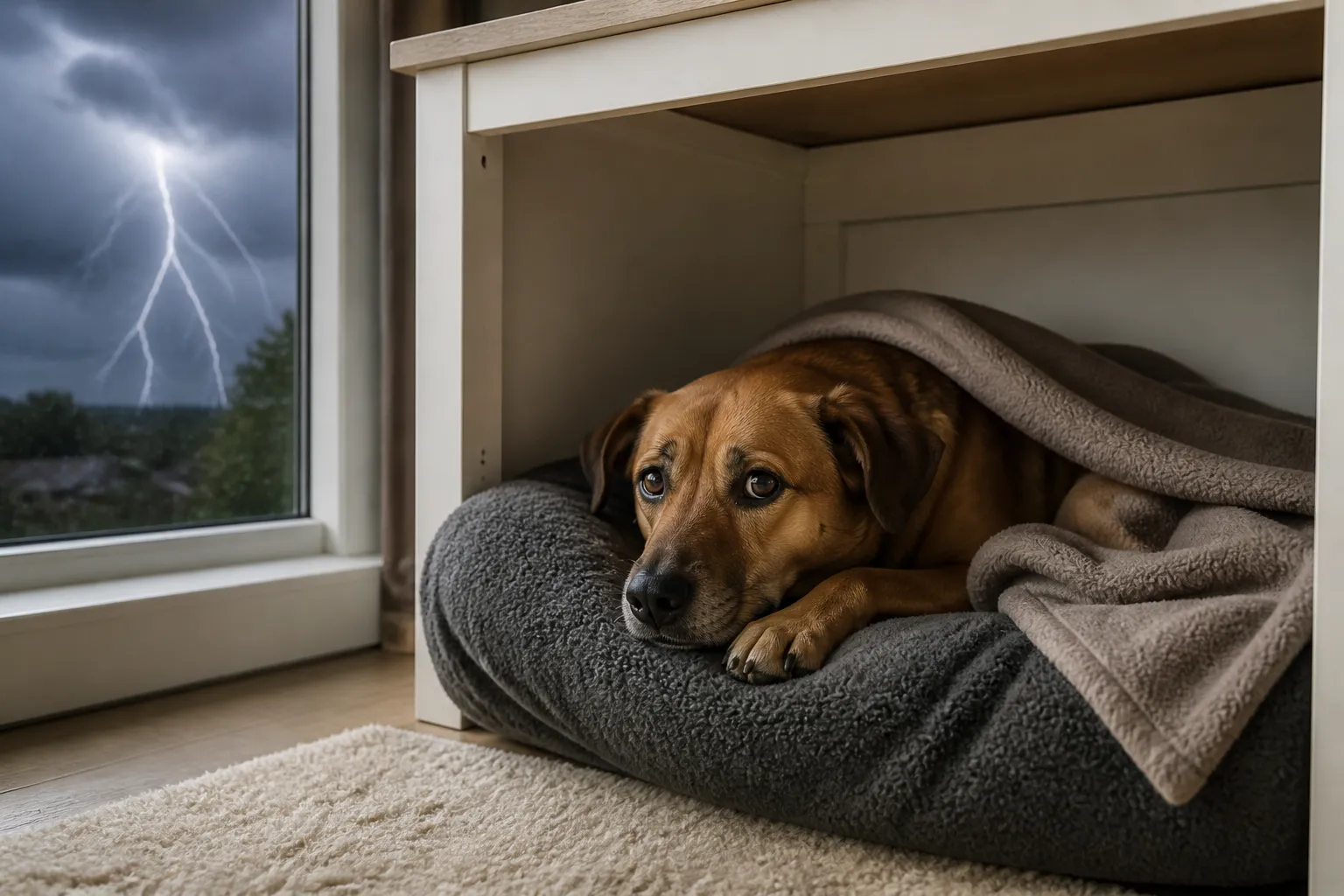
Offer the dog a choice of resting places. Some dogs hide under furniture; others prefer proximity to a person. Do not drag a dog from its hiding place unless immediate safety requires it. Sit nearby, read, or perform a quiet task. Your steady presence can reduce additional social pressure.
Watch doors and windows carefully. Fearful dogs can escape through openings they normally ignore. Keep the dog supervised, confirm identification, and consider a properly fitted harness for necessary movement, but never use equipment as a substitute for supervision. If evacuation is required, use the safest familiar restraint and bring familiar bedding or food.
During a storm, skip formal training if your dog is already distressed. You can reward voluntary eye contact, movement toward the safe area, or calm behavior, but do not test progress with louder sounds. The storm is for management; structured learning resumes later at an easier level.
| Situation | What to do | What to avoid |
|---|---|---|
| Calm dog during practice | Pair mild sound with rewards | Increasing intensity too quickly |
| Early stress signs | Lower volume, add distance, pause | Continuing to prove the dog can cope |
| Active panic during storm | Manage safety and provide refuge | Formal exposure or forced interaction |
| Severe or worsening fear | Contact a veterinarian and qualified behavior professional | Using medication or supplements without guidance |
Know when professional help is needed
Consult a veterinarian if fear is intense, new, worsening, or linked with pain, illness, aging, or cognitive changes. A sudden behavior change deserves medical attention because discomfort or neurological problems can affect sound sensitivity. Your veterinarian can discuss an examination and, when appropriate, medication options.
Medication is not a failure of training. Some dogs cannot learn while panicking, and veterinary treatment may lower distress enough for behavioral work to be effective. Use only medication prescribed or recommended for your individual dog. Human drugs, leftover prescriptions, essential oils, and unregulated supplements can be unsafe or interact with other treatments.
A qualified behavior professional can identify triggers, design gradual steps, and observe body language. Look for someone with relevant education and humane methods. Be cautious of anyone promising a guaranteed cure, recommending punishment, or insisting that flooding is necessary. A sound plan should explain thresholds, safety, progress criteria, and what to do after setbacks.
Common mistakes that slow progress
The first mistake is practicing too loudly. Owners often assume the recording must resemble a real storm, but learning occurs only when the dog remains capable of eating and thinking. The second is advancing after one good session. A single calm response does not establish a stable association.
The third is rewarding only perfect stillness. Relaxation may appear as sniffing, chewing, turning away, or choosing a bed. Reinforce these useful choices rather than demanding eye contact or obedience. The fourth is ignoring recovery. A dog that looks calm but stays vigilant for a long time may still be over threshold.
Another mistake is training only during storm season. Short, easy sessions during calm months help preserve the association. However, maintenance should remain gentle. You do not need to make recordings increasingly loud forever; occasional successful practice at a comfortable level can support the learned response.
Track progress realistically
Progress may look like earlier recovery, willingness to eat, choosing the safe room, or reduced escape behavior rather than complete indifference. Keep a log with date, trigger, intensity, duration, body language, rewards, and recovery. Review trends over several sessions instead of judging a single difficult day.
Expect setbacks. A particularly close storm, unexpected crash, illness, poor sleep, or accidental loud exposure can temporarily lower tolerance. Respond by returning to the last successful step. Do not punish regression or compensate with an ambitious session. The correct adjustment is usually easier practice and better management.
Never leave a dog alone with a known severe storm fear if you can arrange safe supervision. If separation is unavoidable, ask your veterinarian and behavior professional for a plan tailored to the dog. Crating can protect some dogs and intensify panic in others; observe your dog’s history rather than assuming one solution fits all.
FAQ
Can I train during an actual thunderstorm?
Usually, no. If your dog is already afraid, the storm is too intense and unpredictable for careful desensitization. Focus on safety, access to a refuge, calm supervision, and prevention of escape. Resume training later with a recording at a level your dog can handle.
Should I comfort my dog?
Yes, if your presence helps. Sit quietly, permit contact, speak in a calm voice, and avoid forcing interaction. Comfort does not create the original fear. The important distinction is between supportive choice and restraint: let the dog move away, hide, or approach when possible.
How loud should thunder recordings be?
There is no universal volume setting because devices, rooms, hearing, and dogs differ. Begin barely audible and use behavior as the guide. The dog should remain able to eat, respond, and relax. If any early stress sign appears, lower the volume or stop.
How long should each session last?
Keep sessions short enough that the dog finishes relaxed. Several brief pairings may be more useful than one extended practice period. End after a successful response rather than waiting for fatigue. If attention fades, food loses value, or the dog begins scanning, stop and try an easier session another day.
Can puppies be trained for storm fear?
Puppies can learn positive associations with sounds, but exposure must be gentle and age appropriate. Do not deliberately frighten a puppy. Pair ordinary, low-level sounds with food and rest while monitoring reactions. If fear appears, seek guidance early; prevention is easier than repairing a severe pattern.
Does thunder anxiety always get worse with age?
Not necessarily. Some dogs improve with management and training, while others become more sensitive or develop additional triggers. Aging, pain, hearing changes, and past frightening experiences can alter behavior. A new or rapidly changing fear warrants a veterinary discussion rather than an assumption that it is simply a training issue.
Are calming shirts or supplements enough?
They may help some dogs as part of a wider plan, but they should not replace safety, gradual behavior work, or veterinary advice. Products vary, and evidence or suitability may differ. Introduce any wearable item during calm weather and stop if it causes heat, restriction, or discomfort.
What if my dog will not take treats?
Refusal is valuable information. It usually means the trigger is too strong, the reward is unsuitable, or the dog is already distressed. Increase distance, lower volume, choose a better reward, or stop. Do not push food toward the dog or interpret refusal as stubbornness.
Conclusion
A safe plan combines prevention, controlled sound exposure, rewards, choice, and professional support when needed. Begin below the fear threshold, watch body language, change one variable at a time, and treat setbacks as information. During real storms, manage danger instead of testing progress. With patient repetition and veterinary guidance for severe cases, many dogs can learn that thunder predicts support rather than helplessness.