
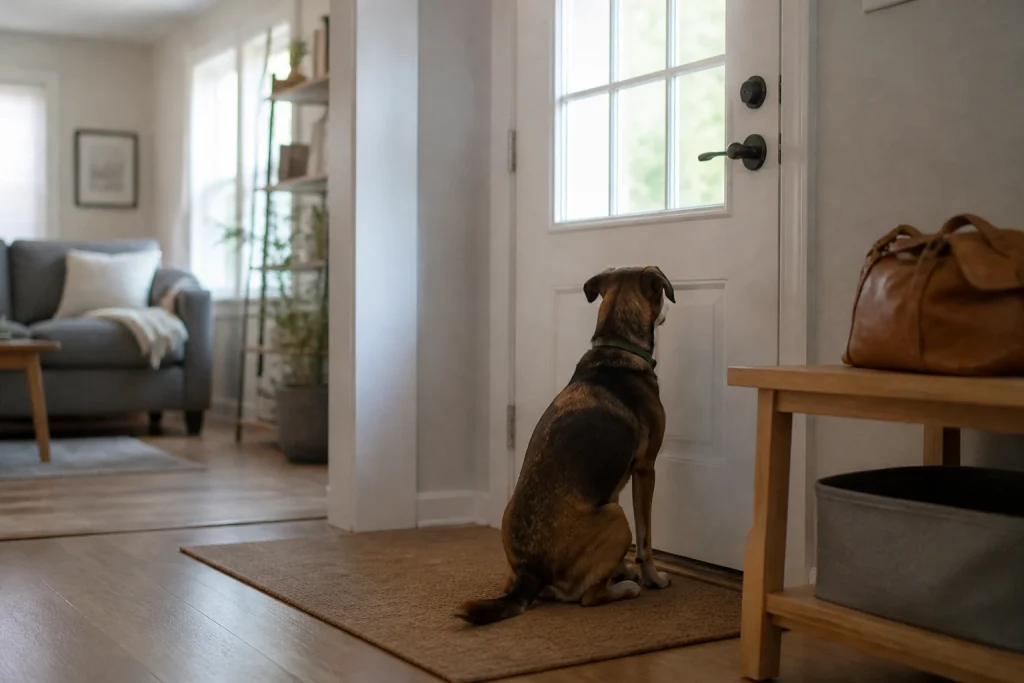
Separation-related distress is not solved by rushing out the door or offering a single distracting toy. Dogs learn calmer departures when leaving becomes predictable, preparation cues lose their frightening meaning, and time alone increases gradually enough to remain manageable. A useful routine combines observation, environmental preparation, brief practice absences, and careful adjustment.
The aim is not to make a dog tolerate overwhelming fear. It is to keep each training repetition below the point where panic takes over. Watch for early signs such as following you closely, panting, lip licking, yawning, trembling, whining, pacing, staring at the door, refusing food, or becoming unable to settle. Severe destruction, escape attempts, self injury, prolonged vocalizing, toileting changes, or sudden distress deserve veterinary attention. Pain, illness, noise sensitivity, medication effects, and other behavioral problems can resemble separation anxiety.
Start with a Calm Baseline
Before changing departures, record what happens when your dog is alone. A phone, pet camera, or audio recorder can reveal details you miss after leaving. Note the time your dog first shows concern, whether distress begins during preparation, and which activities help or fail. Do not use recording to watch continuously or react remotely; use it to identify patterns.
For several ordinary departures, write down the length of time you were away, the dog’s behavior, food intake, sleep, toileting, exercise, and notable household events. Look for differences between leaving during a quiet afternoon and leaving after a hurried morning. This information helps you choose realistic practice durations rather than copying a schedule designed for another dog.
If your dog panics within seconds, begin with tiny absences measured in seconds, not minutes. If the dog remains relaxed for ten minutes, training may start with shorter repetitions anyway, because early success matters more than testing the maximum. A baseline is a planning tool, not a challenge.
Recognize the Threshold
The threshold is the point at which worry becomes visible and learning becomes less reliable. A dog below threshold may notice your movement, glance toward the door, then return to a chew or resting place. A dog above threshold may stop eating, rush after you, bark continuously, or remain fixed on escape. End or shorten the exercise before that escalation whenever possible.
Build the Routine Before Leaving
A dependable departure routine begins well before keys turn in the lock. First meet essential needs without creating frantic excitement. Offer a suitable toilet opportunity, normal movement, water access, and a calm period indoors. Exercise can help some dogs settle, but exhausting a frightened dog is not a treatment and may increase arousal if play becomes intense.
Prepare the environment in advance. Remove hazards, secure doors and windows, and provide a comfortable resting location. White noise, quiet music, or closed curtains can reduce outside triggers for some dogs, but test these choices while you are home. Never assume confinement is calming. A crate may help a dog that already regards it as a safe place; it can intensify distress in a dog that panics when confined.
Use a food toy only if your dog willingly eats while alone. Food is a useful indicator: accepting a familiar chew often suggests manageable arousal, whereas refusing it may signal that the absence is too difficult. Avoid leaving items that can splinter, unravel, or be swallowed. Select enrichment appropriate to the dog’s chewing habits and supervise initial use.
Keep greetings and farewells emotionally ordinary. This does not mean ignoring your dog or withholding affection. It means avoiding a dramatic ritual that announces a major emotional event. Speak normally, move steadily, and let the dog settle before you begin departure practice. Your calm behavior cannot cure anxiety by itself, but it can prevent extra excitement.
Make Departure Cues Boring
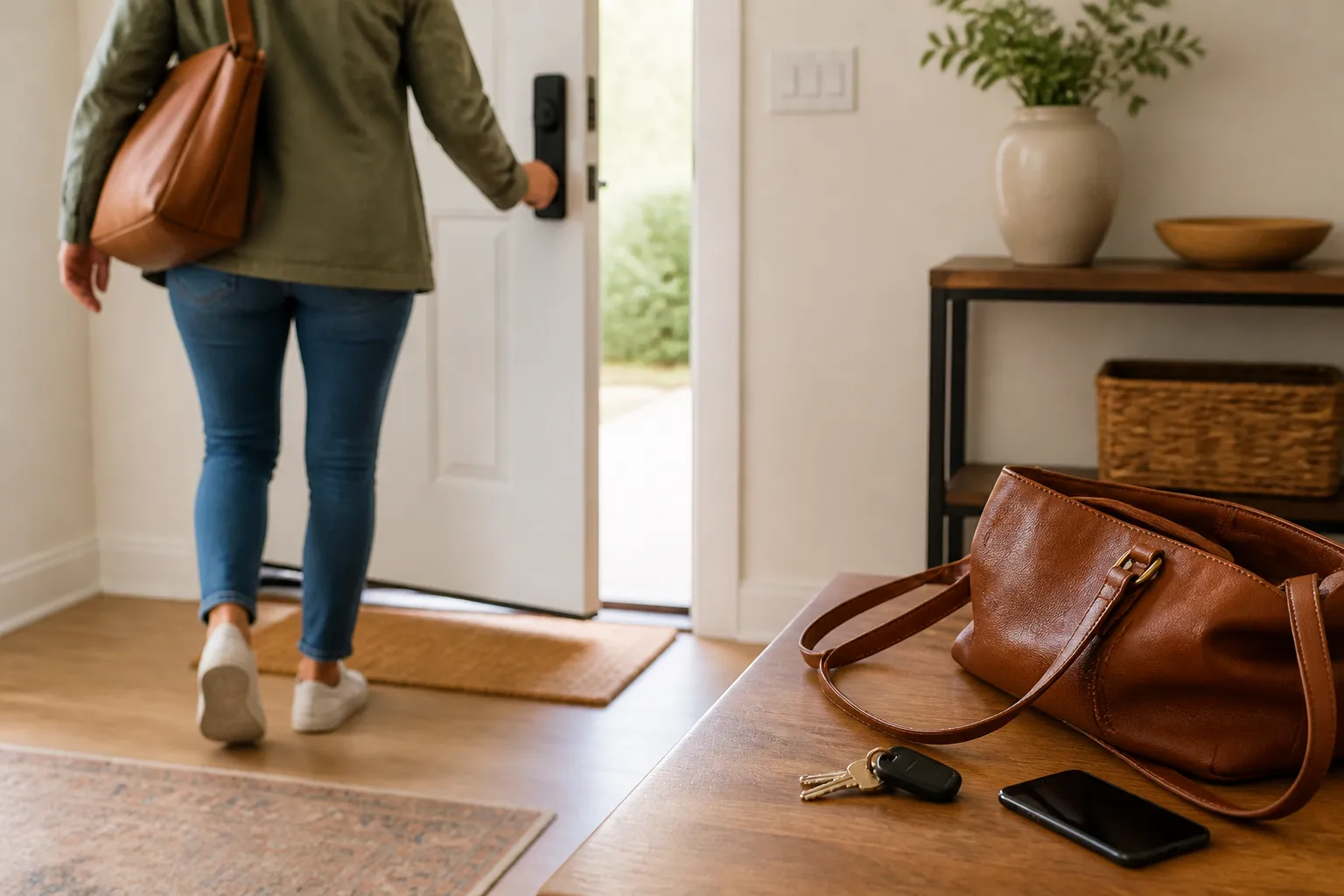
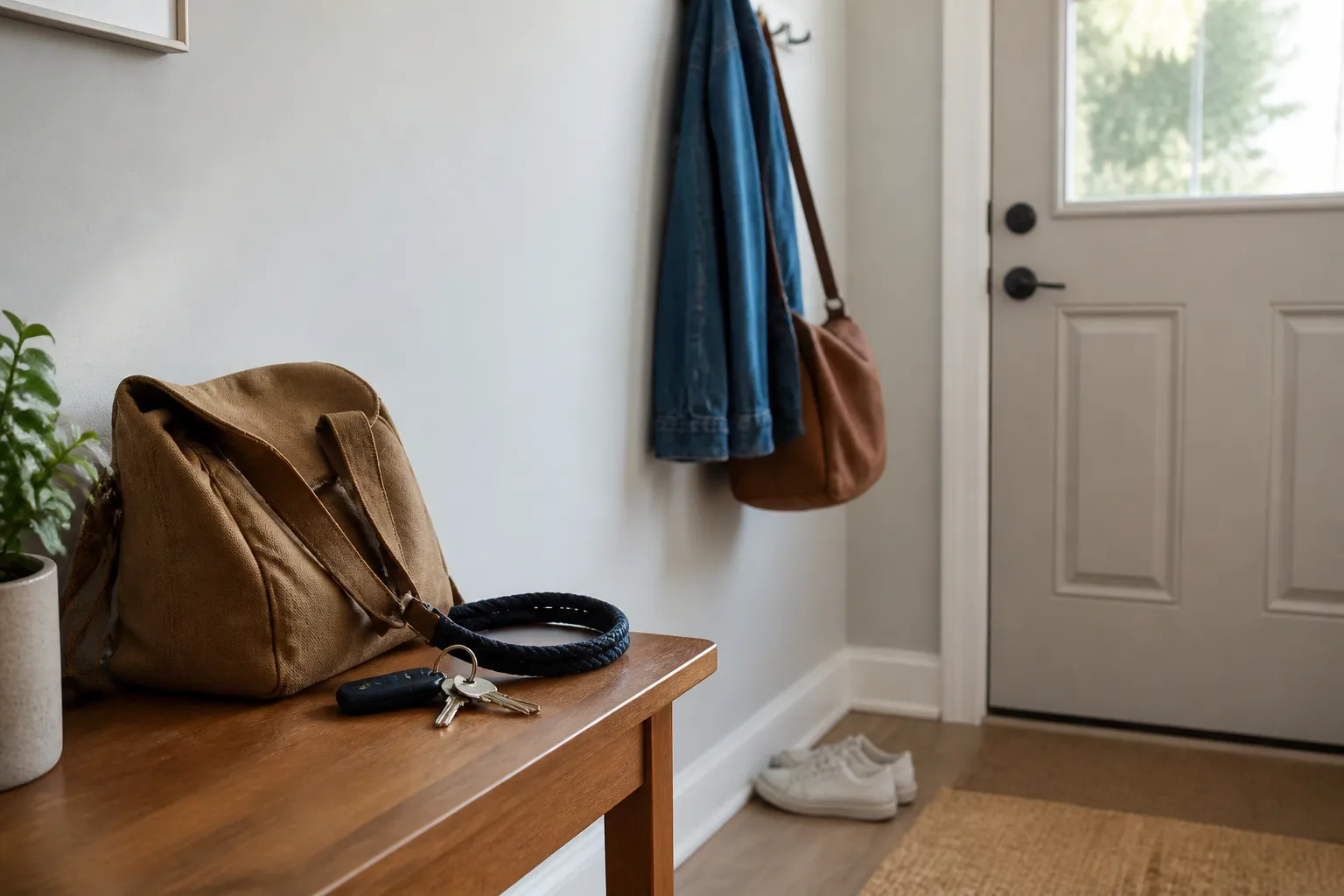
Many dogs react before the person leaves because ordinary signals have acquired predictive meaning. Picking up keys, putting on shoes, closing a laptop, showering, or carrying a bag may trigger following and vocalizing. Separate these cues from real departures.
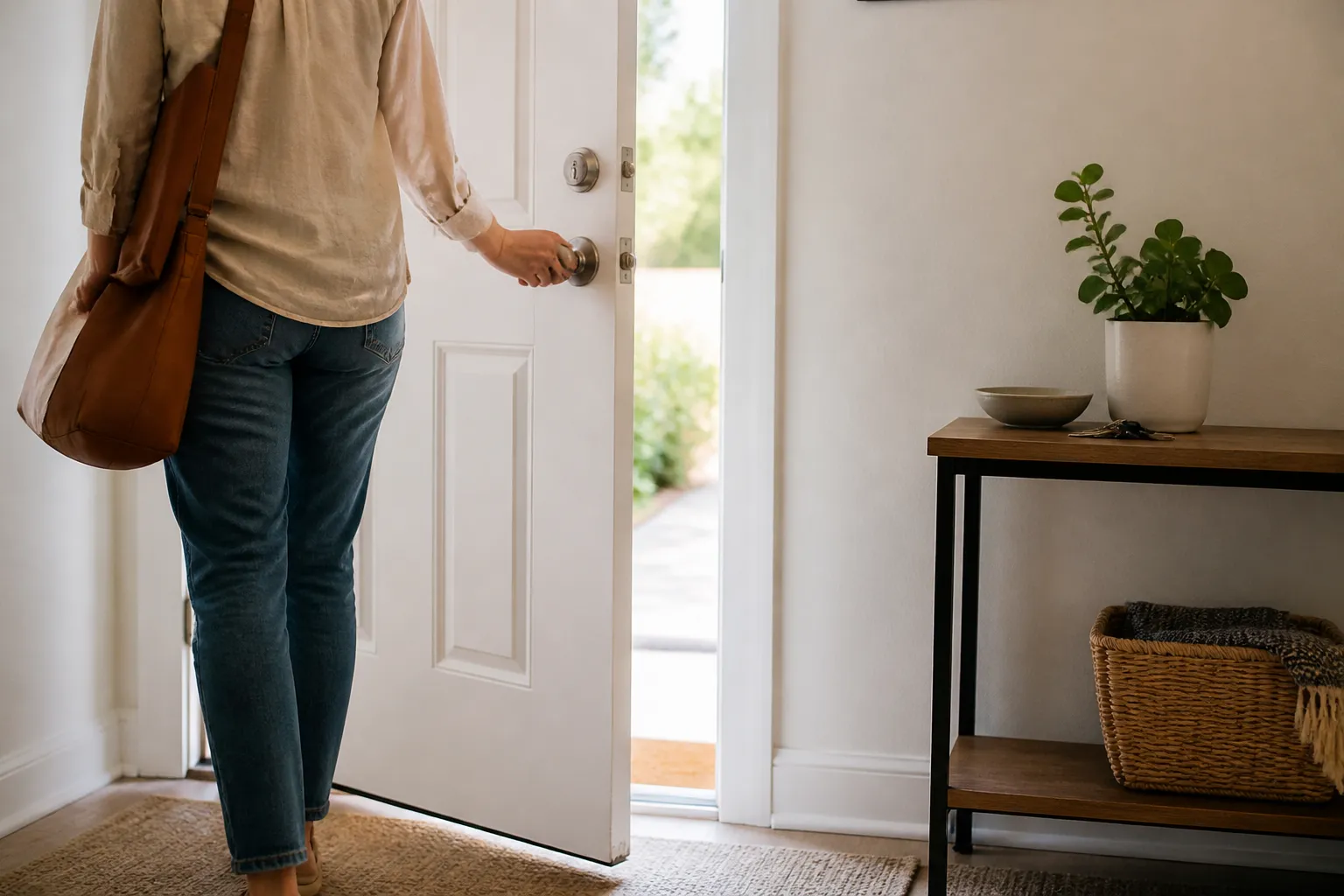
Several times a day, pick up the keys and put them down. Put on a coat, then make tea. Walk toward the door, turn around, and sit. Open the door without leaving, then close it gently. Repeat only while your dog remains reasonably relaxed. If the dog becomes tense, make the action smaller, slow down, or add distance from the cue.
The checkpoint is observable: after the cue, your dog should be able to disengage, eat, sniff, lie down, or respond normally. If the dog tracks you intensely or rushes to the exit, the cue is still too powerful. Do not repeat it rapidly until the dog is exhausted. Give a pause, then practice an easier version.
Practice Micro-Absences
When preparation cues are less alarming, teach the actual skill of being alone. Choose a moment when your dog is settled and the home is quiet. Step outside for one or two seconds, return before distress appears, and wait for calm before repeating. The first goal is not distance or duration. It is a successful, uneventful separation.
Use a simple progression. A session might include two seconds, three seconds, two seconds, five seconds, and three seconds. Variation prevents the dog from expecting one exact interval, while returning quickly protects confidence. If every repetition is longer, the session may become a test rather than practice.
Observe behavior through a camera if possible. The checkpoint is relaxed body language during the absence and a normal recovery after your return. A dog can be quiet yet distressed, so watch for rigid posture, constant door monitoring, rapid pacing, or refusal of food. Silence alone does not prove comfort.
Increase duration only after several easy sessions, and change one difficulty at a time. You might add a few seconds while keeping the same door, or use the same duration while walking farther away. Later, vary departure times, clothing, rooms, and exit routes. Progress is not linear. A dog may manage eight minutes one day and need two minutes after poor sleep, illness, storms, or household disruption.
What to Do After a Difficult Repetition
If your dog becomes distressed, return calmly and reduce the next attempt substantially. Do not punish barking, scratching, accidents, or destruction. Punishment can add fear to the separation and may suppress communication without changing the underlying emotion. Clean accidents with an appropriate odor remover and review the setup.
A useful adjustment is to identify the earliest missed signal. Perhaps the dog became tense when you stood up, not when you opened the door. Restart below that point. You may need to practice standing, sitting, and moving around the room before attempting another exit. If distress appears repeatedly despite very small absences, pause independent duration work and consult a qualified behavior professional.
Manage Real Departures
Training repetitions are most effective when daily absences do not repeatedly exceed the dog’s current ability. This is often the hardest part. If possible, use family support, a trusted sitter, carefully selected daycare, or a work arrangement that reduces long isolation during the early phase. Management is not failure; it protects progress.
A sitter is not automatically suitable. Introductions should be gradual, and the dog should show comfort with that person before being left together. Daycare may help social dogs, but it can overstimulate others. A familiar caregiver who offers quiet company may be a better fit than an exciting group environment. Choose according to the individual dog’s response, safety, and history.
For unavoidable absences, prioritize safety over perfect training. Avoid leaving a dog alone longer than it can presently manage when alternatives exist, but do not create unsafe rushing or repeated failed experiments. Discuss temporary support with your veterinarian if anxiety is severe. Medication, when appropriate, is prescribed and monitored by a veterinary professional; it should complement behavior work rather than replace assessment and gradual practice.
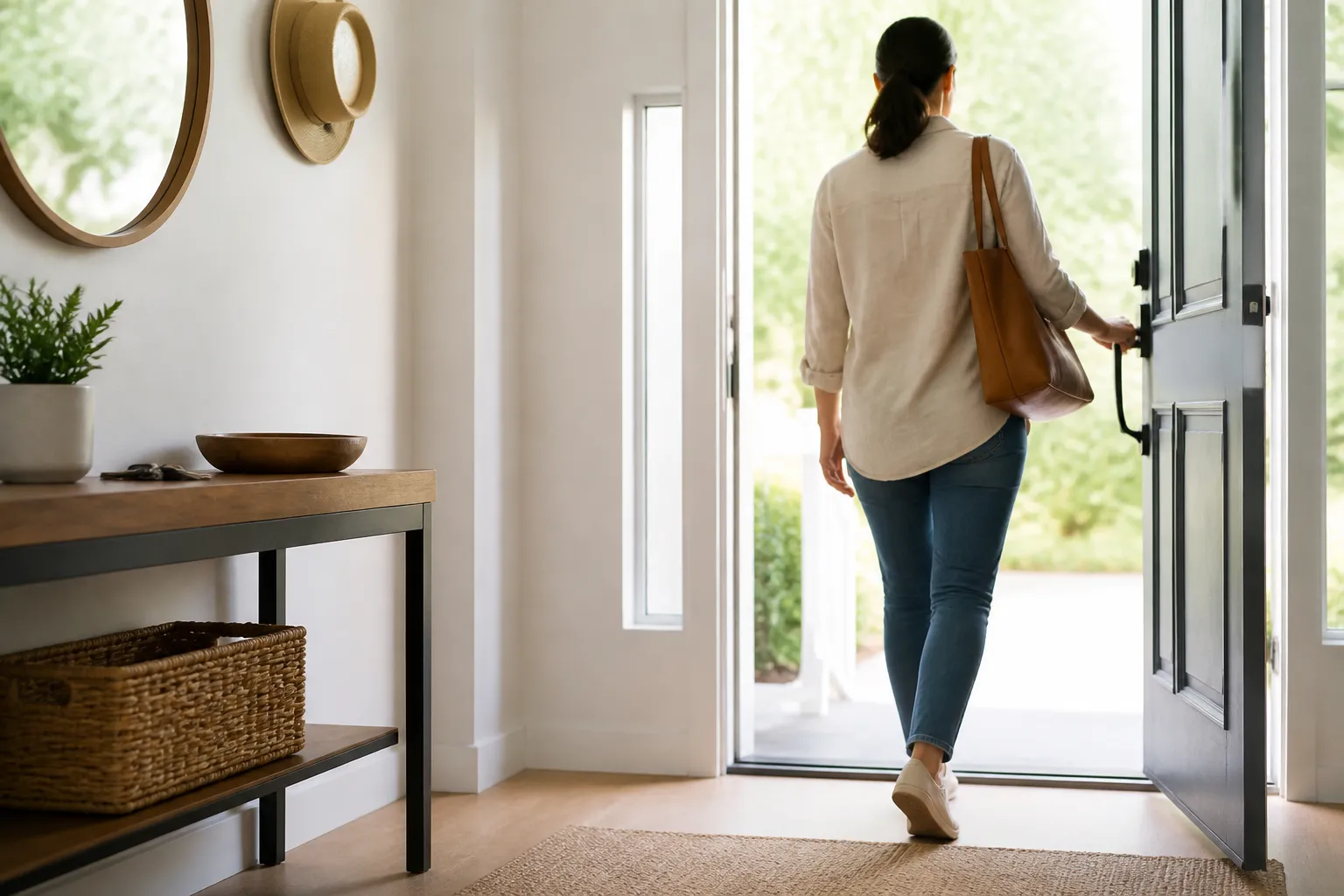
Keep departures and returns predictable without making them rigid. A consistent sequence can lower uncertainty, but life will include delays and unusual events. Once your dog is stable, introduce small variations carefully. The goal is flexible calmness, not dependence on a ritual that must occur identically.
Returning Home
Return without scolding or excessive excitement. If your dog is frantic, move quietly, put belongings away, and offer attention when the body begins to soften. Do not deliberately withhold comfort as a rule; calm affection is compatible with training. The important lesson is that reunion is safe and ordinary, not a dramatic reward for panic.
Wait until your dog has settled before starting another exercise. Some dogs need several minutes, while others need much longer. A successful return is not measured by a perfect sit. Look for easier breathing, softer muscles, exploratory behavior, and the ability to disengage from you.
Support Relaxation Skills
Teach settling when you are home. Place a mat near your chair and reinforce voluntary lying, relaxed posture, and quiet observation. Gradually move the mat farther away, briefly stand, walk around, and return. This builds independence without the emotional intensity of an immediate departure.
Reward calm choices at unremarkable moments. If your dog rests in another room, quietly deliver a treat or use gentle verbal acknowledgment, provided it does not make the dog get up and follow. Encourage sniffing, chewing, and resting, but do not force a dog to remain on a mat if the exercise creates tension.
Predictability also comes from meeting daily needs consistently. Regular feeding, sleep, toilet opportunities, social contact, and appropriate activity can make behavior easier to interpret. Nevertheless, a well exercised dog can still experience separation distress. Routine supports treatment; it is not a substitute for gradual exposure.
Avoid strategies based on dominance, prolonged ignoring, surprise absences, or deliberately triggering panic. “Crying it out” can expose the dog to more fear than it can process and may worsen escape behavior. Likewise, bringing home another animal is not a reliable cure. A second pet can add companionship, but it cannot guarantee that the specific fear of human absence will disappear.
Track Progress Carefully
Use a simple log with date, predeparture behavior, planned duration, actual response, food acceptance, and recovery time. Mark each repetition as easy, borderline, or too difficult. Patterns become clearer when notes describe behavior rather than impressions. “Lay down and chewed for thirty seconds” is more useful than “seemed fine.”
Set checkpoints that are visible and modest. For example, your dog may calmly remain behind a closed interior door, then tolerate you stepping outside briefly, then handle a longer absence. Do not advance because a calendar says it is time. Advance because the dog repeatedly demonstrates comfort.
If progress stalls, ask what changed. The trigger may be duration, a new departure cue, outside noise, confinement, time of day, or your dog’s physical condition. Reduce difficulty, improve management, or seek professional guidance. Regression is information, not disobedience.
When Professional Help Is Important
Consult a veterinarian when distress is intense, sudden, worsening, accompanied by injury, or present alongside changes in appetite, sleep, mobility, elimination, or general behavior. A veterinary examination can identify medical contributors and discuss whether medication or referral is appropriate.
Seek a qualified reward based behavior professional for a tailored plan, especially when there is escape behavior, aggression around departures, or inability to complete tiny absences. Ask about experience with separation related problems and methods used. Avoid practitioners who recommend punishment, intimidation, flooding, or promises of a guaranteed rapid cure.
A careful professional should assess the whole picture, explain the training plan, define safety precautions, and adjust exercises using observed behavior. Cooperation among veterinarian, caregiver, and trainer is particularly valuable when anxiety is severe or complicated by other conditions.
Frequently Asked Questions
Should I ignore my dog before leaving?
No blanket rule is necessary. Keep interaction calm and ordinary rather than creating an emotional farewell. You can provide affection, but avoid escalating excitement or making the departure unusually significant. The dog’s body language should guide timing; if attention increases arousal, allow a quiet settling period.
Is a crate helpful for separation anxiety?
Only when the dog already finds the crate comfortable and can remain relaxed there. Introduce or improve crate comfort separately from departure practice. If confinement causes frantic scratching, biting, heavy panting, or escape attempts, use a safer open area and seek guidance. Never use a crate to force a frightened dog to endure a long absence.
How long should training sessions last?
There is no universal duration. Keep sessions short enough to preserve success, often several easy repetitions rather than one demanding attempt. End while the dog is coping, allow recovery, and repeat later. The correct length depends on the dog’s threshold, environment, history, and response that day.
Should I leave the television on?
It may mask occasional sounds for some dogs, but it is not a treatment. Test sound levels while you are present and choose something unlikely to cause excitement. White noise or quiet background audio can be useful environmental support, but the central work remains gradual, tolerable separation.
What if my dog will not eat when alone?
Treat refusal as useful information, not stubbornness. The absence may be too difficult, the food unsuitable, or the dog physically unwell. Try an easier duration and verify that the dog eats normally when you are home. Persistent appetite changes require veterinary advice.
Can exercise prevent separation anxiety?
Appropriate exercise can support rest and emotional balance, but it cannot reliably prevent or resolve separation distress. Avoid using exhausting activity as the sole strategy. Pair normal movement with gradual alone-time training, calm enrichment, predictable care, and professional support when needed.
Conclusion
A calmer departure routine is built from small successes: identify early stress signals, make preparation cues unremarkable, create a safe environment, practice absences below threshold, and manage unavoidable time alone. Progress depends on the dog’s observable comfort, not on a fixed timetable. When setbacks occur, reduce difficulty rather than applying punishment or forcing endurance.
Your most persuasive tool is consistency paired with flexibility. Protect successful repetitions, record what you see, and adjust one variable at a time. If fear is severe, sudden, or resistant to careful practice, involve a veterinarian and an experienced reward based professional. With appropriate support, departures can become ordinary events instead of repeated tests of fear.