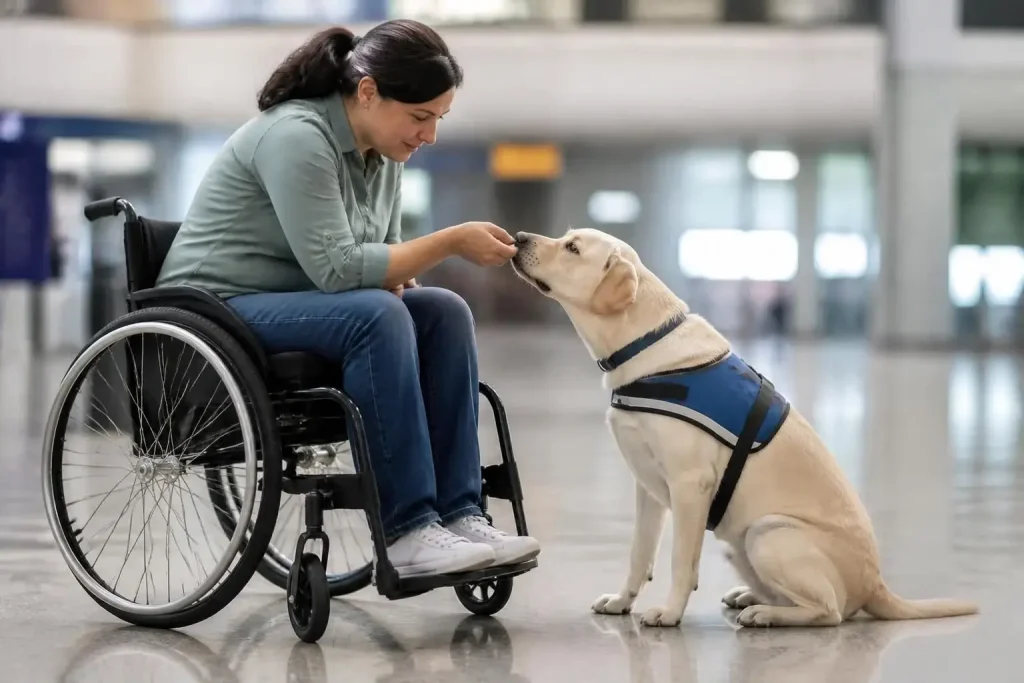
Service dog training requires more than teaching obedience. A reliable service dog must perform specific tasks that reduce a handler’s disability-related limitations, remain calm in public, work safely around people and animals, and respond consistently despite distractions. The strongest programs combine careful dog selection, reward-based instruction, gradual exposure, health monitoring, and close cooperation with the person who will depend on the dog.
Training is not a quick course or a guaranteed outcome. Dogs vary in temperament, health, learning speed, and suitability for particular tasks. A responsible trainer assesses progress honestly and changes the plan when a dog shows fear, aggression, persistent stress, or physical limitations. The goal is not a perfect performance in every situation; it is dependable, humane assistance that supports the handler’s independence while protecting the dog’s welfare.
What a service dog must learn
Service dogs need two connected kinds of training. Public-access skills help a dog behave safely in places such as shops, offices, transport, and medical facilities. Task training teaches actions directly related to a person’s disability, such as retrieving objects, providing mobility support when physically appropriate, interrupting harmful behavior, alerting to a medical change, or creating space during a panic episode.
Not every useful behavior qualifies as a disability-related task. Comfort, companionship, and general emotional support may be valuable, but they are not the same as a trained action that mitigates a disability. Clarifying the intended tasks early prevents wasted effort and helps determine whether a dog is physically and behaviorally suited to the work.
A dog should also learn an off-duty state. Service work involves long periods of quiet waiting, so the dog needs permission to relax without constant stimulation. A clear release cue can distinguish working time from rest and reduce frustration.
Choosing the right dog
Temperament comes first
Breed can influence size, energy, coat, and inherited tendencies, but individual temperament matters more. Look for a dog that is social without being indiscriminately excited, curious without being reckless, and able to recover quickly from unfamiliar sounds, surfaces, movements, and people. A dog that freezes, lunges, guards resources, or cannot settle may struggle with public work.
Puppies require careful developmental support, while adult dogs may offer a clearer picture of their temperament. Neither option guarantees success. Obtain veterinary records when possible, arrange a thorough health examination, and consider orthopedic, sensory, respiratory, and hereditary concerns relevant to the dog’s expected tasks.
Mobility-related work deserves particular caution. Bracing, pulling, or helping a person rise can place substantial stress on joints and the spine. A veterinarian or qualified rehabilitation professional should assess whether the dog’s structure and conditioning make such work appropriate. Never teach weight-bearing assistance simply because a dog is large.
Define the handler’s needs
Write a task description before selecting training methods. Identify what happens before assistance is needed, what the dog must do, how the handler will recognize completion, and what safety conditions apply. For example, “retrieve a dropped phone and deliver it to hand” is clearer than “help with mobility.” Specific descriptions make training measurable and reveal when an alternative tool may be safer or more practical.
A task should be useful, repeatable, and physically reasonable. If the handler’s condition changes, the training plan may need revision. Collaboration with medical, occupational, or rehabilitation professionals can help separate genuine assistance from actions that create risk.
Build foundational skills
Begin in a quiet setting with short sessions. Teach the dog to respond to its name, orient toward the handler, follow a marker or reward signal, and offer simple behaviors such as sit, down, stand, hand target, recall, and loose-leash walking. Reward correct choices promptly. Food is often effective, but praise, play, access to sniffing, or another meaningful reward can also reinforce behavior.
Avoid drilling one cue until the dog becomes frustrated. Alternate easy and difficult exercises, stop while the dog is still successful, and record what happened. A simple training log can include the environment, cue, response, reward, distractions, and stress signs. This record helps identify whether a problem involves unclear communication, excessive difficulty, insufficient motivation, or discomfort.
Proof skills gradually. A dog that sits in a kitchen may not sit near a doorway, elevator, food court, or wheelchair. Change only one major factor at a time when possible: distance, duration, distraction, location, or handler movement. If performance collapses, reduce difficulty instead of repeating the cue louder.
Practical tip: Treat calm recovery as a trained skill. When a distraction appears, reward the dog for noticing it and returning attention to the handler, rather than demanding that the dog pretend the distraction does not exist.
Teach public-access behavior
Public-access preparation should be systematic. First practice outside the home in low-pressure places, then progress to quiet businesses or outdoor areas where dogs are permitted. Later, add busier environments, narrow aisles, doors, lifts, waiting rooms, and varied flooring. Always follow local access rules and the policies of each location.
Essential behaviors include walking without persistent pulling, ignoring dropped food, remaining under a chair or table, waiting at thresholds, avoiding greetings, settling for extended periods, and responding to the handler without vocalizing. The dog should not solicit attention from strangers or investigate merchandise, medical equipment, food, or other animals.
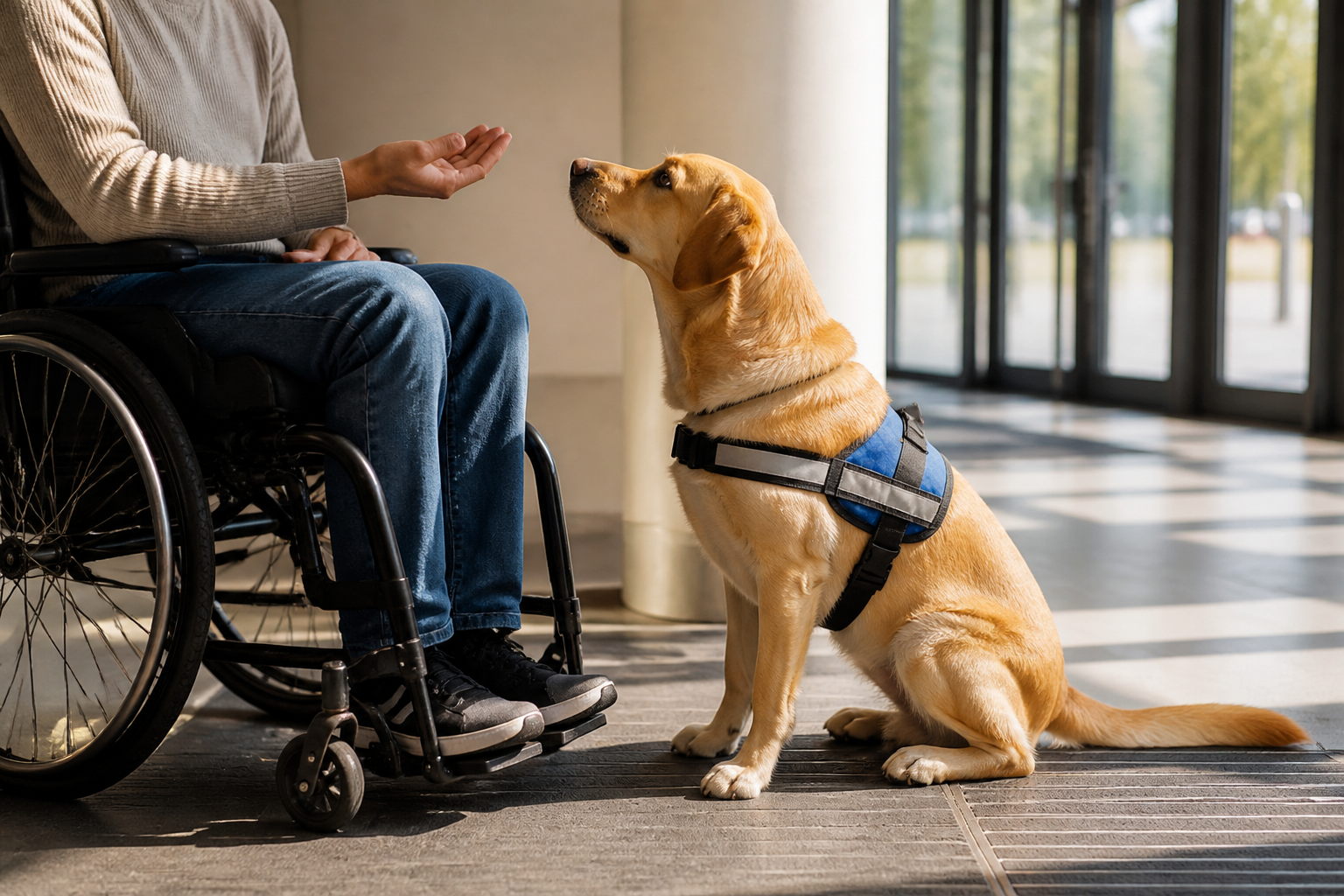
Socialization does not mean forcing interaction. Let the dog observe people, mobility devices, sounds, and surfaces at a distance where it remains able to eat and respond. Pair unfamiliar experiences with rewards, then leave before stress builds. Signs such as tucked posture, repeated yawning, lip licking, panting unrelated to heat, avoidance, scanning, or sudden loss of appetite indicate that the session may be too difficult.
A service dog must also learn safe toileting routines. Teach a consistent cue and select appropriate locations without rushing. Maintain hygiene and never rely on a dog to work when illness, pain, diarrhea, or significant fatigue is present.
| Stage | Action | Checkpoint |
|---|---|---|
| Foundation | Teach attention, movement, and basic cues | The dog responds in a quiet setting |
| Generalization | Practice one skill across locations and distractions | The dog recovers and responds without repeated cues |
| Task work | Shape the disability-related behavior | The dog completes the full sequence safely |
| Public access | Combine tasks with calm community behavior | The dog remains unobtrusive and dependable |
Develop disability-related tasks
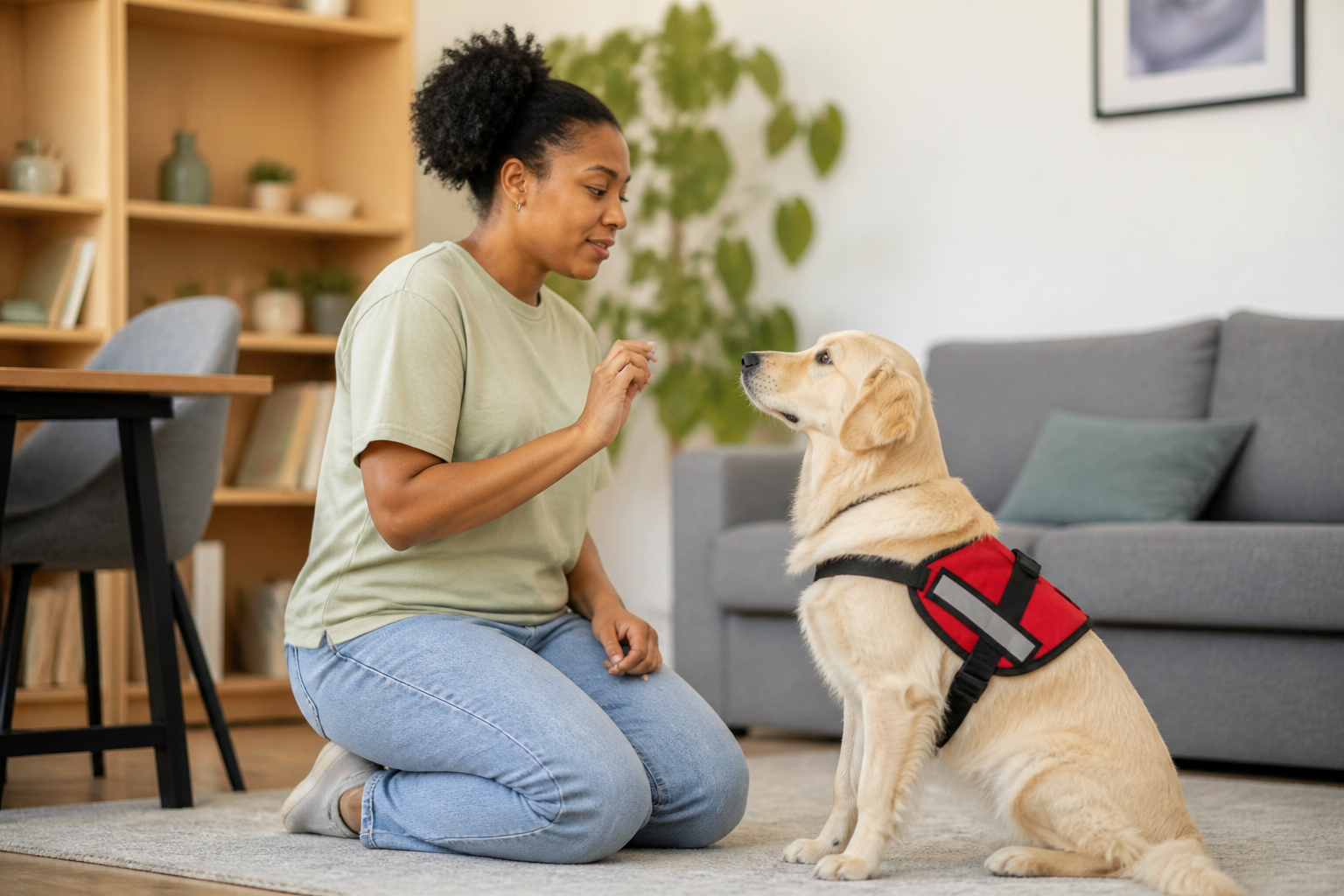
Break each task into small, observable parts. If the final behavior is retrieving an object, begin with orienting toward the object, touching it, grasping it, lifting it, carrying it, and delivering it. Reinforce each stage before combining the sequence. Shaping allows the dog to understand the behavior without repeated physical manipulation.
Use a consistent cue only after the dog is offering the behavior reliably. Then add the real context: an object on the floor, a ringing phone, a closed drawer, or the handler seated rather than standing. Vary harmless details so the dog learns the task rather than memorizing one location.
For alerts, define the detectable change and the safe response. Some dogs can learn to respond to an observable event, but claims that a dog can reliably predict every medical episode should be treated cautiously. An alert behavior should never replace medical monitoring, prescribed treatment, an emergency plan, or professional advice.
For interruption or grounding tasks, protect the handler and dog from escalation. Teach a gentle nose touch, paw target, retrieval, or position change, and provide an alternate behavior when contact would be unsafe. If the task involves pressure, blocking, or physical contact, obtain professional guidance and stop if the dog shows pain or distress.
Generalize and test reliability
A task is not finished when it works in the training room. Practice with different handlers, clothing, objects, times of day, lighting, surfaces, and realistic distractions. Train in short, planned sessions rather than exposing the dog to chaotic environments and hoping it adapts.
Use a simple reliability test: give the cue once, allow reasonable processing time, and observe whether the dog completes the behavior safely. Avoid counting a performance as successful when the handler points, repeats the cue, or physically guides the dog. At the same time, do not create artificial pressure. Real assistance includes understandable variation, and the dog should be allowed to pause when a situation is unsafe.
Recognize failure early
A responsible program has exit criteria. Repeated fear, aggression, inability to settle, persistent avoidance, serious health problems, or lack of progress despite appropriate instruction may mean the dog is unsuitable for service work. Rehoming a dog into a compatible companion role is not failure; it can be the most humane decision.
Punishment, intimidation, shock-based methods, and forced exposure can suppress visible behavior while increasing fear or damaging trust. Choose trainers who explain methods clearly, reward desired behavior, use management to prevent rehearsal of dangerous behavior, and welcome questions. Credentials and titles vary, so observe how the professional handles mistakes, stress, and welfare.
Maintain skills and welfare
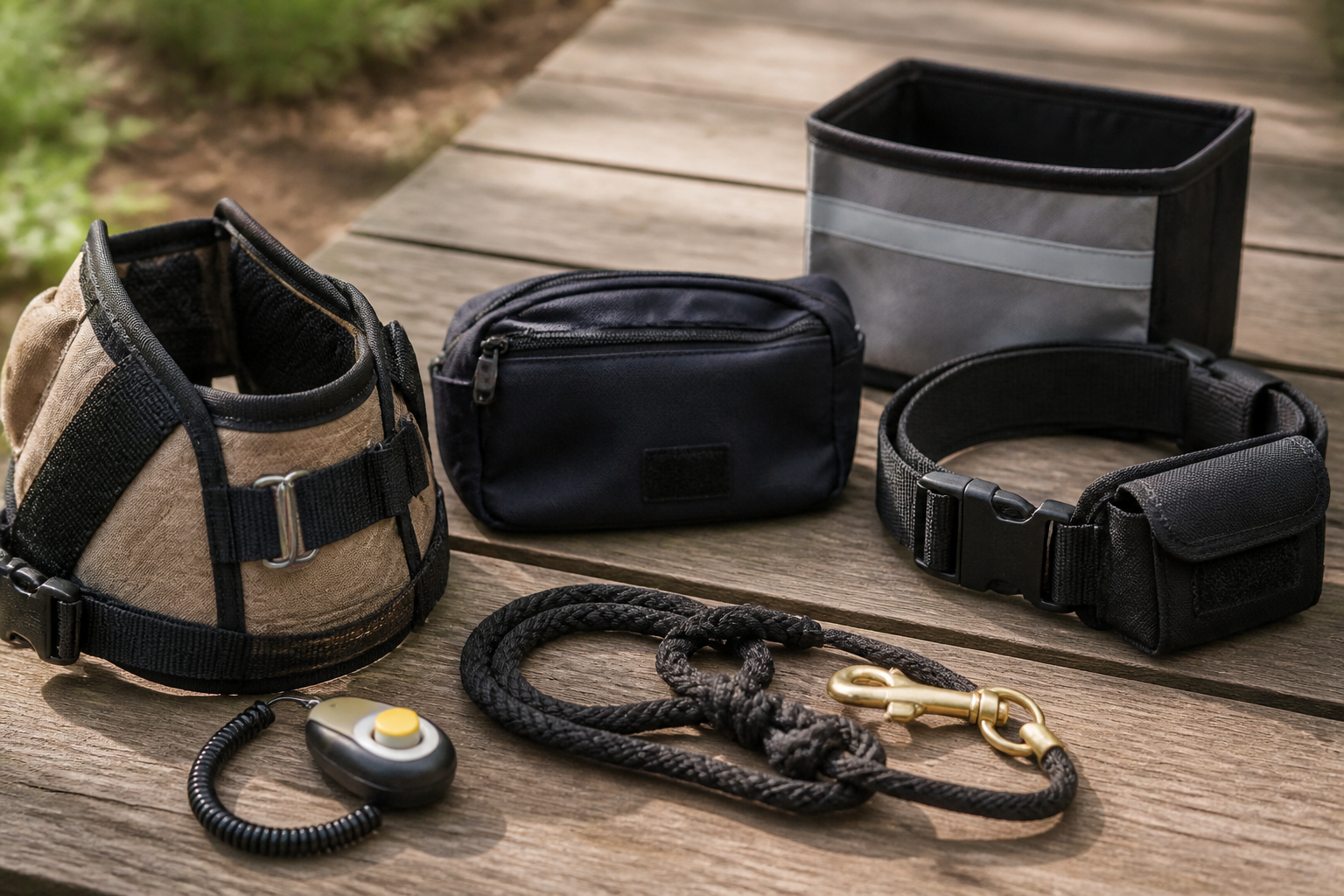
Training continues after public access begins. Schedule refreshers, practice tasks in ordinary routines, and reinforce calm behavior unpredictably so it remains valuable. Review equipment regularly, keep identification and veterinary care current, and monitor weight, paws, teeth, ears, sleep, and recovery after work.
The handler should protect the dog from unnecessary interaction. A working dog is not public property, and strangers should not pet, feed, call, or distract it without permission. A clear vest or harness may communicate that the dog is working, but equipment does not create access rights or replace training. Rules differ by jurisdiction and by setting, so check current local requirements rather than relying on online assumptions.
Plan rest days and retirement. Aging, injury, medication, or changes in the handler’s needs can make service work inappropriate. A retirement plan protects continuity of assistance and gives the dog a comfortable next stage of life.
Frequently asked questions
How long does training take?
There is no universal timeline. It depends on the dog’s age, temperament, health, prior learning, task complexity, trainer support, and the handler’s consistency. Basic obedience may develop relatively quickly, while reliable public behavior and complex tasks require sustained practice. Progress should be judged by safe, repeatable performance rather than a calendar deadline.
Can any dog become a service dog?
No. Any breed may contain suitable individuals, but not every dog has the temperament, health, size, or work ethic required. A friendly pet can still be too distractible, anxious, reactive, or physically vulnerable for service work.
Should I train alone or hire a professional?
Some handlers can teach foundation skills independently, but professional guidance is valuable for task design, public-access preparation, behavioral problems, and physically demanding work. Choose help that uses humane methods and understands disability-related tasks. A trainer should assess the actual dog and handler rather than promise success before evaluation.
Is certification always required?
Requirements differ by country, state, and setting. Online certificates, identification cards, and purchased registrations may not establish legal status. Learn the rules that apply where the dog will work, keep documentation that is genuinely required, and avoid misrepresenting a pet as a service animal.
What should I do if the dog makes a mistake in public?
Manage the situation calmly. Move away from the trigger, prevent repetition, and determine what made the task too difficult. Later, return to an easier setting and rebuild the skill. Do not punish the dog during a stressful event, and do not continue working if either partner is unsafe or overwhelmed.
Conclusion
Effective service dog training is a careful partnership built on suitability, clear tasks, humane teaching, gradual exposure, and honest evaluation. Start with the handler’s functional needs, select for health and temperament, teach foundations before complexity, and measure progress in real environments. Protecting welfare is not separate from performance: a calm, healthy, confident dog is more able to provide dependable assistance.
Use professional support when tasks involve medical alerts, mobility, pressure, aggression, fear, or uncertainty about legal requirements. If the dog cannot meet the work safely, changing plans is responsible. The best outcome is assistance that genuinely helps the handler while preserving the dog’s comfort, dignity, and long-term wellbeing.