
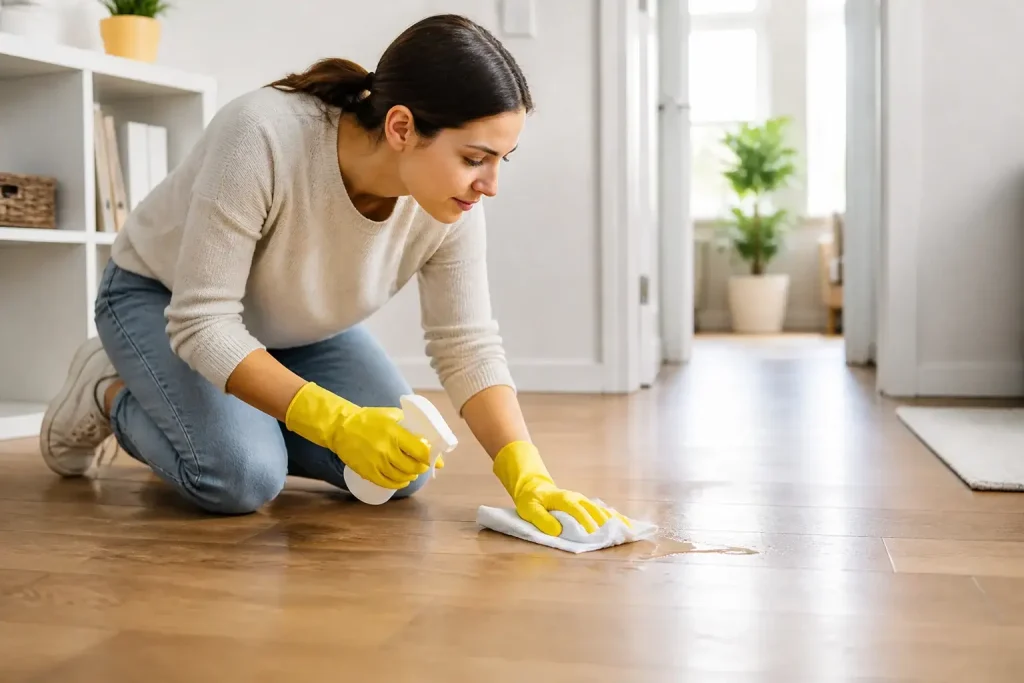
Accidents do not mean your puppy has failed, and they do not require punishment. The most effective reset is calm, immediate cleanup, closer supervision, and more frequent trips outside. Your puppy needs a clear pattern: the right place is easy to reach, successful toileting brings gentle praise, and indoor mistakes are handled without fear.
Potty training is a learning process shaped by age, bladder development, routine, environment, and communication. After an accident, your goal is not to make the puppy feel guilty. Your goal is to prevent a repeat, remove the odor cue, and teach what to do next.
What an Accident Really Means
An accident is information. It may show that the interval between bathroom trips was too long, the puppy had too much freedom, the route outside was slow, or a change in activity created an overlooked need. Young puppies also have limited physical control, so even a puppy that understands the desired location may not reach it every time.
Look at what happened rather than assigning blame. Ask when the puppy last toileted, what it had been doing, whether it had just eaten, drunk, woken, played, or become excited, and how long it had been unsupervised. This simple review turns frustration into a practical adjustment.
If you find the puppy beginning to urinate or defecate, interrupt gently with a neutral sound, such as “outside,” then guide it quickly to the designated area. If it finishes there, offer quiet praise immediately. Avoid shouting, rubbing its nose in the mess, or displaying the evidence. Those responses can make a puppy hide future accidents without teaching the correct location.
If the accident is already finished, say nothing to the puppy about it. Clean the area thoroughly and change the routine that allowed the mistake. The lesson comes from the next successful opportunity, not from delayed correction.
The Calm Reset Plan
A reset works best when every household member follows the same sequence. Consistency reduces confusion and gives the puppy many chances to practice the behavior you want.
1. Respond Without Drama
Keep your voice and movements controlled. Excitement, anger, or frantic handling can make the puppy anxious and may interrupt elimination before it finishes. A neutral interruption is useful only when you catch the behavior in progress; a delayed reprimand is not meaningful to a young dog.
If the puppy seems frightened, soften your posture and move slowly. Do not corner it or force it to inspect the accident. Your relationship matters because a puppy that feels safe is more likely to seek you out, follow guidance, and eliminate openly in the appropriate place.
2. Clean the Area Completely
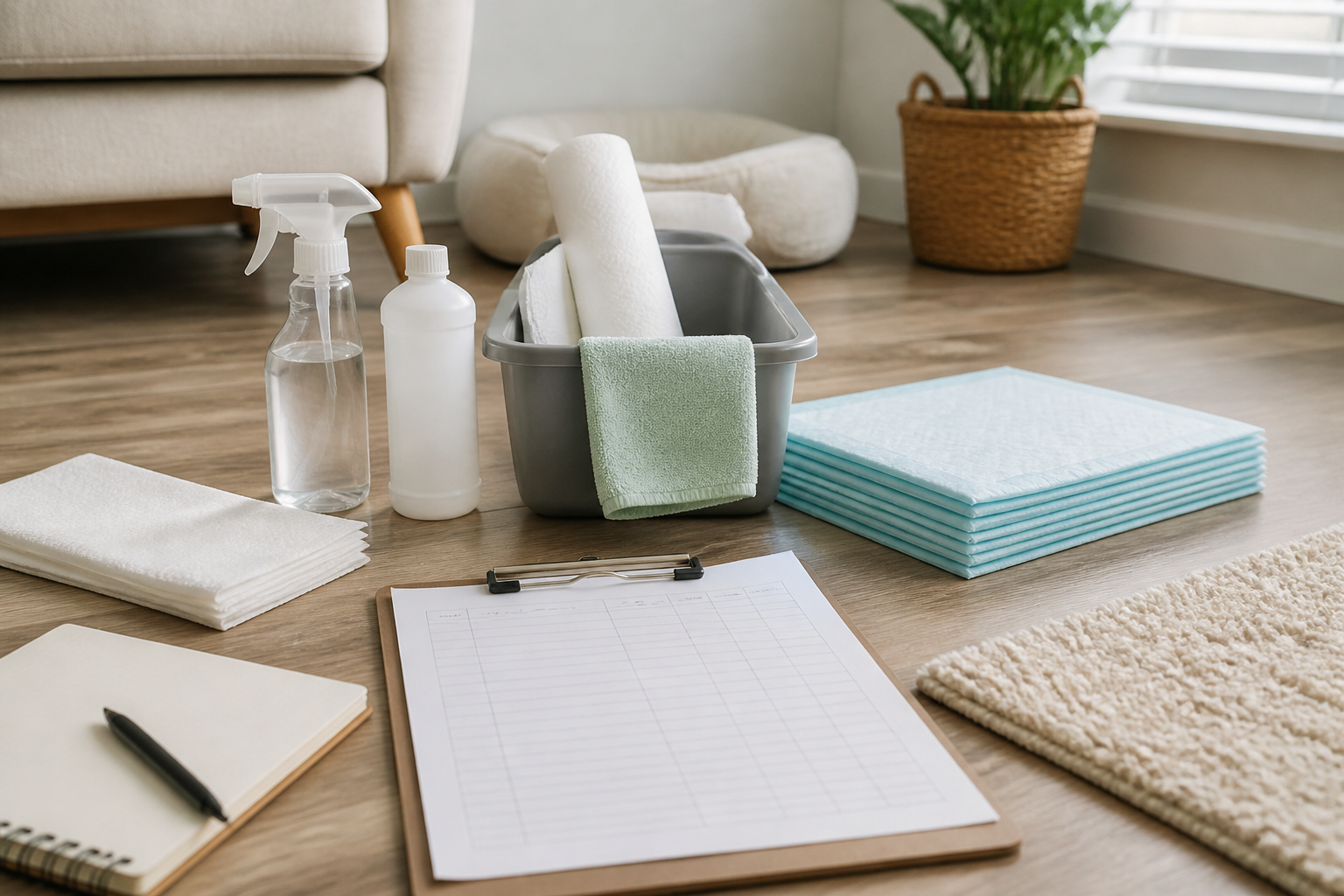
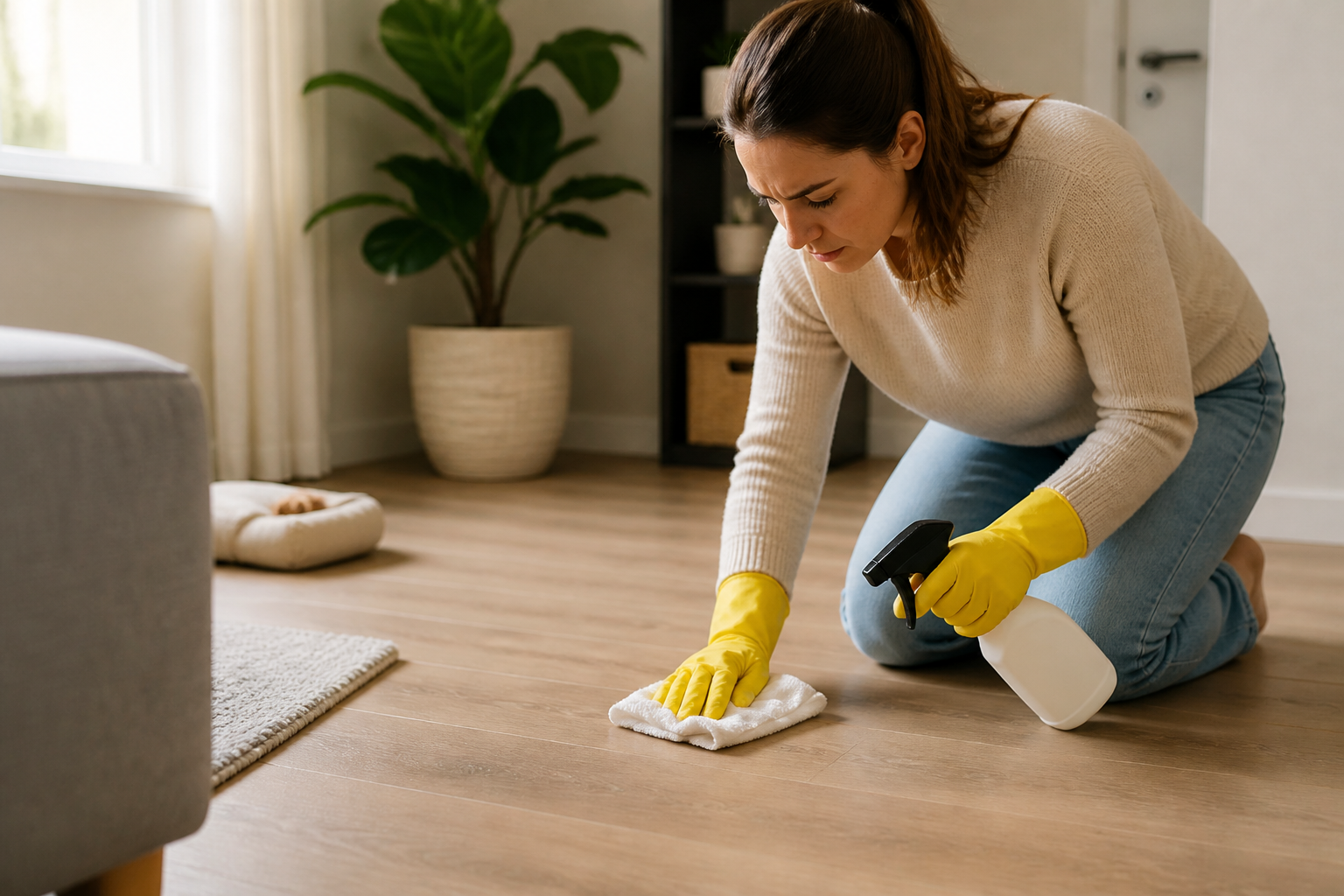
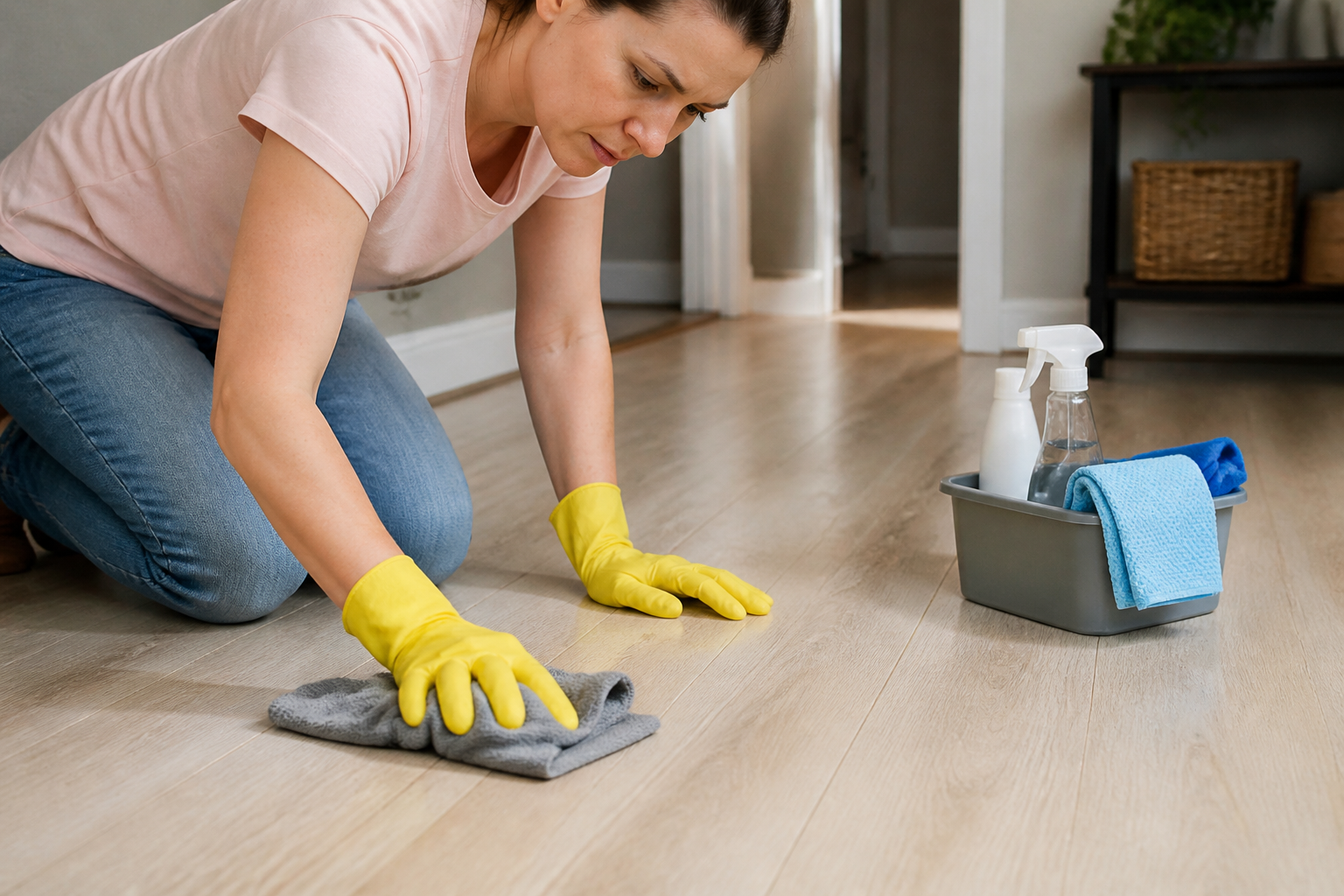
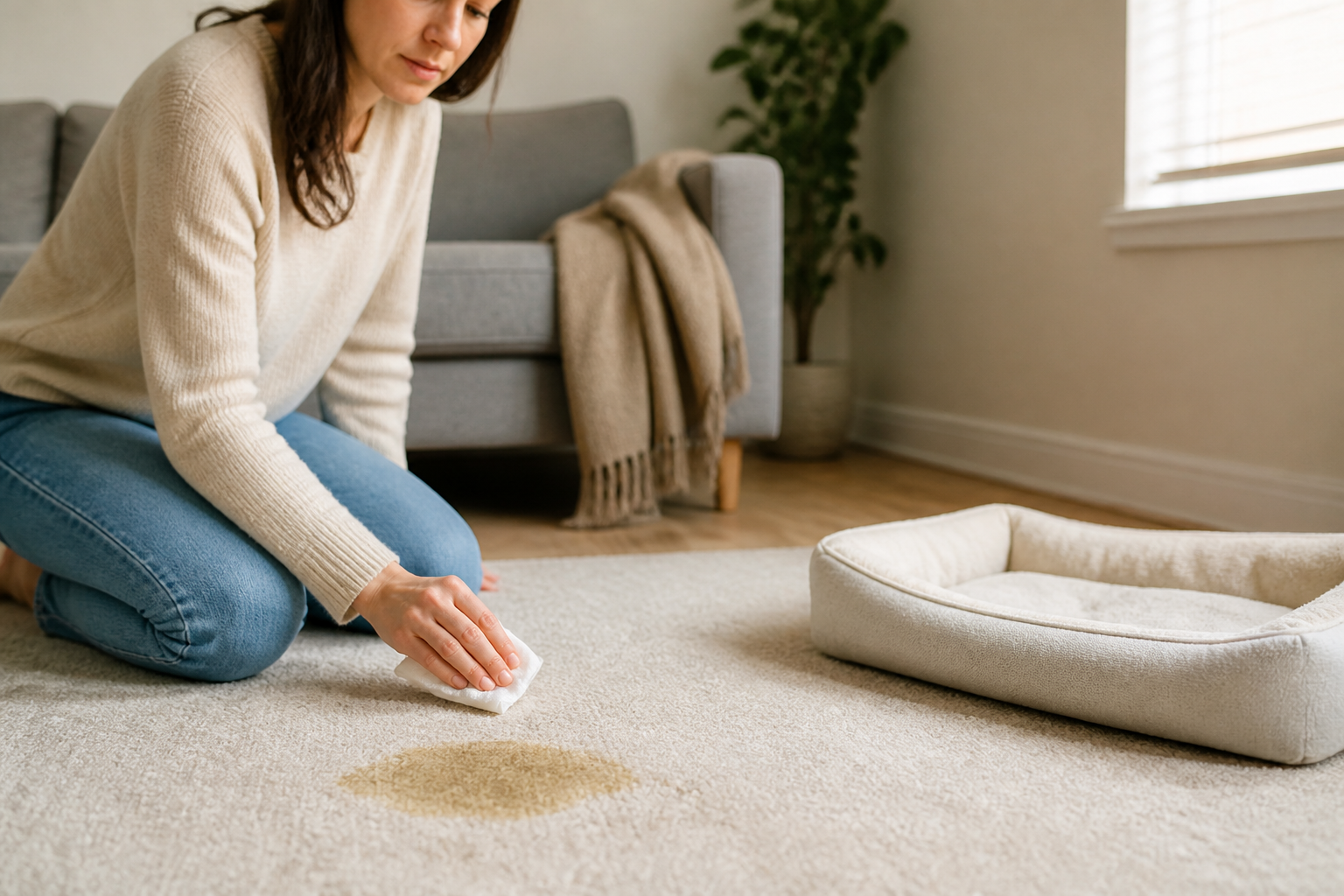
Use a cleaner designed to break down urine or fecal odor, following its label directions and checking that it is suitable for the surface. Ordinary household cleaners may make a spot look clean while leaving scent molecules that a puppy can detect. Residual odor can act like a bathroom sign.
Blot fresh urine rather than spreading it. Remove solid waste promptly, then clean the surrounding area, including edges that may have been missed. Wash or replace absorbent items when appropriate. Keep the puppy away from wet cleaning products until the surface is safe.
Do not rely on your own nose as the final test. A puppy’s sense of smell is stronger than yours, so repeated accidents in one place may mean the odor remains. If a particular area keeps attracting toileting, block access temporarily while you improve supervision and cleaning.
3. Reduce Freedom Temporarily
After an accident, give the puppy less unsupervised space, not less affection. Use a puppy-proofed room, a safe pen, a crate used appropriately, or a leash attached to you while you are awake and attentive. The arrangement should allow comfortable movement and rest, never prolonged confinement.
Freedom can expand gradually after a pattern of successful trips. If accidents return, reduce access again without treating that change as punishment. Management is a teaching tool: it keeps the puppy near you, makes signals easier to notice, and prevents rehearsal of indoor toileting.
4. Increase Bathroom Opportunities
Take the puppy out after waking, eating, drinking substantially, playing, training, and exciting social activity. Also offer regular trips during quiet periods. The exact schedule depends on age, size, health, individual control, and your veterinarian’s guidance, so observe your puppy instead of relying on a rigid universal timetable.
Choose one outdoor toilet area when practical. Familiar smells can help the puppy understand the purpose of the trip. Walk directly there, remain boring and patient, and give the puppy time to sniff and settle. If nothing happens, return indoors under close supervision and try again soon rather than allowing unrestricted wandering.
5. Reward the Correct Moment
Praise and reward immediately after the puppy finishes in the desired location. Timing matters. If you wait until returning indoors, the puppy may connect the reward with the walk, the doorway, or another unrelated action.
Use a calm, happy voice and a reward your puppy values. Food can be useful, but praise, access to play, or permission to explore may also reinforce success. Deliver the reward outdoors, within seconds of completion, so the connection remains clear.
Building a Reliable Daily Routine
A predictable routine helps you anticipate needs before urgency becomes an accident. Keep a simple log for several days. Record meals, water-heavy activities, sleep, play, elimination, accidents, and unusual events. Patterns often appear quickly, even when they were invisible during a busy day.
A log is not a test the puppy can pass or fail. It is a planning tool. If accidents commonly happen shortly after energetic play, schedule a trip immediately after play. If the puppy wakes from a nap and urinates within minutes, make the outdoor trip part of every wake-up routine.
Meals at consistent times can make bowel movements easier to predict, although household schedules and veterinary advice should guide feeding decisions. Do not restrict water to prevent accidents. Clean, available water is important, and excessive thirst or unusually frequent urination deserves professional attention.
Use a clear signal for going outside. You might take the puppy to the door, teach it to touch a bell, or watch for natural signs such as sniffing, circling, pausing during play, or moving away from people. A signal is helpful, but do not wait for it before every trip. Young puppies may not signal reliably until the habit is established.
Preventing Common Timing Errors
Many setbacks come from giving too much freedom too soon. A puppy may toilet successfully outside several times and still lack dependable control. Success is evidence that the plan works; it is not automatic proof that supervision is no longer needed.
Another error is staying outside too long without a clear purpose. If the puppy becomes distracted, return indoors briefly under close supervision, then try again. Once elimination occurs, allow a short period of safe exploration or play when practical. Otherwise, some puppies learn to hold it because toileting ends outdoor time.
A third error is changing the destination repeatedly. Occasional changes are unavoidable, but a consistent spot and route simplify the lesson. Keep the area reasonably quiet, especially for puppies distracted by traffic, people, animals, or weather.
Crate, Pen, and Supervision Choices
A crate can support potty training when it is introduced positively and used for appropriate periods. It should be large enough for the puppy to stand, turn, lie down, and stretch comfortably, but not so oversized that one end becomes a convenient toilet. A crate is not a substitute for regular trips.
A pen offers more room and may work well when the puppy needs a safe area during brief periods when direct supervision is impossible. If you use an indoor toilet surface, understand that it can slow the transition to outdoor-only toileting for some puppies because it teaches two acceptable locations. Decide which outcome fits your household, then apply the rule consistently.
Direct supervision is often best when the puppy is awake and active. Keep the puppy near you, scan for signs, and escort it out before urgency peaks. When you cannot supervise, use a safe management space rather than hoping the puppy will make a perfect choice.
- Take the puppy to the toilet area after waking, eating, drinking, playing, and exciting activity.
- Wait quietly and avoid turning the trip into a distracting game.
- Reward immediately after elimination finishes in the correct place.
- Return indoors with supervision, or provide safe activity if outdoor time is appropriate.
- Log the result and shorten the next interval if the puppy had an accident.
What to Do When Progress Regresses
Regression is common after travel, visitors, schedule changes, illness, fear, weather changes, or a new household arrangement. Respond by returning to the last level of management that worked. Increase supervision, refresh the routine, and reward outdoor success generously but calmly.
Do not assume regression is stubbornness. A puppy may forget during excitement, become uncomfortable outside, or fail to understand that a new surface is also acceptable. Rain, snow, heat, darkness, slippery flooring, or loud noises can make the outdoor area less appealing. Make the route safe and predictable, and speak with a veterinarian if discomfort may be involved.
If a previously reliable puppy suddenly begins having frequent accidents, consider medical causes. Urinary infections, digestive problems, parasites, pain, increased thirst, and other conditions can affect elimination. Contact a veterinarian for repeated, sudden, unusually urgent, painful, bloody, or otherwise concerning changes. Training advice cannot replace medical assessment.
Never punish a puppy for an accident caused by illness. The correct response is care, cleaning, and professional guidance.
Troubleshooting Specific Problems
The Puppy Keeps Returning to One Spot
Block access after cleaning and rearrange furniture if possible. Increase supervision near that location, and take the puppy outside before it begins sniffing or circling. If the surface is absorbent, cleaning may require repeated treatment or professional assistance.
The Puppy Toilets Outside but Also Indoors
This usually indicates that outdoor learning exists but management is not yet reliable. Shorten the interval between trips, supervise after indoor drinking and play, and reward every outdoor success. Avoid giving the puppy a large area until the pattern becomes steady.
The Puppy Will Not Eliminate Outside
Reduce distractions and choose a consistent area. Give enough quiet time, but do not turn the trip into an extended, cold, or stressful outing. If nothing happens, return indoors under close watch and try again soon. Medical discomfort, fear, or an unsuitable surface may also contribute.
The Puppy Eliminates in the Crate
Check timing, crate size, cleaning, stress, and the length of confinement. Puppies may soil a crate when they cannot hold it, when they arrived with an established kennel habit, or when illness is present. Adjust the schedule and seek veterinary advice if the pattern persists.
Quick Reference for Reset Decisions
| What happened | Immediate response | Next adjustment |
|---|---|---|
| You caught the puppy starting | Interrupt gently and guide outside | Watch more closely during similar activities |
| You found an old accident | Clean thoroughly without reprimand | Review access and timing |
| Accidents repeat in one place | Block the area after cleaning | Increase supervision near that location |
| Sudden frequent accidents | Note other symptoms and contact a veterinarian when warranted | Do not treat a possible medical problem as disobedience |
Frequently Asked Questions
Should I punish my puppy after an accident?
No. Delayed punishment cannot teach the desired location and may create fear, hiding, or reluctance to eliminate near people. Interrupt only when you catch the behavior, guide the puppy outside, and reward completion there. For a finished accident, clean it and change the plan.
How long should I wait outside?
Wait quietly for a reasonable opportunity, based on your puppy’s age, urgency, weather, and comfort. Avoid making every successful toilet trip end immediately if that causes the puppy to hold it. After elimination, brief safe exploration can help maintain a positive association.
Are puppy pads helpful?
They can be useful in some homes, especially when outdoor access is limited or a veterinarian recommends a temporary arrangement. They may also teach that indoor toileting is acceptable, which can lengthen a transition to outdoor-only habits. Choose deliberately and keep the location consistent.
Should I wake my puppy at night?
Very young puppies may need nighttime bathroom trips, while older puppies may sleep longer. Observe restlessness, whining, movement, and previous patterns, but do not expect physical control beyond the puppy’s developmental ability. Ask a veterinarian for individualized guidance when uncertain.
Why does my puppy pee again shortly after coming inside?
The puppy may have been distracted, too excited, uncomfortable outdoors, or not fully finished. Keep post-trip indoor time supervised. If no elimination occurred, try again soon. If frequent small urinations continue, especially with straining or discomfort, contact a veterinarian.
When is professional help appropriate?
Seek veterinary advice for sudden change, pain, blood, diarrhea, unusual thirst, repeated straining, lethargy, or accidents that do not improve with sensible management. A qualified trainer or veterinary behavior professional can help when fear, anxiety, complex household conditions, or persistent training difficulties are involved.
Conclusion
A potty-training accident is a prompt to adjust the system, not a reason to punish the puppy. Clean the area thoroughly, reduce freedom, increase timely outdoor trips, reward immediately, and record patterns that reveal when your puppy needs help. Stay patient while control and communication develop.
The most persuasive lesson is repeated experience: toileting in the right place is safe, predictable, and rewarding. If accidents are sudden, severe, or paired with physical signs, involve a veterinarian. A calm reset, applied consistently, gives both puppy and household a clear path forward.