
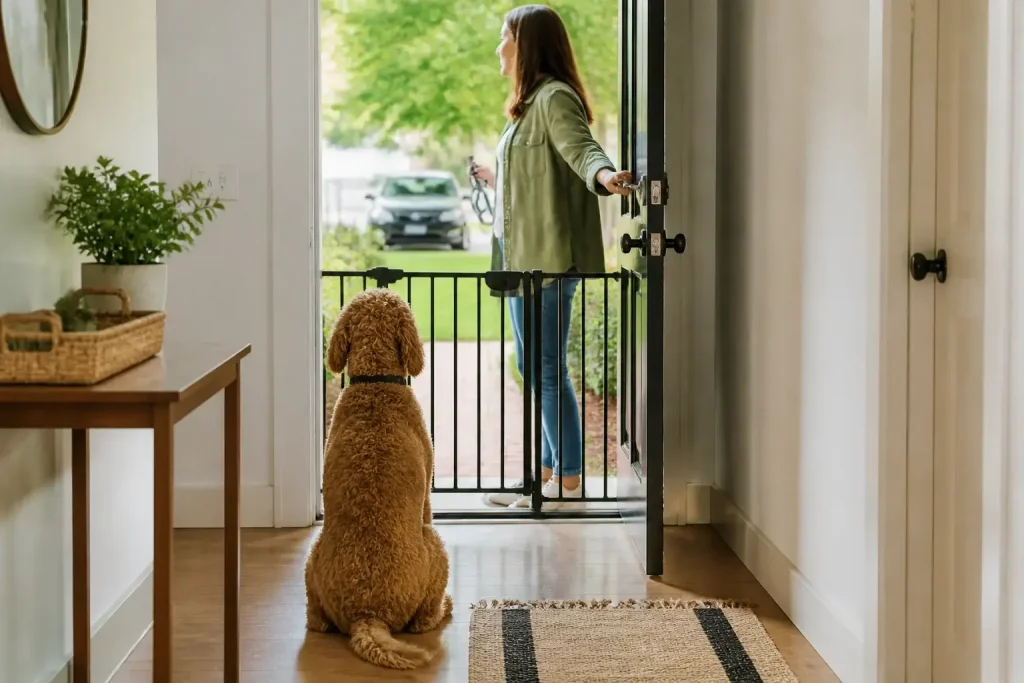
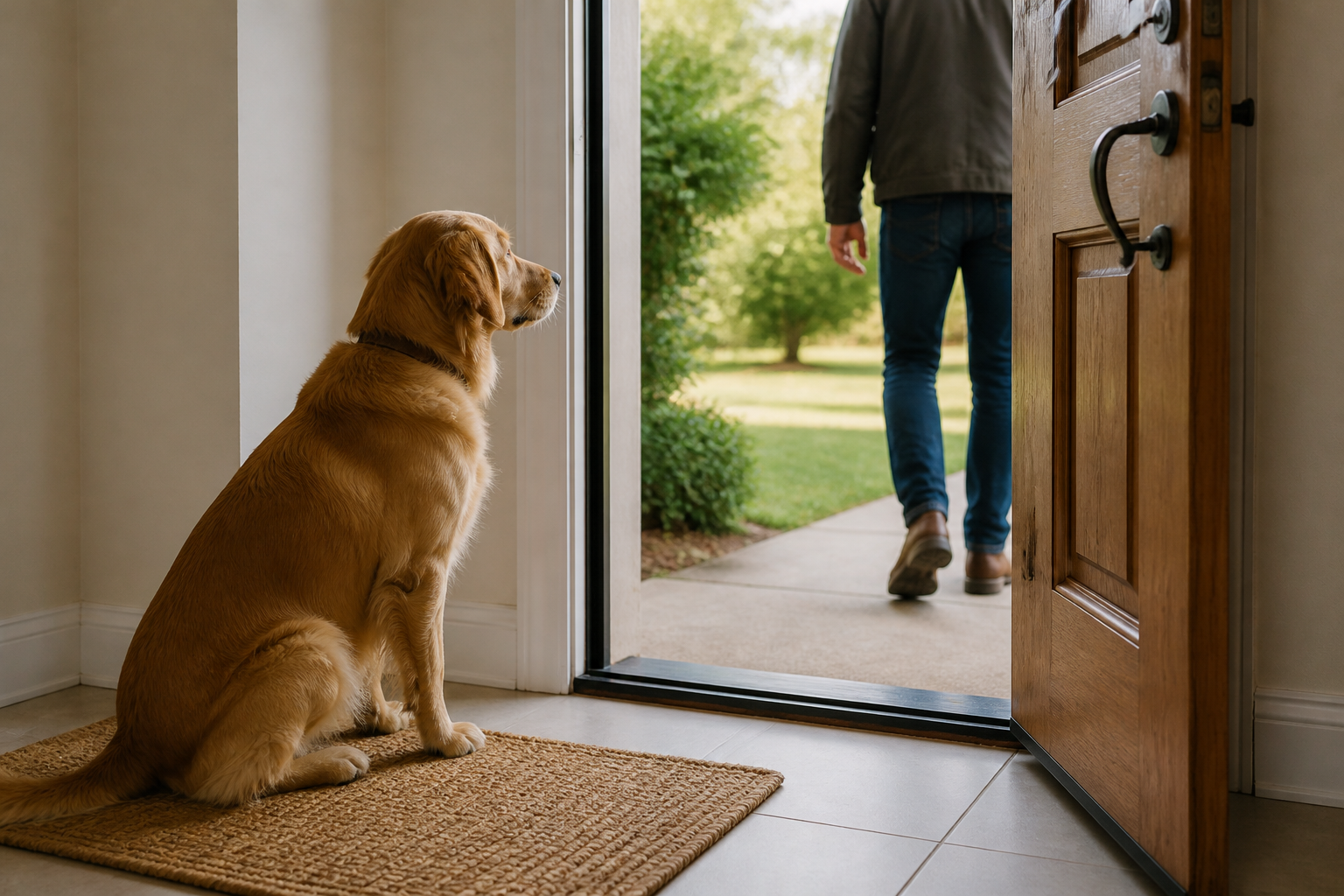
Teaching a dog to wait at doors is a practical safety skill, not a trick. The goal is simple: your dog pauses behind a boundary, keeps four paws on the floor, and moves forward only after receiving a release cue. This habit can reduce rushing through front doors, gates, car doors, and household entrances. It also gives you time to check surroundings before your dog enters a street, meets a visitor, or approaches another animal.
Train gradually, reward generously, and manage the environment while learning takes place. Do not rely on a verbal cue alone in a risky location. A leash, secure gate, and calm handling provide protection while your dog develops reliable self-control.
What “wait” should mean
“Wait” tells a dog to pause temporarily. It does not necessarily require a formal sit, and it does not mean the dog must remain in one exact position forever. A successful wait ends when you give a clear release cue, such as “okay,” “free,” or “let’s go.” Choose one phrase and use it consistently.
“Stay” usually asks for a longer, more precise hold. “Wait” is often more useful at doors because the dog only needs to pause until you inspect the area, adjust the leash, or invite movement. Decide what behavior you want before training. If your dog backs away, stands calmly, or sits while waiting, all can be acceptable unless the doorway makes one position safer.
The release cue matters as much as the pause cue. Without it, dogs may learn that a few quiet seconds mean permission to surge forward. Say the release word once, then move through the doorway with your dog. If the dog moves before release, calmly reset rather than repeating the cue louder.
Prepare a safe training setup
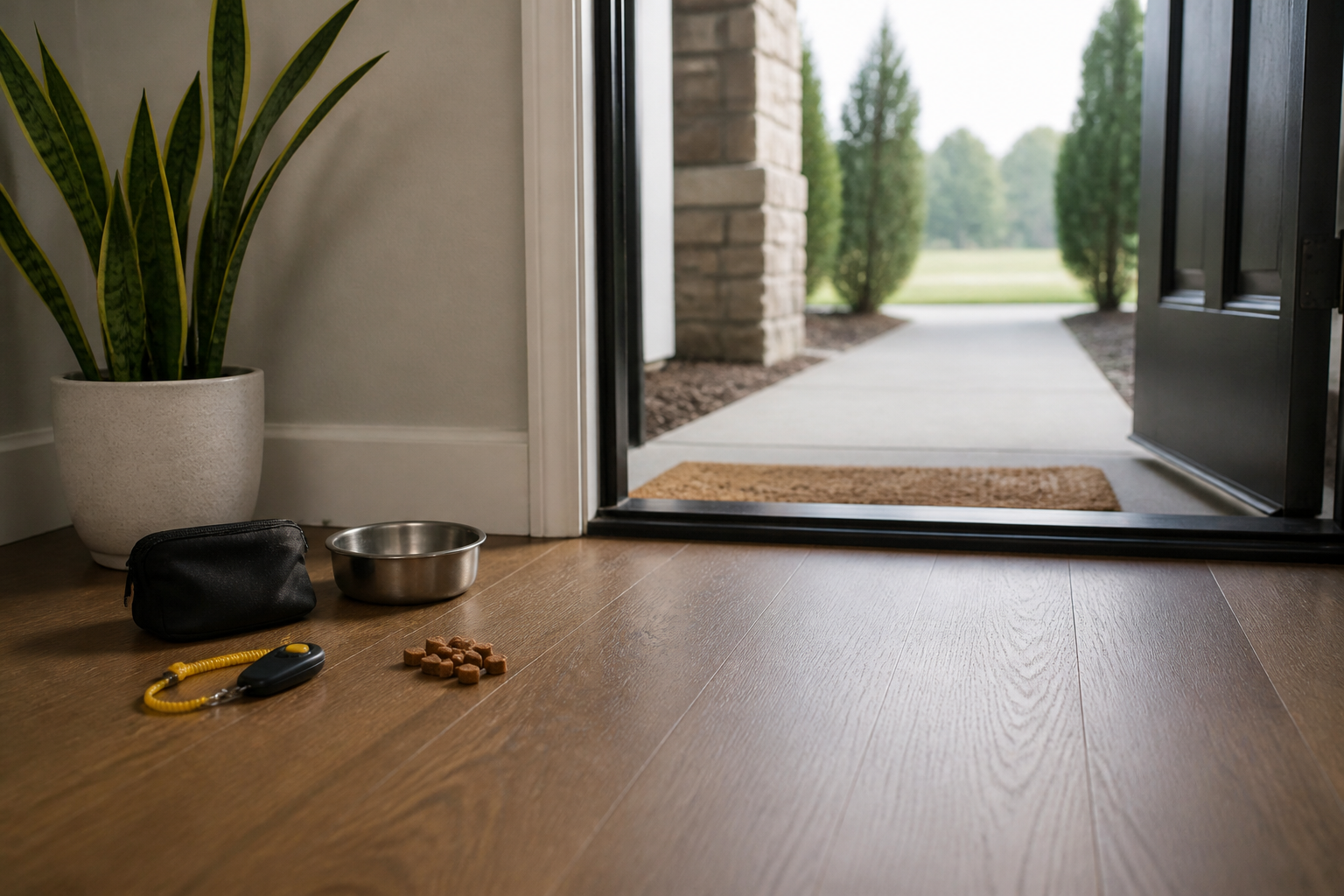
Begin at an interior doorway with little excitement. A hallway, bedroom, or laundry-room entrance is usually easier than the front door. Close nearby doors, remove tempting toys, and ask family members not to create distractions during practice. Keep small, soft treats ready, or use part of the dog’s normal meal if that suits the dog and your veterinarian’s feeding guidance.
Use a leash when your dog may bolt, but hold it as a safety line rather than a tool for dragging. A harness can provide comfortable control for many dogs, while equipment choice should match the individual dog and professional advice. Never wrap a leash around your hand or use force to pull a dog backward through a doorway.
Start when your dog is calm enough to notice you. A dog already barking, jumping, or straining toward the door is practicing the opposite habit. You can first move farther from the entrance, close the door, or wait for a quieter moment. Management is not failure; it prevents rehearsals of rushing.
Establish a release cue first
Stand beside your dog in a quiet room. Wait for a moment of stillness, say your chosen release word, and toss a treat a short distance away. The dog learns that the word predicts movement. Repeat several times, then pause. If the dog moves before the word, simply wait for calm and try again.
This exercise separates permission from accidental movement. Keep the release cue cheerful but not so exciting that it causes explosive behavior. Later, the same word will end the door wait.
The step-by-step door plan
Work through the following stages in short sessions. Two or three minutes can be enough, especially for a young, excitable, or easily frustrated dog. End while your dog is still succeeding. Several easy repetitions create better learning than one long session that ends in repeated mistakes.
- Choose a starting distance. Stand several steps from an open interior doorway. Ask for attention, then pause. If your dog remains with you, mark the calm moment with “yes” or another consistent marker and deliver a treat near your leg, away from the threshold.
- Approach without opening the door. Walk toward the doorway, stop before the threshold, and reward your dog for staying controlled. If the dog surges, turn away or step back until the leash slackens and attention returns. Do not advance while pulling is occurring.
- Add the pause cue. Near the doorway, say “wait” once. Pause for only a second, then mark, reward, and give the release cue. Move through together. The first goal is understanding, not duration.
- Increase one difficulty at a time. Gradually add a longer pause, a closer starting point, a slowly moving door, or mild background noise. Change only one factor when possible so you know what caused a mistake.
- Practice the complete routine. Approach, ask for the wait, open the door slightly, pause, check the area, release, and cross calmly. Repeat from different angles and with both sides of the door when safe.
Reward the position you want
Place rewards where you want the dog to remain. Feeding beside your leg or just behind the threshold can discourage forward creeping. Avoid tossing treats through the doorway during early practice because that may teach the dog to launch toward the opening.
A marker word can improve timing. Say “yes” the instant your dog pauses, then deliver the reward. If your dog is not comfortable with a marker, use calm praise and place the treat promptly. The reward does not have to be food every time once the behavior is strong, but food is often useful while building a new response.
Reward calm details: a loose leash, quiet feet, a relaxed mouth, and attention that returns to you. Do not wait only for a perfect sit. Reinforcing small improvements helps the dog understand which choices earn access.
Add door movement carefully
Once your dog can wait near an open doorway, touch the handle. Reward stillness. Then move the handle slightly, reward, and reset. Next, open the door a small amount, pause, and close it if your dog leans forward. Release before frustration builds.
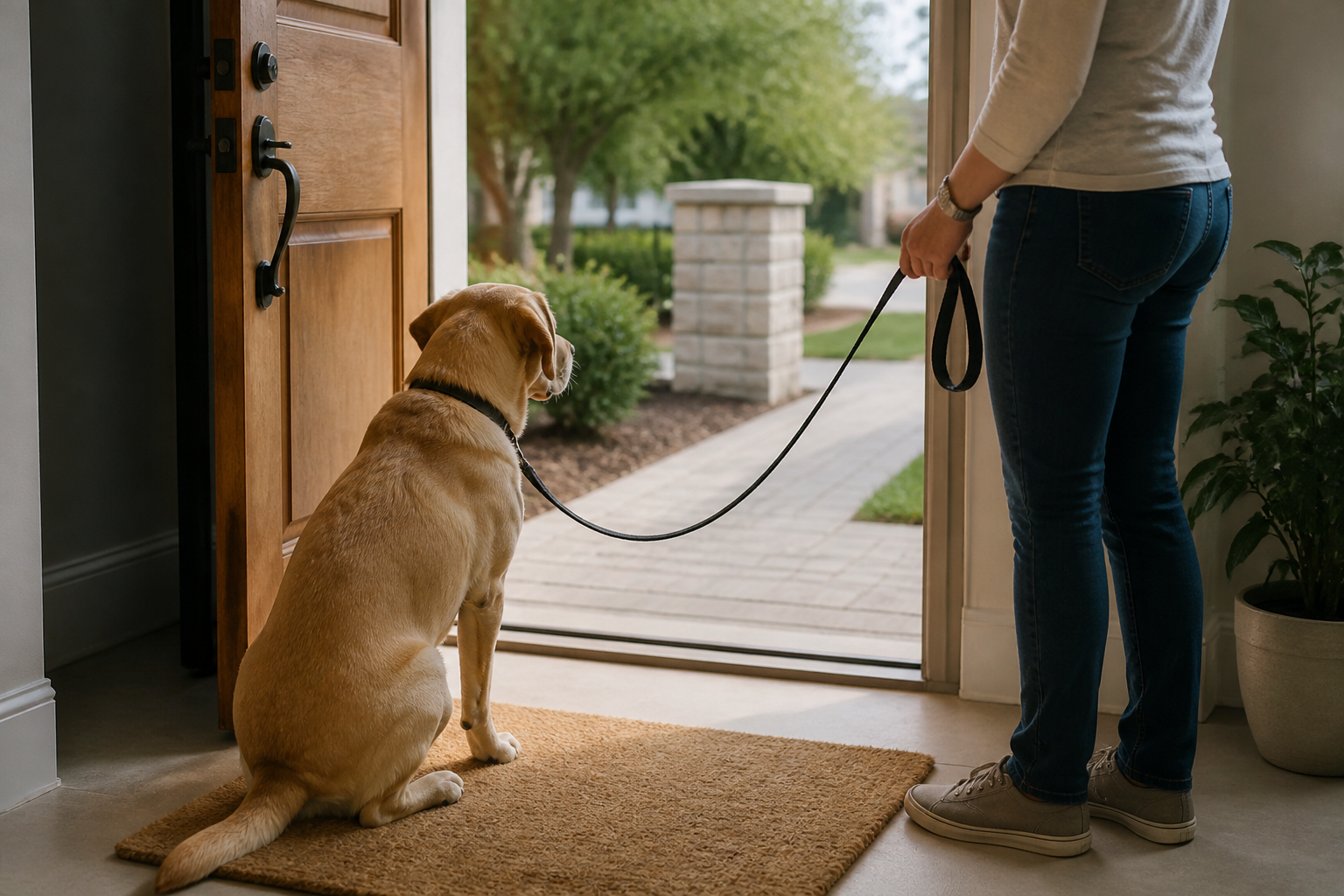
The door itself can become a reward. Calm waiting earns access to the interesting space beyond it. However, do not create a contest by repeatedly opening and slamming the door while the dog fails. Make the movement smaller, increase distance, or return to an easier stage.
If the dog crosses the threshold early, avoid chasing or scolding. Secure the dog, calmly bring the exercise back to a safe starting point, and reduce difficulty. The lesson should be that rushing does not produce access, while calm behavior does.
Generalize beyond one doorway
Dogs do not automatically apply a skill learned in a quiet interior room to every entrance. Practice at a back door, baby gate, elevator entrance, vehicle door, and garden gate, but introduce each setting separately. A front door may be difficult because it predicts visitors, deliveries, sounds, and outdoor smells.
Begin in each new place with the door closed and generous rewards for calm orientation. Then approach, touch the handle, and open it slightly. Keep the dog leashed near exterior exits until the wait is dependable and local safety conditions support greater freedom.
Vary your position and routine. Sometimes stand on the hinge side; sometimes approach from an angle. Practice with an empty hand, a bag, or a coat only after the basic response is stable. Add household sounds before adding strangers or active outdoor distractions.
Never test reliability by opening an exterior door onto traffic and hoping the dog remembers. Secure the dog first. Training should build confidence, not depend on a dangerous mistake to reveal weakness.
Use distractions in a planned order
Increase distractions from easiest to hardest. A quiet family member walking past may come before a ringing doorbell. A familiar visitor may come before a delivery person. If your dog reacts strongly to a trigger, stay far enough away for learning to occur and consider guidance from a qualified, reward-based trainer.
Keep sessions brief when distractions rise. A dog that cannot eat, orient toward you, or respond to a simple cue may be over threshold. Increase distance, close the door, or end the exercise. Calm management protects both the dog and the people outside.
Common problems and useful adjustments
The dog rushes as soon as the door moves
Make the opening smaller and reward earlier. You may have increased door movement too quickly. Return to touching the handle, then build through tiny changes. Keep the dog behind a physical barrier when practicing a front door so an error cannot become a runaway event.
The dog waits but breaks when released
Your release cue may be unclear or too exciting. Say it once, wait a moment, and move smoothly. If the dog explodes forward, shorten the pause and reward a quieter transition. You can release to a treat beside you before eventually releasing through the doorway.
The dog sits but watches the outside intensely
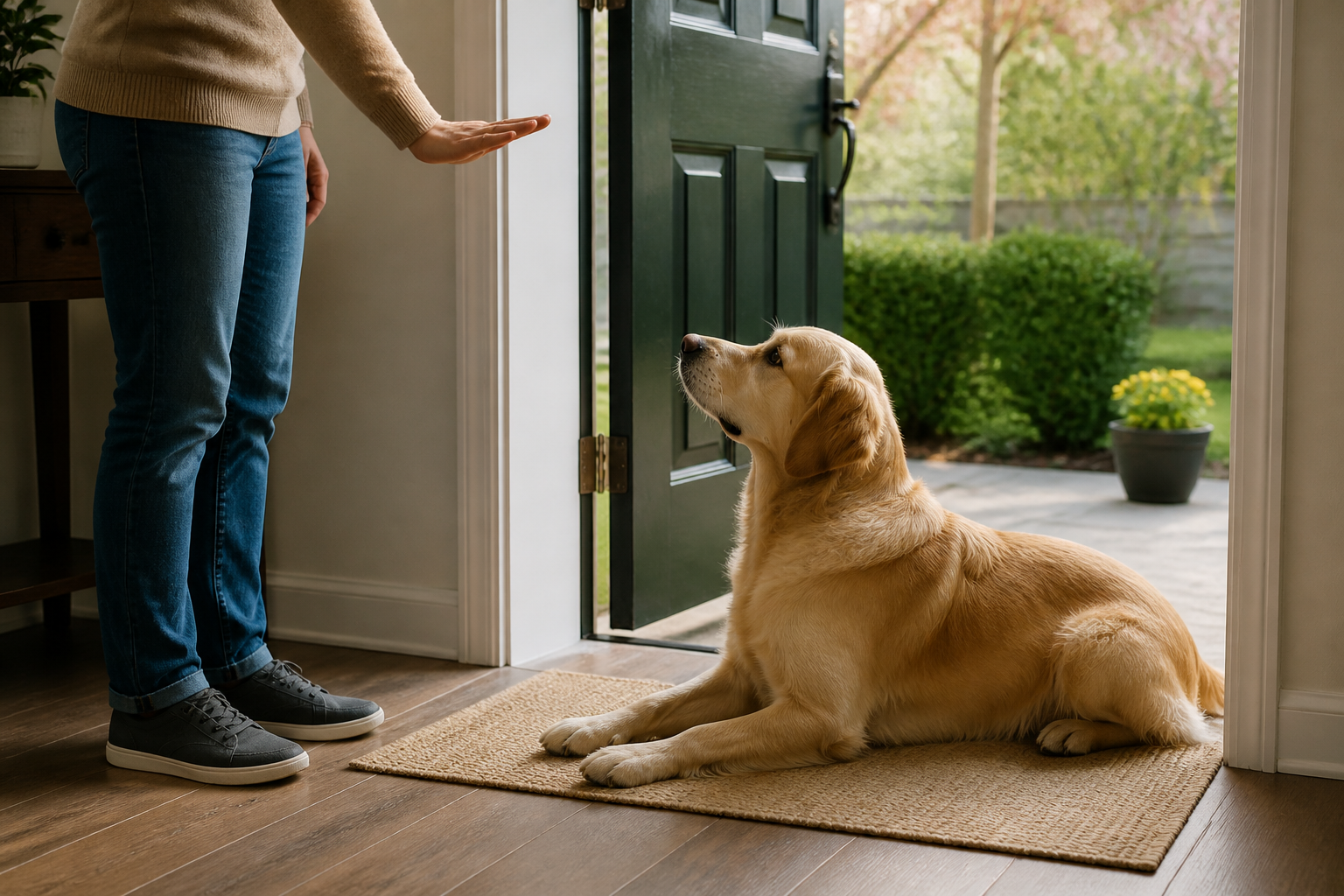
A sit does not automatically mean emotional calm. Look for loose muscles, manageable breathing, and the ability to respond to you. Increase distance from the doorway, reduce the distraction, or use a quieter entrance. Safety depends on control, not on posture alone.
The dog barks at visitors
Door waiting and visitor behavior are related but separate skills. First prevent rushing with a leash, gate, or closed interior door. Then teach a visitor routine, such as moving to a mat, while keeping greetings controlled. If barking includes lunging, snapping, or intense fear, seek qualified professional help rather than forcing exposure.
The dog will not take treats
Stress, excitement, illness, or low-value food may explain refusal. Do not push food toward a frightened dog. Make the situation easier, check basic welfare needs, and consult a veterinarian if appetite changes occur outside training or seem unusual.
A practical progress checklist
- Your dog pauses before the threshold instead of pulling toward it.
- You can touch or move the door slightly without an immediate surge.
- Your dog can respond to the release cue without frantic jumping.
- You can reset calmly after an early movement.
- The behavior works in more than one quiet location before distractions are added.
- An exterior doorway remains managed with a leash, barrier, or other safety plan when needed.
Progress is not measured by a single flawless repetition. Look for a pattern of calm responses across different days and situations. If performance falls apart, the correct adjustment is usually less difficulty, not harsher correction.
Choosing rewards and equipment
Food rewards should be small enough for repeated practice and appealing enough to compete with the doorway. Some dogs work well for ordinary kibble indoors but need a more valuable option near outdoor distractions. Consider the dog’s total daily intake, and ask a veterinarian about dietary needs or restrictions.
Toys, praise, sniffing, and access to the yard can also reinforce waiting. A reward should follow the desired behavior quickly and safely. Do not use a toy that encourages grabbing at the threshold or creates conflict with people passing through.
A leash and well-fitted harness can add control, but equipment cannot replace training. Avoid tools intended to cause pain or fear, particularly around doors where panic can increase escape risk. If you need physical restraint to prevent a dog from charging, improve management immediately and obtain skilled guidance.
Safety around children and visitors
Children should not be responsible for opening an exterior door while a dog is learning. Teach them to call an adult, keep hands away from collars, and avoid running through the doorway. Visitors can wait outside or enter only after the dog is secured.
Tell guests not to encourage pushing, jumping, or darting. If the dog is highly excited, place the dog behind a gate with a chew or in another safe area before opening the door. A successful training session is not worth risking a bite, escape, or fall.
Use extra care with dogs that have a history of bolting, guarding entrances, severe fear, or aggression. A veterinarian can help identify medical factors affecting behavior, and a qualified behavior professional can create a plan suited to the dog. Seek urgent help if the dog has injured someone or repeatedly escapes.
How long should training take?
There is no universal schedule. Age, temperament, past reinforcement, environment, and the value of outdoor distractions all affect progress. Many dogs can learn the basic pattern quickly, but reliable performance in difficult settings requires ongoing practice.
Train when the dog is rested and able to focus. Stop after several successful repetitions or sooner if attention declines. Repeat the skill during ordinary routines, such as leaving for a walk, but do not turn every doorway into a demanding drill. Sometimes management and a quick release are more appropriate.
Maintain the behavior with occasional rewards. Surprise reinforcement, calm praise, and access to desired spaces can keep waiting worthwhile. Continue using safety barriers when circumstances change, such as a repair person leaving a gate open or a storm frightening the dog.
Frequently asked questions
Should my dog always sit at the door?
No. Sitting can be useful, but the essential behavior is a controlled pause. A dog that stands calmly with all four paws behind the boundary may be safer than a dog that sits rigidly while staring, trembling, or ready to spring. Choose the posture that supports relaxed control.
Should I say “wait” repeatedly?
Usually, no. Say the cue once, then help the dog succeed by reducing movement, increasing distance, or closing the door. Repeating a cue can teach the dog that the first request is optional. Mark and reward the pause, then release clearly.
What if my dog runs through anyway?
Prioritize safety. Secure the area, avoid chasing if that would turn escape into a game, and use a calm, familiar recall if available. Afterward, prevent another rehearsal with a leash or barrier and return to an easier training stage. Do not test the dog again immediately at a dangerous exit.
Can I train this without treats?
Yes, but rewards still matter. Praise, play, sniffing, and access to the destination can reinforce waiting. Food often makes timing easier, especially during early learning. Use whichever safe reward your dog values, and deliver it directly after the desired pause.
When should I hire a trainer?
Seek qualified help if your dog shows aggression, severe fear, repeated escape behavior, or inability to settle near doors. Choose a professional who explains methods clearly and uses humane, reward-based training. Veterinary support is also appropriate when behavior changes suddenly or is accompanied by pain or illness signs.
Conclusion
A dependable door wait comes from a clear sequence: approach calmly, pause behind the boundary, wait for the release cue, and move through safely. Teach the skill in easy settings first, reward small improvements, and add door movement and distractions in careful steps. Use leashes, gates, and closed doors while reliability develops.
The most persuasive reward is real access: calm behavior opens the way. When your dog learns that rushing never earns the doorway but waiting consistently does, each entrance becomes a safer, more predictable routine for everyone.
Pingback: Puppy Behavior Management: Training Tips for Better Habits