
Why safe trading matters
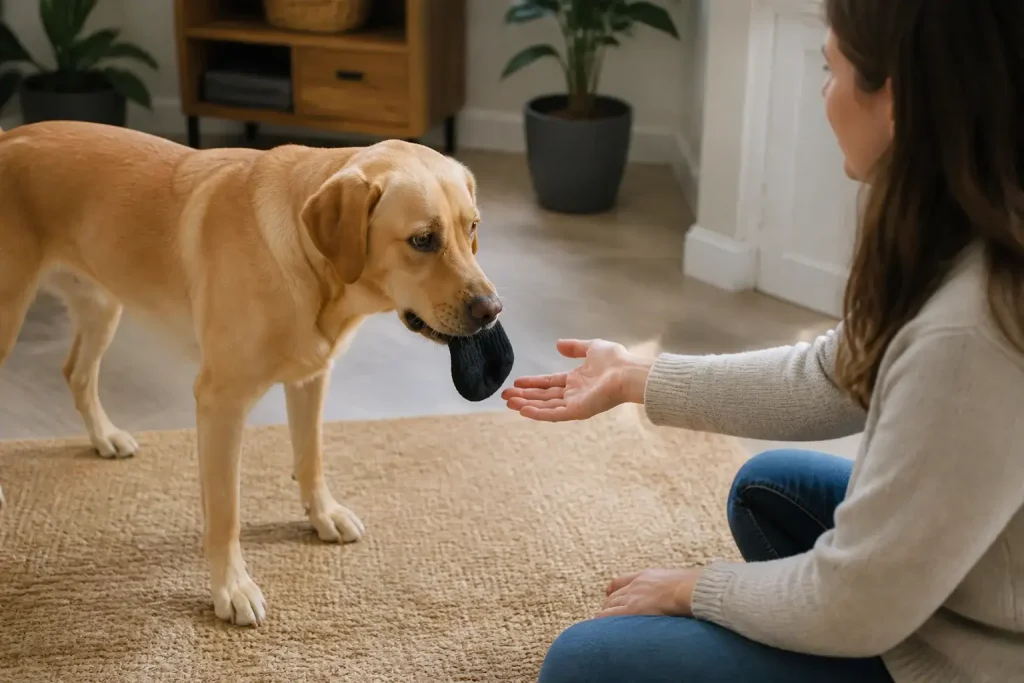
When a dog steals an object, the safest response is usually to avoid chasing, grabbing, or scolding. Those actions can turn possession into a contest and may teach the dog to run away, swallow the item, or guard it more intensely. Instead, teach a calm “drop” cue through reward based trading. The dog learns that releasing an object makes something better happen, while the person remains predictable and nonthreatening.
Safety comes first. If the object is poisonous, sharp, electrical, dangerously small, or likely to cause choking or obstruction, do not turn the situation into a training exercise. Keep your hands away from the mouth, move children and other pets away, and contact a veterinarian or an appropriate animal poison service promptly. If the dog is growling, snapping, stiffening, or guarding, do not force removal. Manage distance and seek qualified help.
Prepare before training
Choose a quiet area and gather several small, soft, highly valued treats. They should be easy to swallow and more appealing than the training object. You also need a safe toy that the dog can hold comfortably. Avoid beginning with clothing, tissues, food wrappers, medication containers, socks, batteries, or anything the dog might damage or ingest.
Management prevents rehearsals of stealing. Keep tempting objects in closed containers, use laundry hampers with lids, secure rubbish, and restrict access to rooms containing fragile or hazardous items. Provide legal alternatives such as chew toys, food puzzles, and interactive toys. Adequate exercise, sleep, and mental activity can reduce some unwanted scavenging, although no lifestyle change replaces supervision.
Select a release word, such as “drop,” “give,” or “trade.” Choose one phrase and use it consistently. A marker word such as “yes” or a clicker can identify the exact moment the dog releases the item, but a marker is optional. Everyone who handles the dog should follow the same plan.
Build the release without stolen items
Start with a toy the dog enjoys but does not guard. Let the dog hold it briefly. Present a treat close to the nose, without poking the face or pulling the toy. Most dogs will open the mouth to take the food. The instant the toy falls, say “yes,” give the treat, and calmly return the toy if it is safe.
At first, say the cue only as the dog begins releasing. After several successful repetitions, say “drop” just before presenting the treat. This connects the word with the action rather than using the cue as a demand the dog does not yet understand. Keep sessions short, perhaps a few repetitions, then stop while the dog remains relaxed and interested.
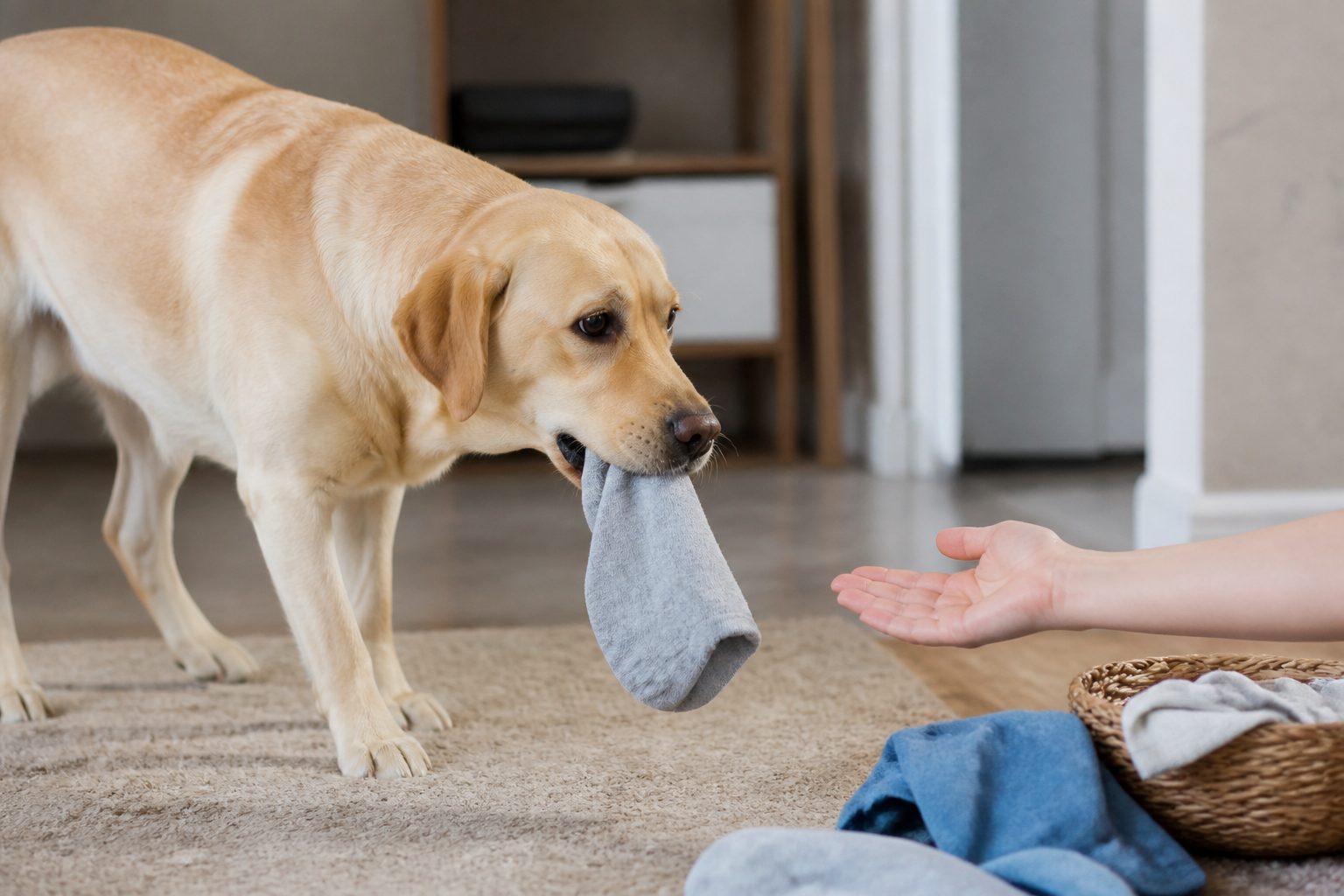
The observable checkpoint is simple: after hearing “drop,” the dog releases the toy promptly, takes the reward, and can receive the toy again without tension. If the dog ignores the cue, waits for a better reward, or grips harder, make the exercise easier. Use a more valuable treat, choose a less exciting toy, reduce excitement, or return to silently offering the treat before saying the cue.
Use two toys carefully
Some dogs prefer another toy to food. Hold one toy still while the dog plays with the other. When the dog releases the first toy to take the second, mark and praise the release. This can create enthusiasm, but do not wave toys around a dog that becomes frantic. Food remains useful because it allows a clean exchange and helps prevent games from becoming rough tugging competitions.
Do not repeatedly snatch the toy after the dog releases it. Give it back often. Returning the item teaches that releasing does not always end enjoyment. If the dog believes every release causes permanent loss, it may hold on, flee, or guard. A successful trade preserves trust.
Increase difficulty gradually
Once the dog releases a familiar toy reliably, practice with different safe objects. Change only one factor at a time: object type, location, distance, movement, or level of excitement. Begin indoors, then use a quiet outdoor area with a leash if appropriate. Keep rewards valuable enough for the situation.
Do not begin by taking an object directly from the dog’s mouth. Place a toy on the floor, allow the dog to pick it up, and then cue the release. Later, practice when the dog is mildly excited, after a brief play session, or while another person moves nearby. A dog that performs in a quiet room may not yet understand the cue beside visitors or outdoor distractions.
Reward quickly and clearly. If the dog drops the item before you give the cue, mark the spontaneous release and reward it. This builds a useful habit without encouraging theft. However, avoid rewarding a pattern in which the dog grabs forbidden objects specifically to obtain treats. The long-term goal is to make appropriate choices and release calmly, not to create a profitable stealing game.
Practice with ordinary household items
When the dog is ready, use harmless items that resemble common temptations, such as a plain cardboard tube or an old towel, provided the dog cannot tear and swallow pieces. Keep the exercise controlled and supervised. Do not use a valuable personal possession as a test. If the dog picks up a forbidden item unexpectedly during practice, respond calmly, present the reward, and exchange it rather than chasing.
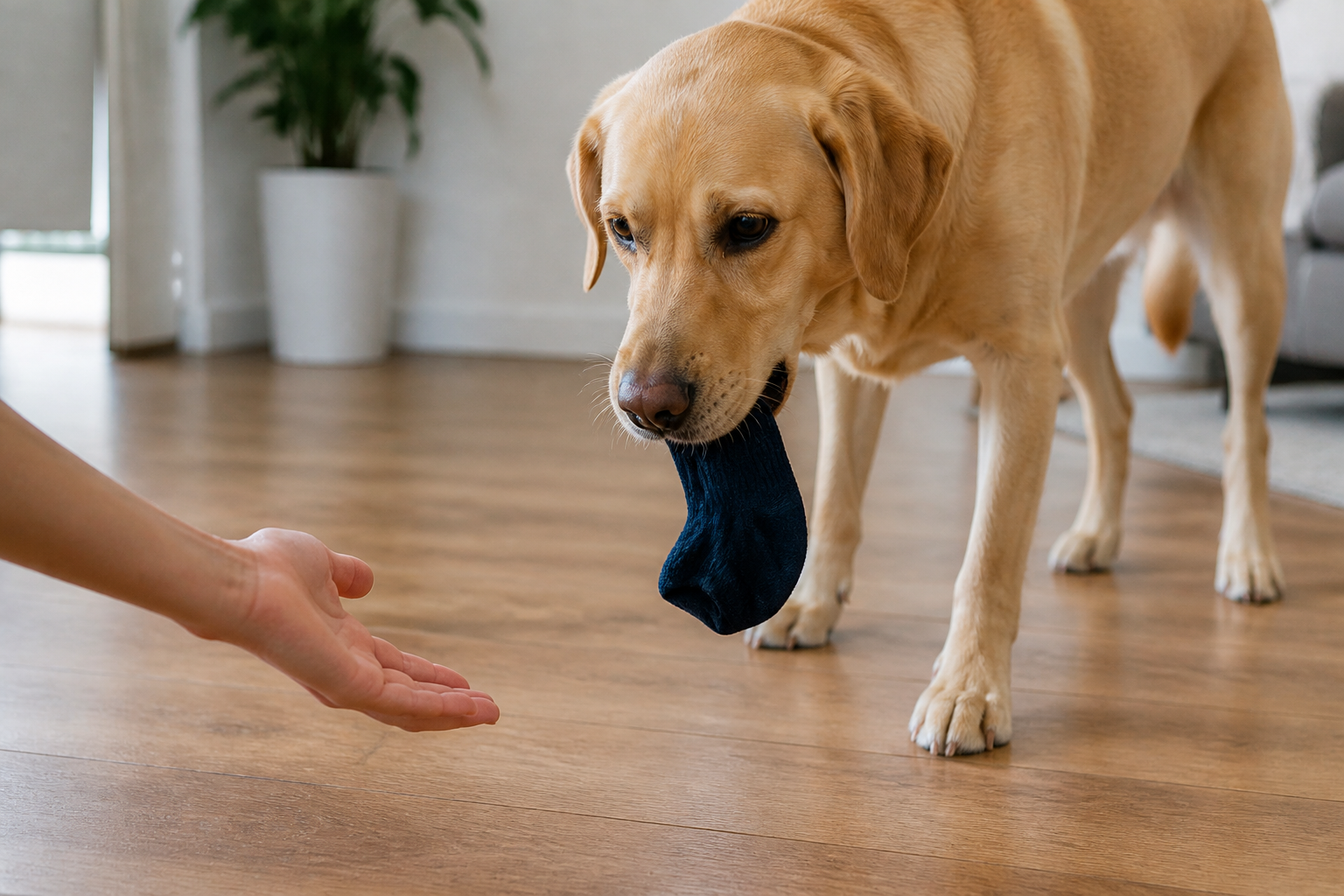
At this stage, practice approaching without looming. Turn your body slightly sideways, soften your posture, and speak in a normal voice. A direct rush can feel threatening. Once the dog releases, reward near the dog, then invite it away or offer an approved toy. This prevents the dog from immediately reclaiming the forbidden object.
Respond to a real theft
If the item is safe and the dog is relaxed, pause before acting. Do not chase. Retrieve several treats, call the dog in a cheerful but not frantic voice, and move away if that encourages following. Show the treat only when you are ready to exchange. Say the release cue once, wait briefly, and mark the moment the object falls. Deliver the reward, then remove the object quietly.
If the dog ignores the cue, stop repeating it. Repeated commands can weaken their meaning and increase frustration. Try a higher value reward, create more distance, or encourage the dog to follow you into a safer area. If the item is dangerous, prioritize containment and professional advice over obedience practice. Never pry open the mouth or pull against a lodged object unless a veterinary professional specifically directs you.
Afterward, identify how access occurred and change the environment. Close the bin, move shoes behind a door, use a barrier, or supervise more closely. Training and management work together: training improves future responses, while management prevents emergencies before the dog can practice stealing.
Recognize guarding and stress
Possession problems can range from playful avoidance to serious resource guarding. Warning signs include freezing, lowering the head over the object, hard staring, showing the whites of the eyes, lip lifting, growling, snapping, or rushing forward when approached. A wagging tail does not automatically mean the dog is comfortable. Observe the whole body and the context.
Take warnings seriously. Do not punish growling, because suppressing the warning can leave the underlying discomfort unchanged and may make a later bite less predictable. Do not test the dog repeatedly, corner it, or force repeated trades. Separate people and animals with doors or gates when necessary, and contact a qualified reward based trainer or veterinary behavior professional. Choose someone who can explain a humane plan and has relevant experience with guarding.
Children should not practice this exercise. They may move suddenly, misunderstand warnings, or offer treats too close to the mouth. Adults should supervise all interactions, and children should be taught to call an adult rather than retrieve a stolen item. Dogs and children should never be left together with accessible high value objects.
Common mistakes and better adjustments
Chasing is one of the most common mistakes. It often adds excitement and teaches the dog that stealing starts a thrilling pursuit. Instead, move calmly away, use a familiar recall or cheerful invitation, and trade when the dog approaches.
Pulling is another mistake. Tugging against a held object can increase opposition and may damage teeth or soft tissue. Hold the reward near the nose, wait, and let the dog choose release. If the dog will not release, stop applying pressure and reassess safety.
Using a low value reward can make a correct behavior unlikely. Match payment to difficulty. Ordinary kibble may work in a quiet room, while chicken, cheese, or another veterinarian approved food may be needed around strong distractions. Keep pieces small and account for treats within the dog’s daily diet.
Training only when the dog has stolen something creates poor timing and emotional pressure. Practice briefly during calm moments, then maintain the skill with occasional rewards. Avoid showing the reward every time once the response is reliable; you can produce it after the release from a nearby container or pocket. Still reward often enough to keep cooperation strong.
Repeating the cue is also unhelpful. Say it once, allow time, and make the next repetition easier. If the dog becomes tense, stop. A short pause protects learning better than pushing through conflict.
Build related skills
A reliable recall helps move the dog away from hazards. Teach it separately with generous rewards, beginning indoors and adding distractions gradually. A “leave it” cue teaches the dog not to pick up an object, while “drop” addresses an item already in the mouth. These skills support each other but are not interchangeable.
Teach hand targeting, such as touching a palm with the nose, as a gentle way to redirect movement. Teach settling on a mat so the dog has a calm alternative to chasing household activity. Reinforce choosing a toy from a basket, chewing an approved item, and walking away from dropped food when safe practice is possible.
Use predictable routines. If the dog receives attention only after stealing, stealing may become a way to start interaction. Offer scheduled play, training, sniffing opportunities, and affection without requiring misbehavior first. A dog with appropriate outlets is easier to guide, though individual temperament and medical factors still matter.
Troubleshooting a stalled response
If the dog releases only for food, that is not a failure. Food may be the clearest initial reinforcer. Gradually vary the reward while keeping occasional excellent payments. Return the toy, begin a game, praise, or release the dog to sniff, depending on what it values. Do not remove rewards abruptly before the behavior is dependable.
If the dog drops the object but grabs it again, deliver the reward first and guide the dog away before retrieving the item. You can toss several treats in one direction, close a door, or offer a replacement toy. Avoid creating a race for the object. Later, practice waiting calmly after release.
If the dog runs when approached, reduce pressure. Practice calling the dog from a short distance, rewarding arrival, and then allowing it to leave again. Do not call only when you intend to take something away. If the stolen object is unsafe, use barriers and professional assistance rather than relying on an untested cue.
If excitement causes nipping, barking, or frantic movement, lower arousal. Use a quieter toy, slower hand movements, fewer repetitions, and longer pauses. Training should produce relaxed cooperation, not merely a technically correct release surrounded by stress.
FAQ
Should I punish my dog for stealing?
No. Punishment can increase fear, avoidance, and guarding, and it does not teach the behavior you want. Calmly exchange safe objects, then improve management. For dangerous or aggressive situations, obtain professional guidance.
What if my dog swallows the object?
Contact a veterinarian promptly, especially if the item is sharp, toxic, stringlike, large, or potentially obstructive. Do not induce vomiting unless a veterinary professional instructs you. Watch for choking, repeated vomiting, abdominal pain, weakness, breathing trouble, or unusual behavior, but do not wait for symptoms before seeking advice when the item is hazardous.
Should I always give the stolen object back?
No. Remove unsafe or forbidden items after the trade. During planned practice with a safe toy, returning it often helps the dog learn that releasing is worthwhile. The distinction is between a controlled training object and something that must remain unavailable.
How long does learning take?
Timing varies with the dog, the object, reinforcement history, and whether guarding is present. Some dogs understand the basic exchange quickly, while reliable performance around distractions requires gradual practice over many sessions. Measure progress by relaxed, prompt releases rather than by a fixed deadline.
Can I take food from my dog’s bowl to prevent guarding?
Routine removal can make meals feel insecure and may worsen guarding. Instead, leave the dog undisturbed while eating and, when safe, teach that a person approaching means an additional high value food appears at a comfortable distance. If guarding already occurs, consult a professional before changing the routine.
Is tug-of-war safe?
Tug can be safe for many dogs when played with rules, suitable equipment, and supervision. Teach “drop” during calm pauses, avoid jerking, and stop if teeth contact skin, the dog becomes distressed, or either participant loses control. Tug should complement, not replace, food based trading.
When should I seek expert help?
Seek help when the dog guards, bites, has injured someone, repeatedly swallows objects, cannot disengage, or lives with vulnerable children. A veterinarian can assess medical contributors, while a qualified behavior professional can design a gradual safety plan. Immediate hazards require veterinary or emergency advice, not an obedience test.
Conclusion
Teaching a dog to drop a stolen object safely depends on cooperation, preparation, and careful risk assessment. Begin with a safe toy, pair release with valuable rewards, return the toy frequently, and increase distractions slowly. During real incidents, avoid chasing and pulling; trade calm behavior for something worthwhile, then manage the environment so the problem is less likely to recur.
A reliable cue is useful, but it is not a guarantee. Dogs can behave differently when frightened, highly aroused, ill, or guarding a valuable resource. Respect warning signals, protect children, and obtain professional assistance when safety is uncertain. With consistent practice and sensible management, dropping an object can become a routine exchange rather than a confrontation.